


What could have been a sad story about vulnerable wildlife instead became a reminder that a few quick human decisions can make all the difference.
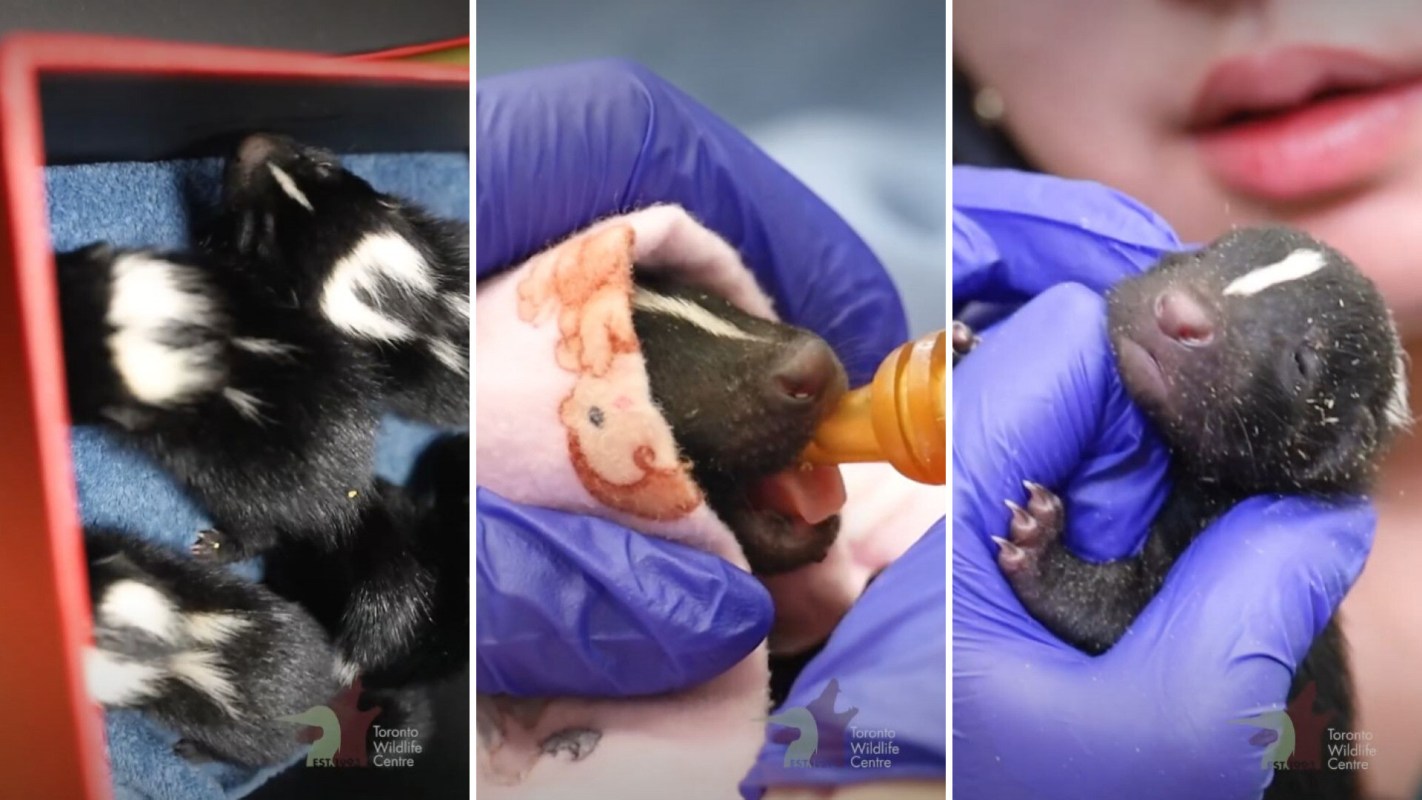
"These tiny stinkers are melting hearts!" the Toronto Wildlife Centre (@torontowildlifecentre) wrote on Instagram after two separate rescues brought four orphaned baby skunks to the center in a single day.
What happened?
According to the caption of the center's post, staffer Emily was at a grocery store when a passerby handed her a shoebox holding three baby skunks he said he had found nearby.
Hours later, in the same general area, a nearby resident named Jan noticed a lone baby skunk close to the road. Worried it could be hit, he called the Wildlife Hotline, placed the animal in a box, and brought it to the center, the organization said.
After all four skunks arrived, it was clear they needed urgent help as they were thin and cold. Clemence, a wildlife rehabilitator, warmed them on a heating pad, then gave them fluids and hand-fed them formula.
For now, the center says the babies are getting four feedings a day until they can eat on their own. The plan is to release them back into the wild once they are fully grown.
TCD Picks » Quince Spotlight
💡These best-sellers from Quince deliver affordable, sustainable luxury for all




The post featuring the four young skunks in action was a hit with viewers, who clearly could overlook the animals' stinky reputation.
"Little stinkers getting the love and attention they need - and deserve," one commenter wrote.
Why does it matter?
Skunks are often treated like neighborhood nuisances, even though they play an important role in local ecosystems and can help control insect and rodent populations.
Young wild animals can quickly end up in danger in developed areas. Parking lots, roads, and busy neighborhoods can be especially risky for babies who become separated from their mothers.
Neither rescue required special expertise at first. All that was needed was just enough concern to stop, protect the animals from immediate danger, and contact the right experts.
That kind of response can make a major difference for many species, especially during baby-animal season, when wildlife centers often see a surge in orphaned or injured young animals.
What's being done?
The Toronto Wildlife Centre is doing the intensive work most people cannot do at home. That includes warming fragile animals, rehydrating them, feeding them on a strict schedule, and preparing them for eventual release rather than captivity.
Young wild animals need species-specific care. Feeding the wrong food, handling them too much, or keeping them without guidance can reduce their chances of survival.
The safest first step is usually to contact a wildlife rehabilitator or local wildlife hotline before taking further action. In some cases, a baby may not actually be orphaned, while in others, quick temporary containment can help prevent injury until experts take over.
Teamwork makes the whole thing.
"These babies are precious," one commenter wrote. "Thank you to the humans that cared to bring them and thank you TWC team for helping the wee ones."

Get TCD's free newsletters for easy tips, smart advice, and a chance to earn $5,000 toward home upgrades. To see more stories like this one, change your Google preferences here.







