


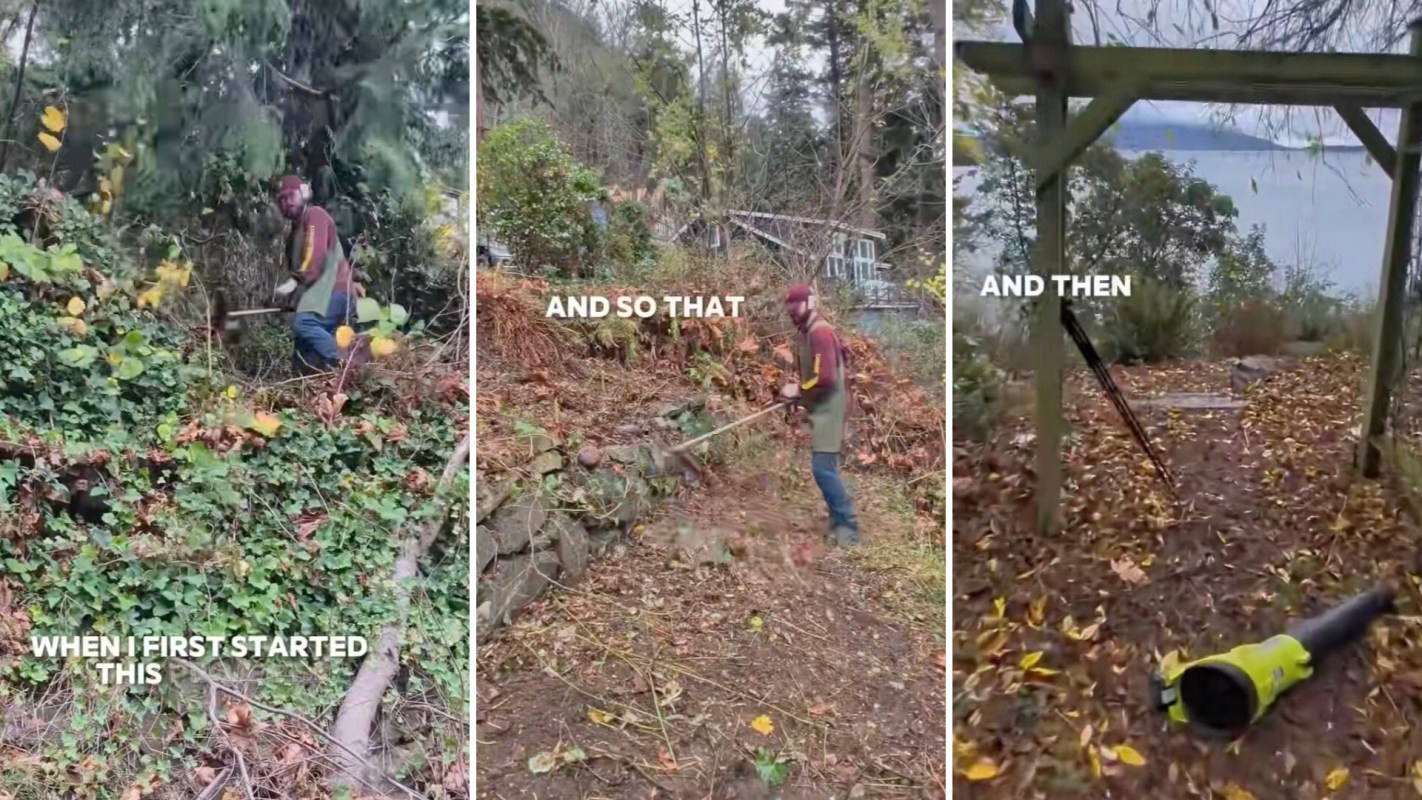
TikTok creator Elliot_Goes (@elliot_goes) shared a viral series of videos on the social media site, documenting his journey to rehabilitating a neglected oceanfront property. While clearing some of the overgrown bushes and invasive plants, Elliot discovered an existing trail that lay underneath the weeds.
In one of his recent TikTok videos, Elliot captures the behind-the-scenes of clearing the dense brush on the hidden trail.
@elliot_goes Erosion protection and retaining walls up next #animaloftheday #wildliferehab #gardening #invasivespeciesremoval ♬ original sound - Elliot_Goes
"When I first started this project, I had no idea that this trail was here at all, so it was pretty cool to unearth it," Elliot says. The video shows a time-lapse of his work on the trail, revealing an old wooden staircase that allows access from the property to the ocean.
"Currently, the biggest challenge that I'm running into over here is actually just too much waste material to be able to take away," Elliot explains. His video shows just how much excess plant material — a lot of invasive ivy and blackberry bushes — he cuts from the trail, which all need to be removed from the property.
Elliot expresses interest in investing in a mulcher to repurpose the excess plant material to create a large pile of compost that would return nutrients to the soil and benefit future gardens.
In his previous videos, part of the property rehabilitation series, Elliot explains that the property had been neglected for over five years, which allowed a lot of invasive plants, like ivy and blackberry, to overtake the land.
While time certainly contributed to the degradation of the property, the invasive nature of these weeds and plants expedited the damage to local ecosystems.
Invasive plants outcompete native plants for nutrients and resources, and paired with few or no natural predators in their new environment, invasive plants grow quickly, allowing them to overtake native habitats.
A loss of native plants disrupts local ecosystems, creating ripple effects on native wildlife species that depend on native vegetation for food and shelter.
Planting native plants not only helps prevent invasive plant species from establishing themselves in local environments, but they also create healthier and more balanced environments for local wildlife, including pollinators that protect the reproduction of native vegetation and human food crops.
TCD Picks » Quince Spotlight
💡These best-sellers from Quince deliver affordable, sustainable luxury for all




|
What's the most you'd pay per month to put solar panels on your roof if there was no down payment?
Click your choice to see results and speak your mind. |
 $200 or more 💰
 Native plants are also much less work to maintain, compared to lawns with invasive grass species, requiring less frequent mowing and watering, saving homeowners time and money on lawn maintenance and water bills.
Buffalo grass and clover are two lawn replacement options that offer homeowners such savings while maintaining the aesthetic of the well-manicured, green lawn.
"I love these kinds of jobs … So satisfying," one commenter wrote under the TikTok video.
Other commenters agreed that mulching would benefit the land on the neglected beachfront property.
"Mulching would give back what's been drawn out of the soil," one commenter explained.
"My brother says mulching it would be best for all your reasons," another user wrote.

Get TCD's free newsletters for easy tips to save more, waste less, and make smarter choices — and earn up to $5,000 toward clean upgrades in TCD's exclusive Rewards Club.
Cool Picks






