


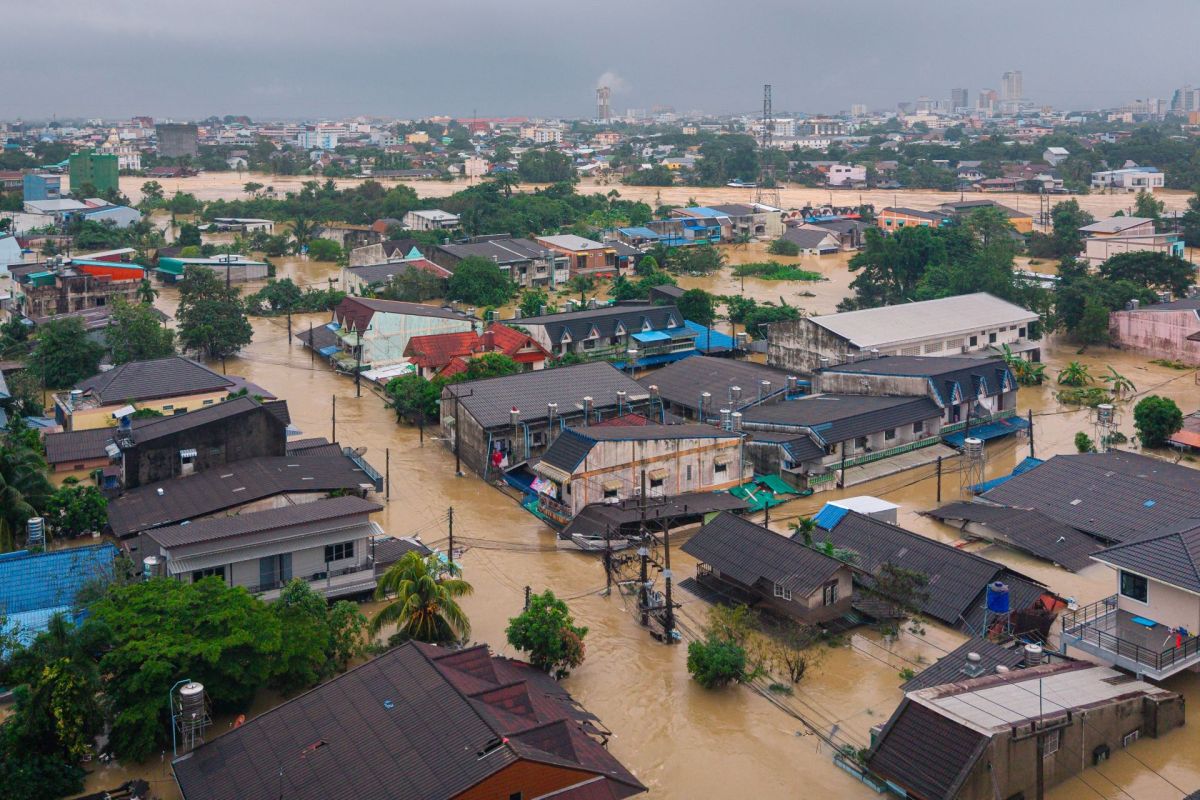
Alarming scenes of families clinging to rapidly disappearing rooftops unfolded in southern Thailand after months of heavy rain, the Associated Press reported.
What's happening?
On Nov. 25, a Thai PBS drone captured dramatic footage from Hat Yai.
As floodwaters rose, a family of five broke through the roof of their home, catching the attention of rescuers with little time to spare.
The family "appeared in the video as colorful specks in a landscape of flat, brown water," per the AP.
Heavy monsoon rains began in July, worsening in late October. Between Nov. 20 and Nov. 22, the rains culminated in severe flooding.
On Nov. 22, Prime Minister Anutin Charnvirakul declared a state of emergency in the province of Songkhla due to the "unprecedented severity" of the floods.
Reuters reported that nearly 990,000 homes and more than 2.7 million people in Thailand had been affected by the storm, and 33 had died, citing spokesperson Siripong Angkasakulkiat.
"There have been 33 deaths across seven provinces. Causes of death include being swept away by currents, drowning, electrocution, and landslides," Angkasakulkiat stated.
Why is this flooding in Thailand concerning?
CNN described the heavy rains and floods as a "'once-in-300-year' storm.'"
The outlet reported floodwaters "more than eight feet high" had stranded a maternity ward with 30 newborn patients.
TCD Picks » Upway Spotlight
💡Upway makes it easy to find discounts of up to 60% on premium e-bike brands





|
Do you think America does a good job of protecting its natural beauty? Click your choice to see results and speak your mind. |
 Definitely 👍
 Hat Yai Hospital began losing power on the night of Monday, Nov. 24, prompting "urgent air transfers" of dozens of patients in a frantic evacuation effort.
Ongoing flooding in Thailand is an example of extreme weather, an increasingly prevalent issue driven by rising temperatures. As the planet overheats and the seas warm, increased evaporation supercharges potentially volatile weather systems worldwide.
Hurricanes, monsoons, floods, droughts, and heatwaves have long been part of planetary weather patterns, but they are not necessarily extreme weather.
Extreme weather is marked by its "unusual severity" and often aseasonal nature. When these systems are strengthened by a warming world, they're costlier and deadlier.
Politician and leader of the Thai Kao Mai Party, Dr. Ae Suchatvee, decried what he deemed "a severe error in disaster management" in Hat Yai in a Nov. 24 Facebook post.
"The damage value is not less than ten billion baht (compared to the major floods of 2010)," he wrote, estimating a sum equivalent to $31 million. "Who will be [held] responsible?"
What's being done about it?
Evacuations were ongoing at Hat Yai Hospital, and the government raced to deploy aid and drain floodwaters by installing pumps, per CNN.
Thailand's Public Health Ministry planned to dispatch a mental health team for medical workers and members of the public coping with the disaster.
As extreme weather worsens, it's critical to stay informed of key climate issues.

💰Get TCD's free newsletters for easy tips to save more, waste less, and make smarter choices — and earn up to $5,000 toward clean upgrades in TCD's exclusive Rewards Club.
Cool Picks






