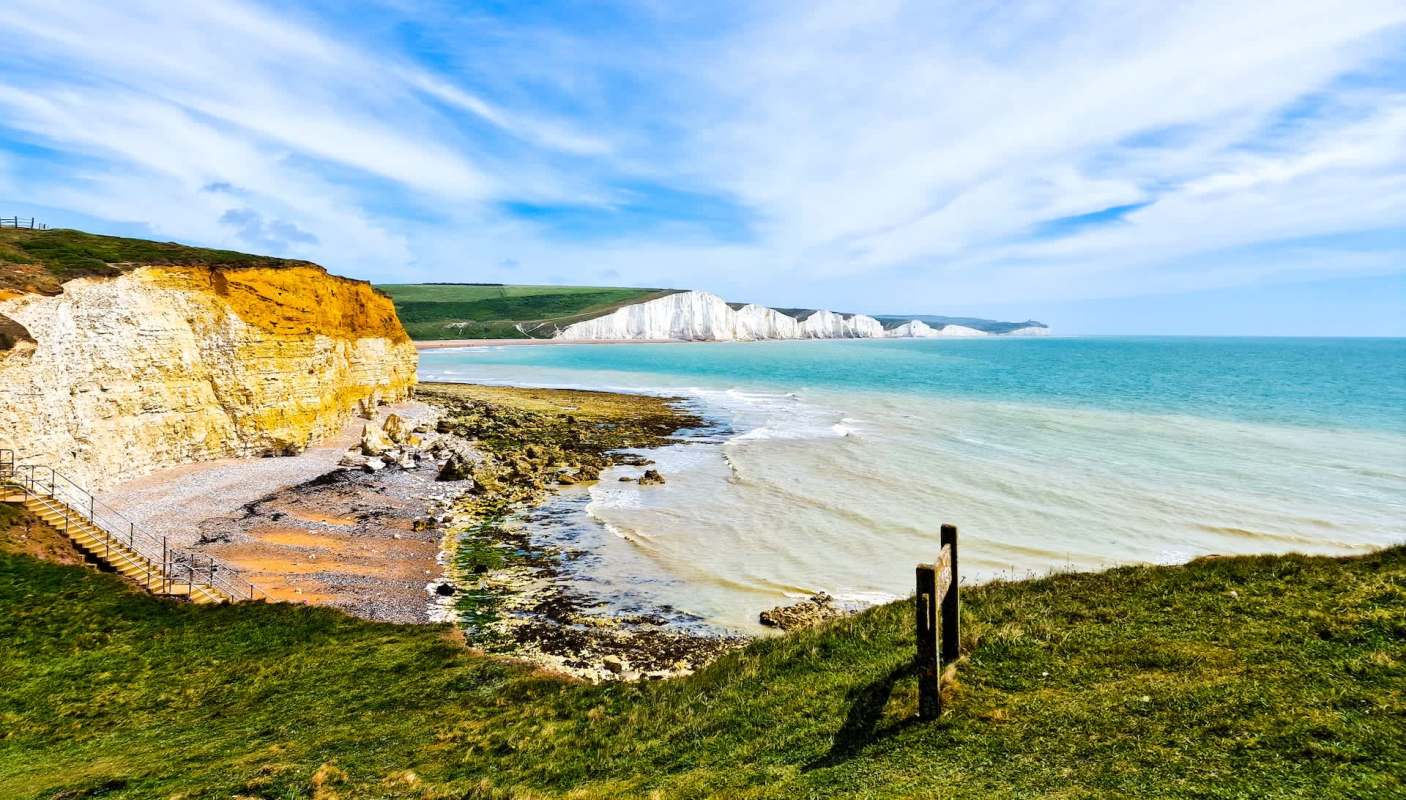
Coastlines along Sussex County in England have been significantly impacted by bottom trawling and environmental influence.
In 2021, the Sussex Inshore Fisheries and Conservation Authority (IFCA) Nearshore Trawling Bylaw was introduced, which banned trawling along the Sussex coastline. Four years later and the Sussex coastlines are recovering for a stronger future, as Oceanographic Magazine writes.
The Sussex coastlines are a vital habitat for marine life. But they also provide immense benefits for humans, improving water quality in the area, protecting coasts and homes from storms, and absorbing planet-warming carbon. However, due to bottom trawling and storms, only about 4% of the coastlines' kelp beds remained, according to the Blue Marine Foundation.
Bottom trawling is the practice of dragging a large net along the floor of the ocean to capture ground species. Trawling can destroy ecosystems with one pull of a net. According to the National Academy of Sciences, about 90% of coral colonies are killed due to trawling. The practice is also responsible for releasing 408 million tons of carbon each year.
"Trawlers are bulldozing and destroying life on the sea floor," said John Warner, member of the Oregon-based West Coast Fishermen's Alliance, according to Oceana. "They're killing the corals and sponges that provide refuge for young commercially important fish."
The ban on trawling along the coastlines was made to help protect kelp and marine populations, returning Sussex waters to a rich biodiversity. Since 2021, the Sussex coastlines have shown some signs of recovery.
According to Oceanographic Magazine, local divers have noted an increase in blue mussels, rays, and angelsharks. According to local experts, more monitoring of the shores will help learn more about the impacts of the ban on the coastal environment.
"We are at a really critical time for the project," said Dr. Valentina Scarponi of the University of Sussex, according to Oceanographic Magazine. "There has been a lot of public awareness around trawling since the film 'Ocean' with David Attenborough hit our screens, but there's much we still don't fully understand about just how removing a destructive fishing practice like trawling can allow the ecosystem to recover. Nature is battling multiple stressors at once, including pollution, dredging and dumping, and rising temperatures."
Dr. Sol Lucas, senior inshore fisheries and conservation officer at Sussex IFCA is optimistic that the recovery will come.
"The hope is that, with sufficient time, we will start to see those kelp forests that were once so abundant along the Sussex coastline start to reclaim this area," Lucas said. "This will provide essential habitat for juvenile fish species and shellfish species as both a nursery ground and as a critical ecosystem for them to thrive in throughout their lifecycle."
TCD Picks » Upway Spotlight
💡Upway makes it easy to find discounts of up to 60% on premium e-bike brands



|
Should the government ban gas-powered lawn equipment? Click your choice to see results and speak your mind. |
 Absolutely 💯
 However, according to Sussex researchers, "Transformation will naturally take time…even decades."
Trawling destroys local ecosystems in the water and can make it harder for them to return by impacting light and food sources in the water. The release of carbon from the ocean floor also impacts sediment in the water, increasing ocean acidity and affecting biodiversity.
This loss of the coastal ecosystems has huge effects on humans, not only just from increasing global temperatures, but also from reducing the number of fish, ultimately hurting our food supply and local economies. This makes banning bottom trawling an important step in conserving biodiversity and our own health.
Other countries around the world have announced plans to ban trawling, including Greece. The European Union also banned trawling along 87 sensitive zones. Sussex has already seen great recovery with the Sussex Kelp Recovery Project, which has brought back lobsters, brown crabs, angel sharks, and short-snouted seahorses.
"Recently we've even seen stingrays, which has been a big, important thing for the area because they've not been seen for some time," said Dr. Raymond Ward of Queen Mary University of London, according to the BBC.
More research and funding for monitoring could help the Sussex coastlines continue to heal and provide researchers with more data to further protect them.
"The slow level of recovery we have seen so far has been in line with what we expected, and that is just the nature of nature recovery," said Francesco Marzano, U.K. projects assistant at Blue Marine Foundation, according to Oceanographic Magazine. "Now in its fifth year, we are collecting the anecdotal data and evidence of specific species, and we anticipate very soon the evidence we retrieve from this area will be significant."

Join our free newsletter for good news and useful tips, and don't miss this cool list of easy ways to help yourself while helping the planet.
Cool Picks