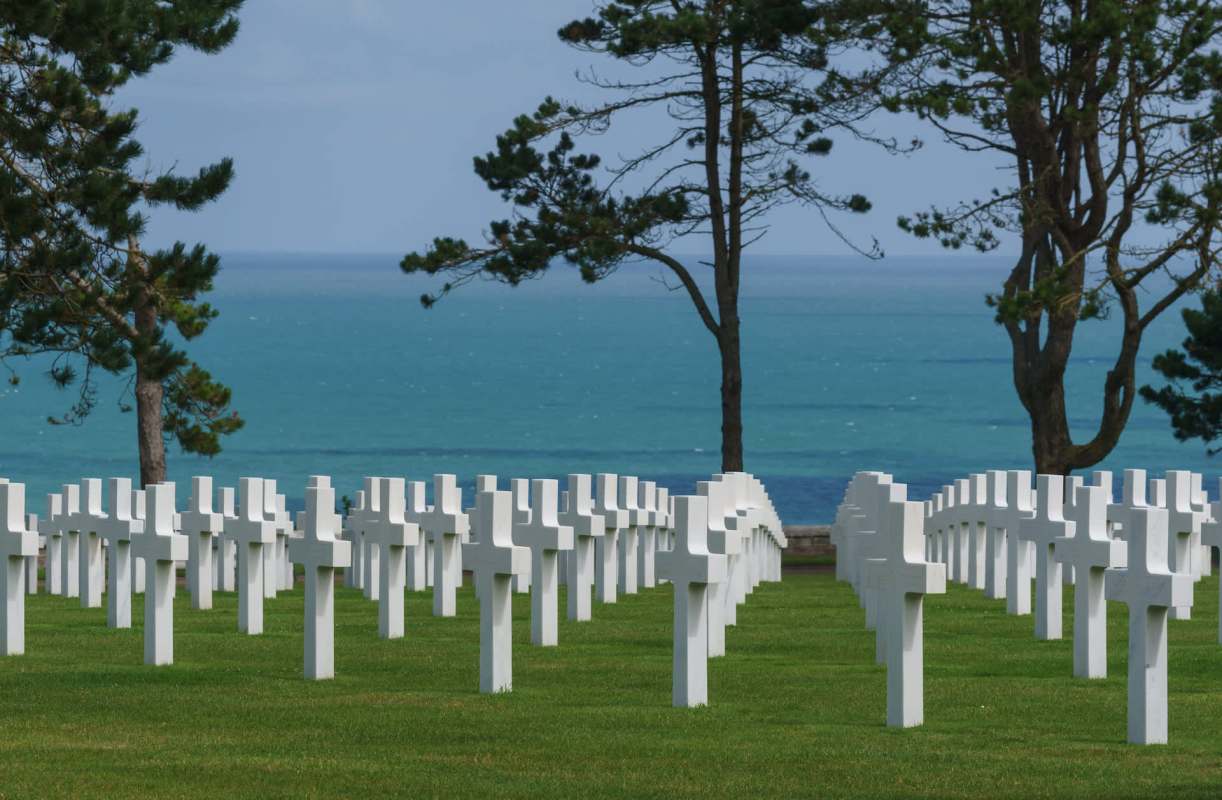
Coastal erosion has threatened the future of a historic English graveyard, and authorities are trying to figure out how to save it.
What's happening?
St. Mary the Virgin Church, built in the 15th century in the coastal town of Happisburgh, is home to a cemetery that commemorates a well-known shipwreck.
But as the BBC reported, erosion has washed away parts of Happisburgh's coastline, and the church is now roughly 260 feet from a cliff's edge. Officials believe the church and cemetery could be washed away in less than 20 years.
In March 1801, the HMS Invincible wrecked while trying to leave Great Yarmouth and fight in the Battle of Copenhagen. More than 400 sailors drowned in the accident, and 119 of them are buried at St. Mary the Virgin.
Government officials have commissioned a report to look into the feasibility of relocating bodies from graveyards that could be lost to the sea, and St. Mary the Virgin is being viewed as a pilot project of sorts.
"We are working with the local community to identify possible solutions," Councillor Harry Blathwayt told the BBC. "We need to get ready for the future. It is not something we would wish to be surprised by."
TCD Picks » Quince Spotlight
💡These best-sellers from Quince deliver affordable, sustainable luxury for all




Why is coastal erosion important?
Shorelines can erode because of natural factors, like rising sea levels and storms, and also from human activities, such as construction and urban sprawl.
But human activity has also increased the likelihood of natural coastal erosion.
The pollution that traps heat in our atmosphere has caused global temperatures to increase. Those warmer temperatures have melted glaciers and forced ocean water to expand, causing the sea levels to rise. Warmer weather also increases the frequency and severity of extreme weather events, such as the storms that cause beaches to erode.
Over the last century, beaches in Louisiana, South Carolina, Texas, and Virginia have lost more than two meters of shoreline per year, according to the U.S. Geological Survey, and researchers expect the problem to get worse as the planet continues to warm.
|
Do you think our power grid needs to be upgraded? Click your choice to see results and speak your mind. |
 Definitely 👍
 What's being done about coastal erosion?
Without a fix, experts worry that coastal erosion could wash away not just churches or graveyards, but also homes and entire communities.
But scientists are working on the problem and have discovered encouraging early results.
A team from Northwestern University found a way to solidify sandy soil near coastlines by applying a mild electric current, turning land that could otherwise wash away into a cement-like substance.

Join our free newsletter for good news and useful tips, and don't miss this cool list of easy ways to help yourself while helping the planet.