


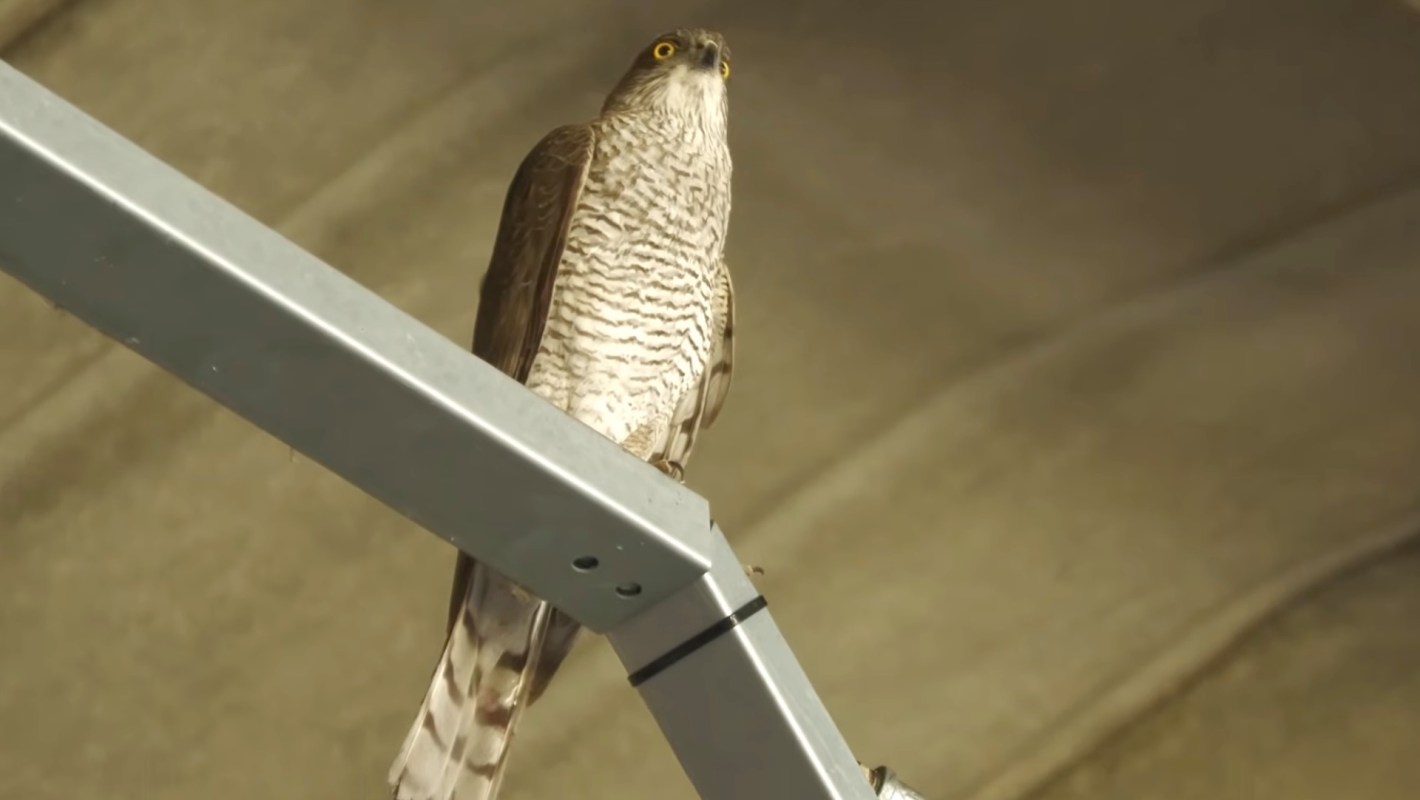
Staff at an ambulance depot faced an unusual animal emergency, one that required help from wildlife rescuers.
Footage shared by Wildlife Aid shows a female sparrowhawk getting trapped in the depot after a chase involving a pigeon.
What happened?
In the caption of the YouTube video sharing the rescue, Wildlife Aid Foundation (@wildlifeaid) posed the question: "Who do the emergency services call when they need help?"
Calls involving wild animals are more often linked to gardens, roadsides, or parks than to an emergency vehicle depot. Wildlife Aid said that "on arrival, the rescue did not go to plan." Rescuers explained in the video that before they could even attempt a rescue, the sparrowhawk flew into a window.
The bird was OK, but they brought her in for a checkup. They were eventually able to release her back into the wild, to give her "the best chance possible."
When wild animals become stressed and trapped in busy human environments, trained wildlife responders are the people called in to manage the situation.
TCD Picks » Quince Spotlight
💡These best-sellers from Quince deliver affordable, sustainable luxury for all




Why does it matter?
Wild animals are constantly navigating built environments that can confuse, trap, or injure them. Birds of prey such as sparrowhawks are skilled hunters, but a fast chase into a depot or warehouse can quickly become dangerous for both the animal and the people nearby.
Emergency workers need to stay focused on public safety, and wildlife specialists help ensure animal emergencies do not become larger disruptions. Quick intervention can also improve the chances that a trapped animal is released safely and returned to the wild.
What are people saying?
"I wish every nation and state around the world had a Wildlife Aid like you!" one commenter wrote.
"Always brings a tear to my eye to watch them fly free, off into the wild blue yonder," another added. "It's heart-warming. Thank you for all you do."
"Thank you for rescuing and helping all the wildlife," said one more.
Wildlife responders are often the people communities rely on when nature and city life collide. To continue their work, the organization issued a fundraising appeal in the caption: "If you'd like to support our work, visit our website to make a donation!"

Get TCD's free newsletters for easy tips, smart advice, and a chance to earn $5,000 toward home upgrades. To see more stories like this one, change your Google preferences here.







