


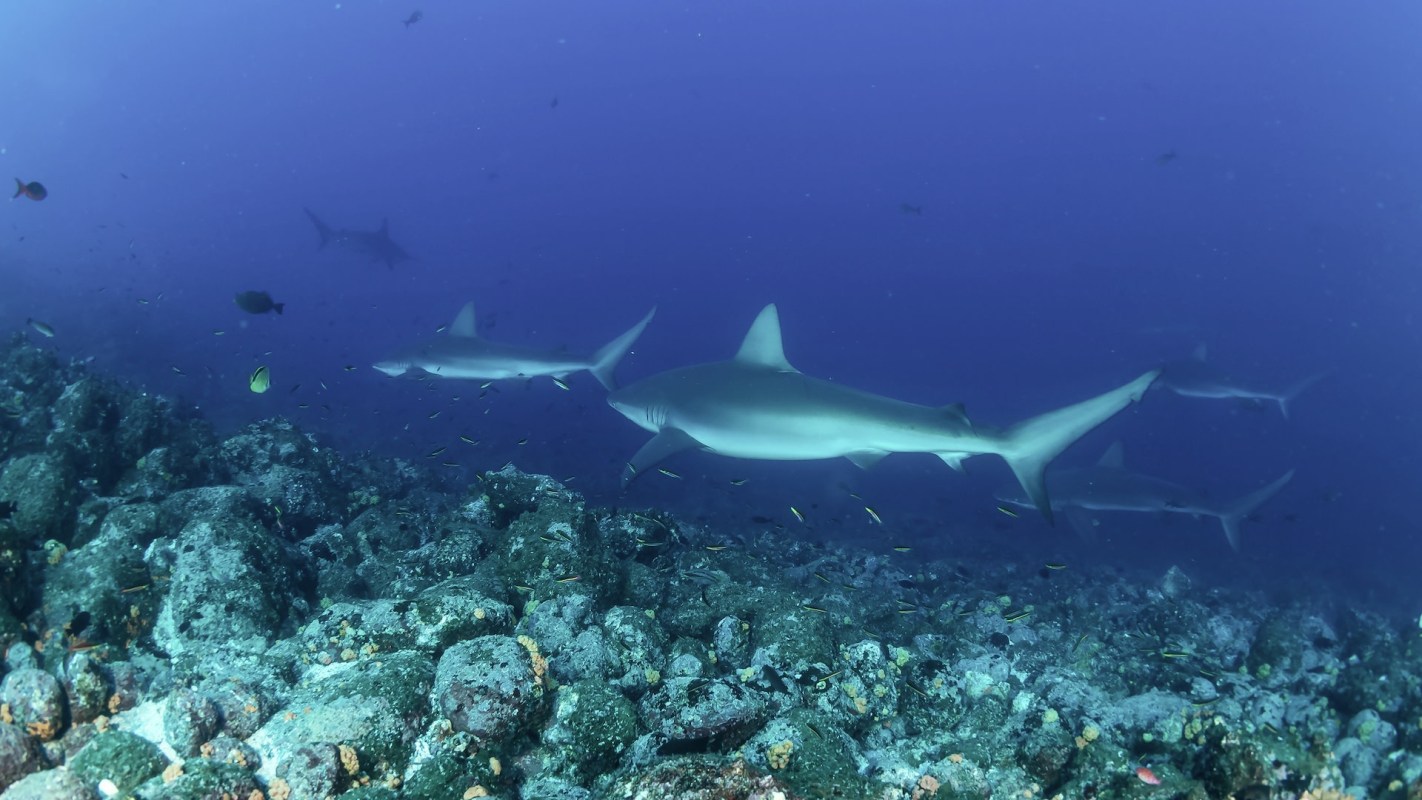
An incredible new study examining shark and predatory fish populations in the Eastern Tropical Pacific shines a light on what the ocean ought to look like at its healthiest, according to an article by the National Geographic Society that was shared by Phys.org.
The study surveyed remote marine protected areas such as the Galápagos, Malpelo, Clipperton, and Revillagigedo islands. It also looked at islands that were closer to coasts.
It found that shark populations were much higher in the most remote and well-protected areas. Meanwhile, the more accessible and coastal marine protected areas, which allow fishing, showed signs of depletion.
"The oceanic islands of the Eastern Tropical Pacific represent a window into the past, where sharks and large predatory fishes are the norm and not the exception," said senior author Dr. Pelayo Salinas-de-León, the principal investigator at the Charles Darwin Foundation. "These areas provide a glimpse of what a healthy ocean looks like."
The rationale of marine protected areas is that they should preserve the populations of fish and other marine life. They should also help protect marine ecosystems. With enough protected areas and strong enough protections, the stable populations in these areas could replenish fishing grounds elsewhere in the ocean.
This would help ensure that oceans can keep providing food sources and global economic prosperity in the long term.
According to The Nature Conservancy, oceans also provide 50% of our oxygen supply. Their habitats can also absorb waves' energy during extreme weather events and keep coastal communities safer.
This study clearly showed that current protections on many nearby marine protected areas are simply not sufficient. Protections must be strengthened to maintain populations within the marine protected areas and help support the rest of the ocean. By allowing fishing in these areas, regulators are undermining their purpose.
"We only have five years left to achieve the global goal of protecting 30% of the ocean by 2030, with research showing we must establish 300 large, remote MPAs and 190,000 smaller, coastal MPAs to achieve the target," said study author Enric Sala, National Geographic Explorer in Residence and founder of Pristine Seas. "The success of the remote island MPAs of the Eastern Pacific Ocean serve as inspiration to us all."
|
Do you think America does a good job of protecting its natural beauty? Click your choice to see results and speak your mind. |
 Definitely 👍
Get TCD's free newsletters for easy tips to save more, waste less, and make smarter choices — and earn up to $5,000 toward clean upgrades in TCD's exclusive Rewards Club.
TCD Picks » Quince Spotlight
💡These best-sellers from Quince deliver affordable, sustainable luxury for all




Cool Picks






