


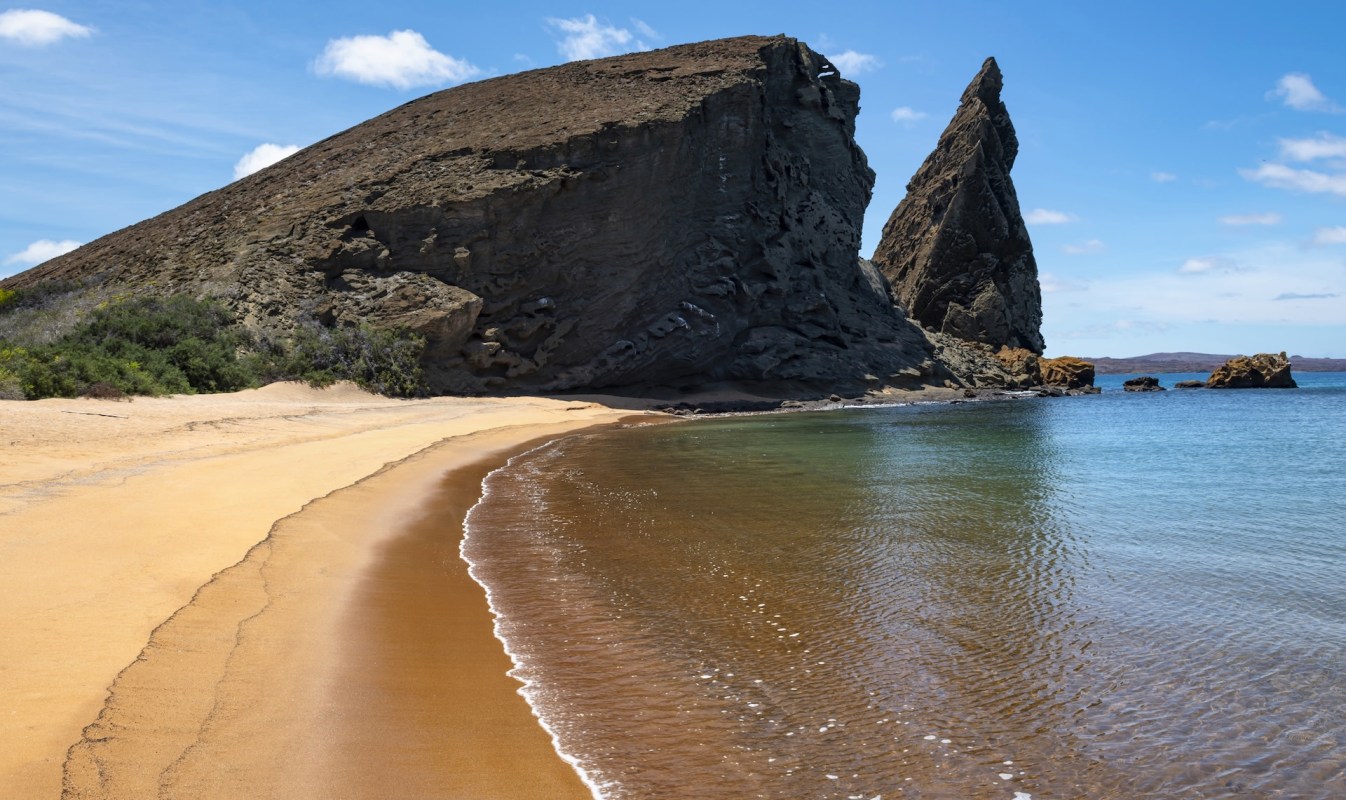
Marine protected areas exist to preserve ocean species endangered by human activity. However, the nature of the ocean is that it is all interconnected, without barriers or borders. Into these freely moving waters come microplastics, pervasive pollutants with no expiration date and no easy solution. Oceanographic Magazine detailed how these tiny particles threaten the delicate ecosystem of the Galapagos Islands and other precious marine preserves.
What's happening?
Galapagos turtle conservationist Juan Pablo Muñoz-Pérez found these particles in the bodies of dead turtles and among beach sand. Concerned, he reached out to the Galapagos Conservation Trust in 2018.
The trust worked to document the extent of microplastic pollution on the islands.
"The problem with microplastics in the water is that they do not respect the boundaries of protected areas, and they are available for any mouth in the ocean," said Ceri Lewis, Exeter University Professor and one of the experts contacted by the trust, per Oceanographic Magazine.
Why is microplastic pollution important?
Microplastics, tiny fragments of plastic, don't decay in nature for decades or centuries. Once in the environment, they contaminate water and food sources, affecting not only wildlife but also humans who eat contaminated seafood.
And even plastic-laden seafood is threatened as ecosystems fall out of balance. The more species are threatened by pollution, the more those we like to eat are affected, with populations diminishing worldwide.
TCD Picks » Quince Spotlight
💡These best-sellers from Quince deliver affordable, sustainable luxury for all




Meanwhile, fragile and irreplaceable biodiversity is being destroyed, never to return. Some of the organisms vanishing from our planet could have held the keys to scientific and medical discoveries. Others are a part of our history that will never reappear once lost.
What's being done about microplastics in marine protected areas?
Because microplastics flow in from outside the affected area, addressing the problem requires mapping the whole Pacific for the sources of the plastic, the routes it travels, and the places it ends up. Research partners from all over the globe participated in this project. They created a high-resolution model that located the sources of the pollution in Central and South America.
Using that data, they created cleanup programs, barriers to catch some of the worst contaminants, and outreach campaigns.
But these are only partial solutions. "Ultimately, we need the whole system to change. We need to totally change our relationship with plastic. Because the problem doesn't stay locally," said Lewis. "It's being transported across oceans. You have to go back up to where it's coming from and stop it at source."
|
Do you think America does a good job of protecting its natural beauty? Click your choice to see results and speak your mind. |
 Definitely 👍
Join our free newsletter for good news and useful tips, and don't miss this cool list of easy ways to help yourself while helping the planet.







