


Being at the top of the food chain is great — until a crucial link in the chain becomes compromised.
Harmful algae blooming off the coasts of California have caused researchers concern after discovering their production of domoic acid, an intense neurotoxin.
What's happening?
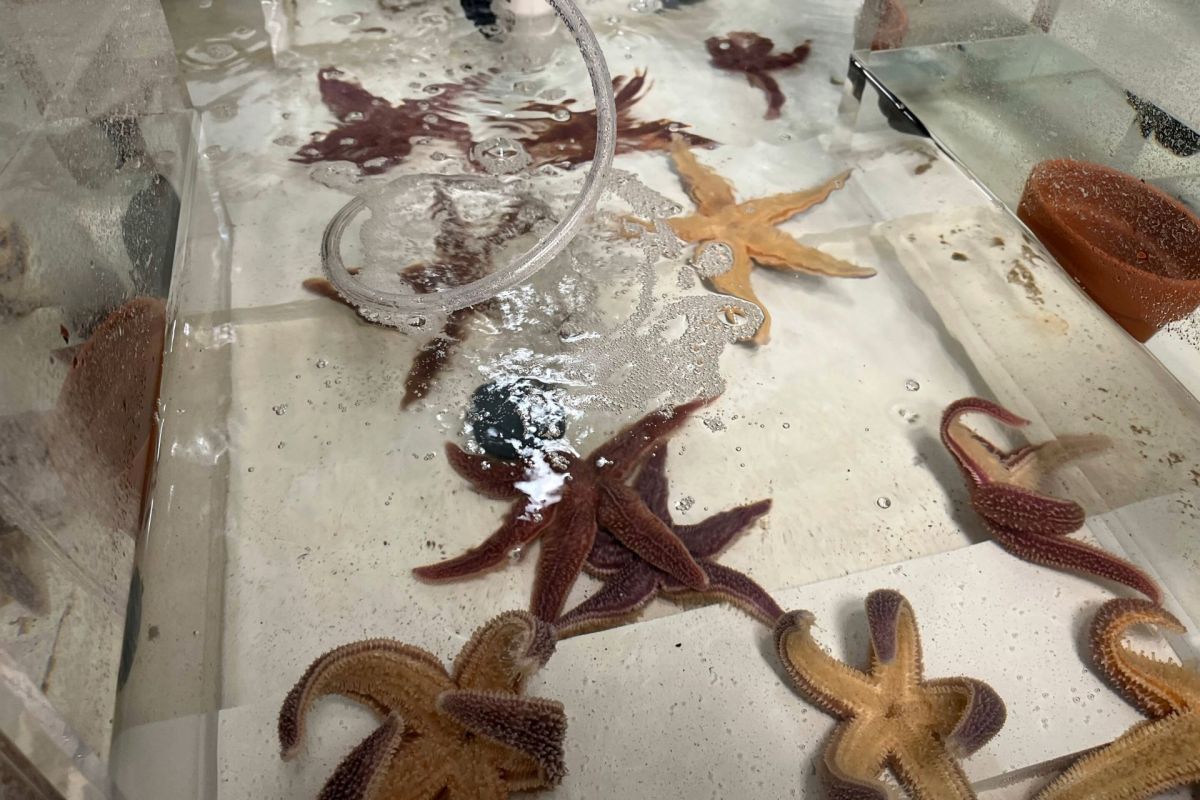
Scientists at the Bigelow Laboratory for Ocean Sciences found worrying amounts of DA in invertebrates, especially focused on sea stars. After testing starfish in their facilities with kainic acid, similar to DA in structure, the team discovered that they had an immediate, negative response.
Per Phys.org, "The vast majority lost the ability to right themselves when flipped on their backs, and many had deflated arms."
While they did eventually regain bodily function, the researchers believed that this was a crucial, albeit concerning, step to understanding the ecological consequences of DA.
Why is this important?
Since starfish are a keystone species, they are crucial to many marine ecosystems as both predator and prey. They consume mollusks and bivalves, as stated by the U.S. National Park Service, and are consumed by lobsters, crabs, and bottom-feeding fish.
"We have seen substantial declines in sea stars in the past decade attributed to changes in mussel abundance and sea star wasting syndrome, but this work suggests that harmful algal blooms may also be a problem for them," said Maya Groner, the senior research scientist of the study, per Phys.org.
The importance of starfish in the marine food chain makes them a pertinent subject to protect from neurotoxins like DA to preserve the animals and the environment around them.
If left unprotected, both the oceanic ecosystem and the human populations consuming the animals within would be in danger.
Though "the impacts of repetitive low-level domoic acid exposure are currently unknown," there is a concern for "domoic acid producing diatom blooms … increasing in frequency world wide, posing an increasing threat to wildlife and human health," per the National Library of Medicine.
TCD Picks » Quince Spotlight
💡These best-sellers from Quince deliver affordable, sustainable luxury for all




|
How often do you worry about the quality of your drinking water? Click your choice to see results and speak your mind. |
 Never 👎
 What's being done about this?
Researchers are working to gauge how long-term consumption of species with small amounts of DA in their systems can affect human health.
One such study published in the National Center for Biotechnology Information found "that DA exposure primarily affects the hippocampal regions of the brain and is associated with seizures and the disruption of cognitive processes … establish[ing] that DA is a dose-dependent emetic that produces clinical and neuropathological changes consistent with excitotoxicity."
A key way to mitigate the increase of oceanic toxins like DA is to build clean habits and choose clean alternatives in regular life. Whether using natural cleaning products, controlling pests without chemicals, or purchasing clean cosmetics, each of these actions decreases the planet's contribution to global heating.
Reducing the same heating that contributes to algal blooms, which can accumulate neurotoxins like DA, is critical.

Join our free newsletter for good news and useful tips, and don't miss this cool list of easy ways to help yourself while helping the planet.
Cool Picks






