


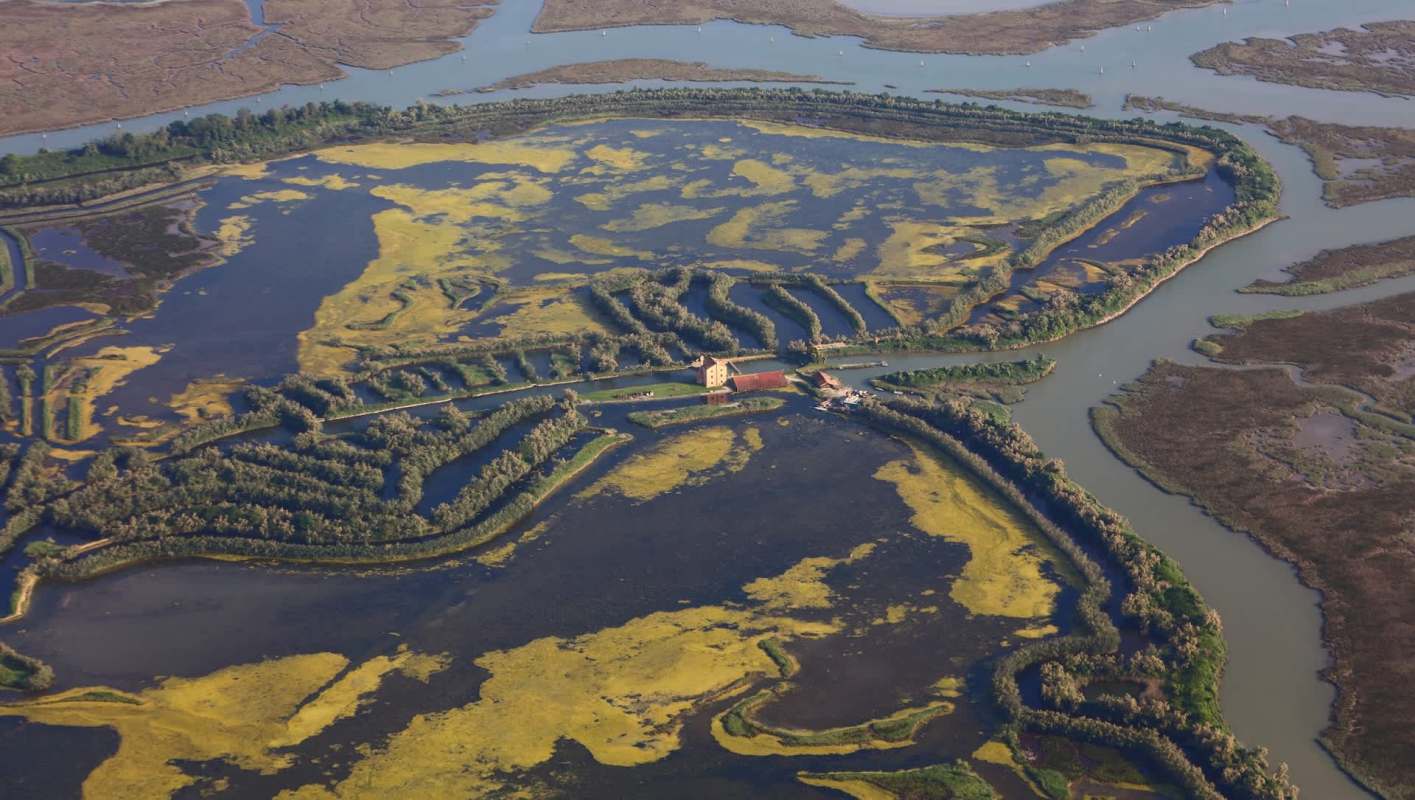
"Healthy ecosystems allow for healthy people." That's what ecologist Alice Stocco said in a recent Grist article about how sea lavender protects wetlands.
According to Grist, researchers studying the Venetian lagoon found that sea lavender plays a vital role in the local ecosystem.
While sea lavender is not the same plant as the one it shares a name with, it does have a similar appearance. The purple flowers attract pollinators just the same, only it happens in wetlands rather than inland fields, Grist shared.
Within its habitat, sea lavender acts as an "anchor" in the waterlogged soil.
As a result, the plant helps minimize erosion and habitat loss, creating a more hospitable environment for other species, per Grist.
Protecting wetlands — and, by extension, sea lavender — helps a variety of other species, boosting biodiversity.
It also provides a barrier against storm surges, the article shared. On top of that, wetlands play an important role in absorbing carbon dioxide, a planet-warming gas.
"[Wetland] conservation also protects many other ecosystem services, which are vitally important from a local to global scale," explained Tegan Blount, a geoscientist at the University of Padova and lead author of the research.
Some of those other "services" include commercial fishing, recreation, floodwater regulation, and water filtration, according to NOAA Fisheries. Researchers have also found that wetlands can help mitigate drought and support global food production.
Luckily, sea lavender species are found all over the world — as are wetlands and marshes. According to the San Diego Zoo Wildlife Alliance, there are species native to Europe, the Mediterranean, and Central Asia, as well as three native to North America.
TCD Picks » Quince Spotlight
💡These best-sellers from Quince deliver affordable, sustainable luxury for all




|
Which of these savings plans for rooftop solar panels would be most appealing for you?
Click your choice to see results and earn rewards to spend on home upgrades. |
 Save $1,000 this year 💸
 Preserving the plant's habitat is also less costly than building a sea wall to protect local communities. Because, unlike a manufactured wall, it can adapt to rising sea levels.
"These systems can keep up pace with sea level rise, as long as they can migrate backwards," shared Emily Landis of The Nature Conservancy, per Grist.

Get TCD's free newsletters for easy tips to save more, waste less, and make smarter choices — and earn up to $5,000 toward clean upgrades in TCD's exclusive Rewards Club.
Cool Picks






