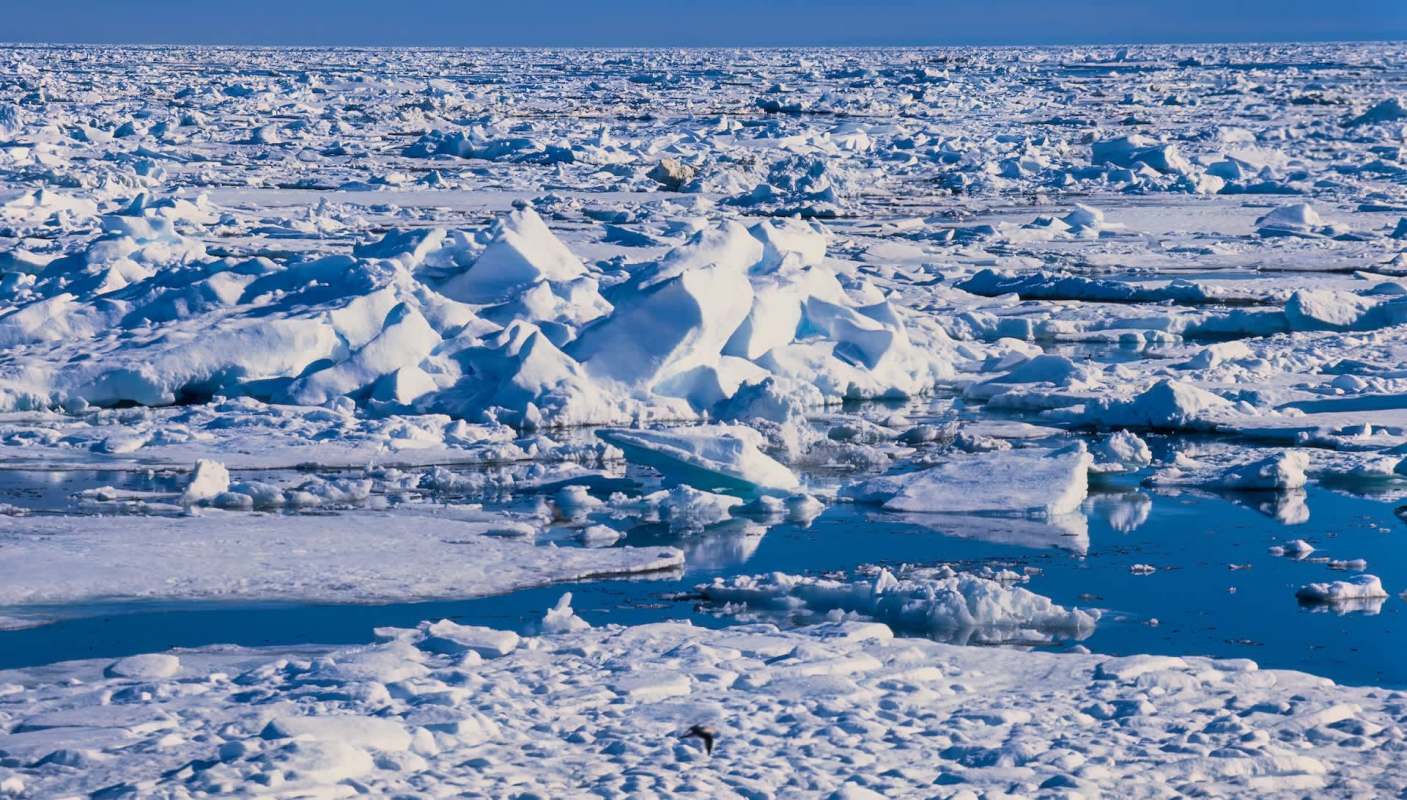
It's one thing to study a phenomenon from a distant laboratory; it's quite another to see it up close. A climate scientist who toured the remotest parts of Alaska gained a fresh and alarming perspective on the impact of global human activity on Arctic Sea ice.
What's happening?
In a piece featured in The Conversation, Alexandra Jahn, a climate scientist at the University of Colorado, Boulder, reflected on her trip to Utqiagvik. The Alaskan town is the northernmost settlement in the United States and home to 4,622 residents, of whom 63% are Iñupiat Iñupiaq. Subsistence fishing and hunting remain an essential part of life for the community, and the effects of rising global temperatures are threatening them.
Jahn noted that the loss of sea ice is restricting travel and accelerating coastal erosion, while thawing permafrost is causing roads and buildings to sink. Another lesser-known impact on locals is the age of the sea ice. In bygone years, hunters could cut a block of multiyear sea ice for drinking water on more extended hunts. Now, most of the sea ice is less than a year old, and this thinner, salty ice is no good.
The Arctic may experience ice-free periods in the summer within decades and could be lost entirely by the end of the century if decisive action isn't taken.
Why is sea ice so important?
The rapid loss of sea ice is a direct consequence of the planet-heating pollution caused by human activity. Late-summer sea ice is half of what it was in 1978. In a vicious cycle, as sea ice is lost, the bright, heat-reflecting surface is also lost, thus accelerating the problem. Worse still, warmer oceans are the perfect catalyst for devastating extreme weather events, made more intense by the rise in temperature.
The plight of the community at Utqiagvik shows another side of the issue, where those who have the least impact on creating harmful pollution suffer the most. According to The Conversation, the average American's consumption habits result in the equivalent of a large hotel room's worth of sea ice being lost. Of course, the ultra-wealthy are on another level entirely.
TCD Picks » Quince Spotlight
💡These best-sellers from Quince deliver affordable, sustainable luxury for all




What's being done about sea ice loss?
There have been some experiments into direct intervention to preserve sea ice, but the science behind those drastic measures is still unproven. It may be decades before those ideas can be applied at scale, and even then, they're just buying time for what has to be done. It's never been more important to stay on top of climate issues.
The ultimate priority is to drastically reduce harmful pollution by moving toward clean, renewable energy. It's equally important to have productive conversations with loved ones and to encourage others to make informed voting decisions.
|
Do you think America does a good job of protecting its natural beauty? Click your choice to see results and speak your mind. |
 Definitely 👍
Join our free newsletter for good news and useful tips, and don't miss this cool list of easy ways to help yourself while helping the planet.