


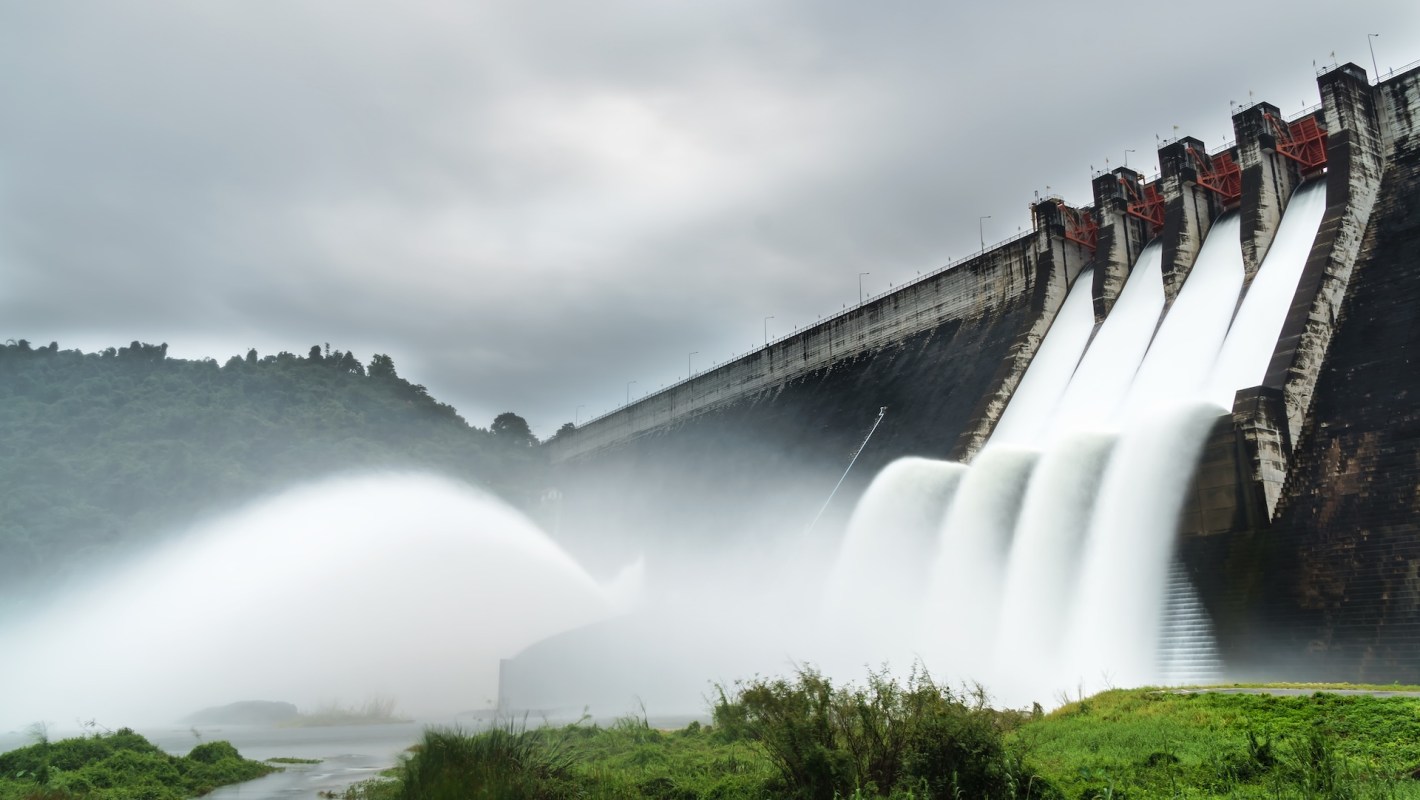
Amid record-breaking rainfall in Southern California in November, Santa Barbara County was the hardest hit, according to local outlet Edhat, raising concerns about reservoir capacity.
What's happening?
A powerful series of storms began battering the region on Nov. 13, The Columbian reported, unleashing unprecedented rainfall totals.
The Los Angeles Times indicated that across Southern California, Santa Barbara County bore the brunt of the heavy rains. On Nov. 17, the Santa Barbara Independent (@sbindependent) shared footage illustrating the shocking severity of street flooding.
Citing data compiled by the Santa Barbara County Flood Control District (SBCFC), published on the same day, Edhat reported that the area "experienced rainfall 400% to 500% above normal."
Edhat noted that the City of Santa Barbara recorded the "wettest water-year start on record," referring to an aspect of California's water management in which water resources are tracked from Oct. 1 to Sept. 30, placing the state in water-year 2026.
Recent rainfall was 400% to 500% above November averages, just six weeks into water-year 2026.
"Rainfall in the county reached 458% of the normal-to-date percentage, the [SBCFC] summary revealed," Edhat observed.
To date, Santa Barbara's rainfall totals have been equivalent to 44% of the annual average, straining reservoirs.
The Jameson Reservoir was at just over 80% capacity, but the Cachuma Reservoir was at capacity and "and subject to spilling at an elevation of 750 feet," Edhat added.
Why is this concerning?
An unusually intense atmospheric river — which the National Oceanic and Atmospheric Administration (NOAA) likened to "rivers in the sky" — was in play, and resulting heavy rains caused at least seven deaths in the region.
TCD Picks » Quince Spotlight
💡These best-sellers from Quince deliver affordable, sustainable luxury for all




|
How concerned are you about the plastic waste in our oceans? Click your choice to see results and speak your mind. |
 Extremely 😫
 Atmospheric rivers "are a key feature in the global water cycle and are closely tied to both water supply and flood risks — particularly in the western United States," NOAA explained.
As a phenomenon, atmospheric rivers are not new, but they're becoming more common and stronger due to extreme weather. As temperatures rise, volatile weather patterns like atmospheric rivers are deeply affected.
The cycle of heat and evaporation, driven by higher air temperatures and sea surface temperatures, affects weather patterns in the same way steroids affect athletes.
Storms, wildfires, floods, and heatwaves are established weather patterns, but in these conditions, they strike harder, occur more often, are far more destructive and costly, and have deadlier consequences.
As extreme weather worsens, atmospheric rivers increase the risk of floods and mudslides, according to USGS data.
What's being done about it?
Understanding key climate issues is crucial, as extreme weather is a global problem.
Officials in Santa Barbara County prepared for storm impacts and opened warming centers for unhoused residents.
The City of Santa Barbara has been "actively planning for increased flooding and shoreline erosion" under a 2021 adaptation plan, according to the "Sustainability" section of its website.
Santa Barbara County has also started preparing for climate impacts, assessing vulnerability, educating residents, and managing development sites to ensure resiliency.

💰Get TCD's free newsletters for easy tips to save more, waste less, and make smarter choices — and earn up to $5,000 toward clean upgrades in TCD's exclusive Rewards Club.
Cool Picks






