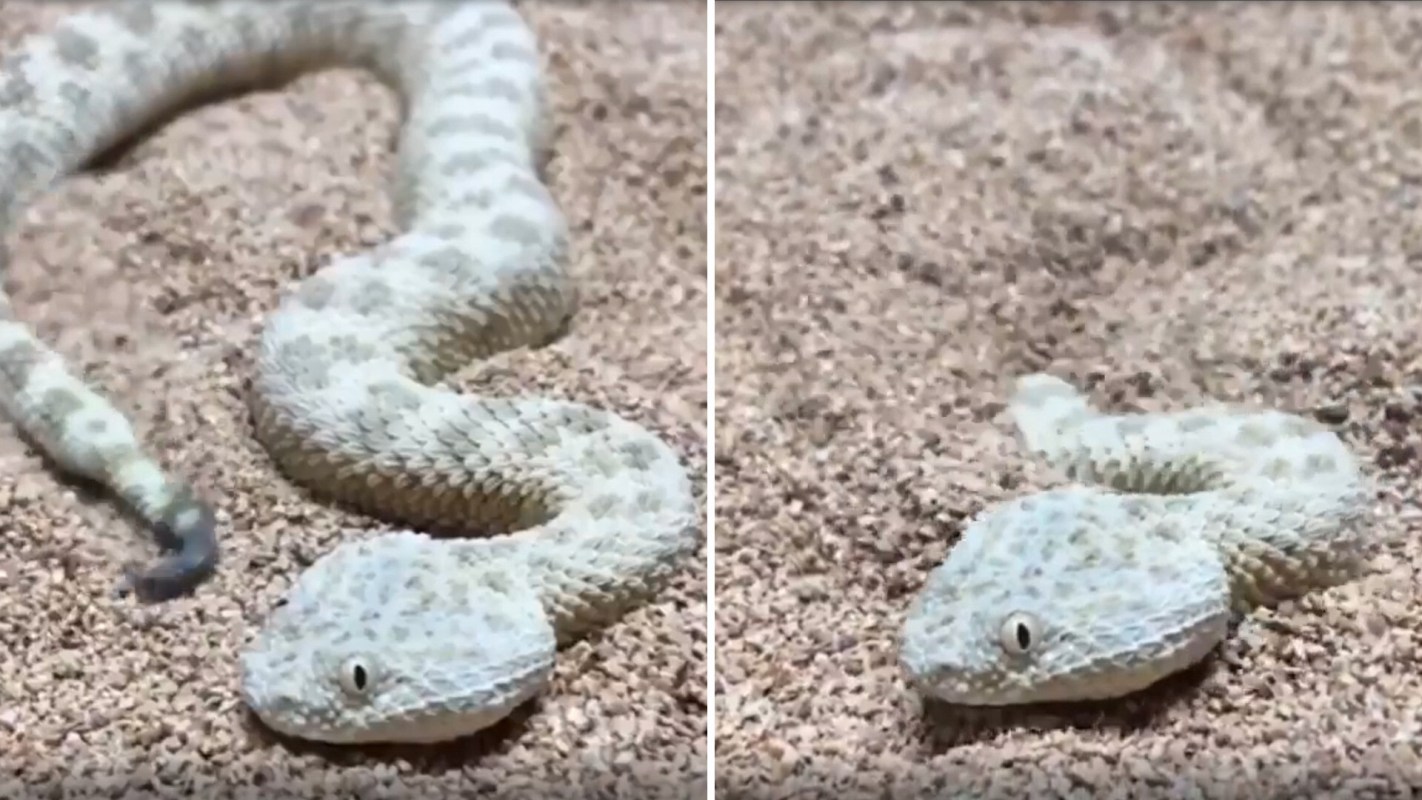
A clip showing a snake disappearing beneath the desert surface in a matter of seconds has mesmerized viewers online.
In the short video posted to a Reddit forum, what is identified as a Saharan sand viper wriggles its body in quick, fluid motions and sinks almost completely out of sight beneath the sand.
(Click here to watch the embedded video if it doesn't appear.)
The Saharan sand viper's rapid burrowing is a natural survival tactic. But for travelers, outdoor workers, and anyone moving through desert terrain, the footage also highlights just how quickly a human-wildlife encounter can unfold.
In desert regions, tourism, off-road driving, development, and other land-use changes can push people deeper into fragile habitats. At the same time, rising global temperatures can put additional stress on already harsh environments, affecting when and where reptiles rest, hunt, and seek shelter. When animals are startled, stepped on, or cornered, defensive bites can become more likely.
A Saharan sand viper burying itself is not doing anything aggressive or unusual — it is doing exactly what it evolved to do in one of the hottest places on Earth. But as more people move through these landscapes, the chances of accidental contact increase.
TCD Picks » EDF Spotlight
💡EDF's Vital Signs newsletter delivers stories about game-changing solutions close to home and around the world



There is also a broader ecological concern. Snakes play an important role in desert food webs, helping control prey populations and serving as prey themselves for larger animals. If fear leads to more snakes being killed on sight, or if habitat damage continues to erode desert ecosystems, those effects can ripple outward.
Simply put, the best response is coexistence, not panic.
Video viewers remarked on the snake's ability to quickly vanish from sight.
"Every time I see this motion I only think about how comfortable it must feel for the snake. Yes, I am projecting," joked one user.
TCD Picks » Quince Spotlight
💡These best-sellers from Quince deliver affordable, sustainable luxury for all




"Snakes always look like their body had their own mind and the head is just for decoration," another said.

Get TCD's free newsletters for easy tips, smart advice, and a chance to earn $5,000 toward home upgrades. To see more stories like this one, change your Google preferences here.
Cool Picks