


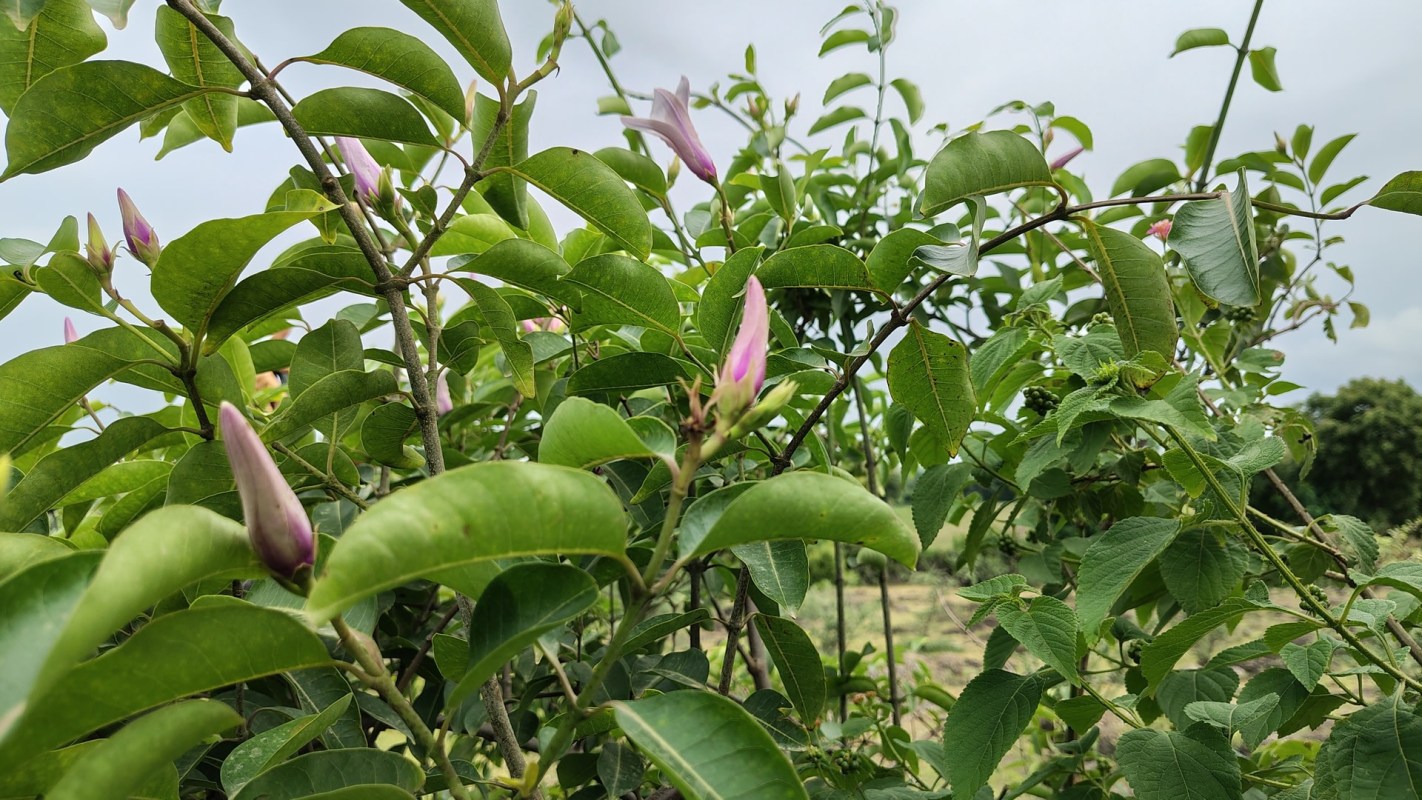
For the first time in more than 50 years, Australian officials in one Queensland town are battling the return of a destructive invasive plant. But this aggressive plant doesn't just outcompete native species and overrun entire landscapes — it's also highly toxic, posing a deadly threat to grazing livestock.
What's happening?
Rubber vine was recently discovered in Lockyer Valley, Queensland — the first confirmed sighting of the invasive plant since 1971.
"This is quite concerning as rubber vine is not normally found in the Lockyer Valley, so we are taking this discovery very seriously," Pest Management Portfolio Councillor Cheryl Steinhardt said in a press release.
The invasive, destructive plant appears as a climbing vine winding through trees or as a messy shrub about three to six feet tall. It has dark green, shiny leaves, and its seed pods usually grow in pairs. Rubber vine's flowers are big and eye-catching, featuring five petals that are white or light purple.
Officials note that rubber vine is listed as a Weed of National Significance because of its ability to spread rapidly and dominate landscapes. It is also poisonous to livestock — and people — if ingested.
"We're hoping this is a small infestation only and we can get on top of it, and it doesn't take hold," Steinhardt added. "However, due to the invasive nature of rubber vine, it could have already spread to surrounding areas or further afield."
Why is a rubber vine infestation concerning?
Invasive plants like rubber vine can severely damage local ecosystems and threaten biodiversity. These stubborn, fast-spreading species often outcompete native species for essential resources like sunlight, water, and nutrients. Over time, this competition can cause native plant populations to decline — or disappear altogether.
Rubber vine produces a large number of seeds that can be carried long distances by wind, water, or animals. This enables the plant to quickly take over new areas — especially along rivers and creeks. Once established, the plant forms dense, tangled growth that smothers native vegetation, blocks sunlight, and destroys wildlife habitats.
In fact, Australia's Centre for Invasive Species Solutions calls rubber vine "one of the worst weeds in Australia because of its invasiveness, potential for spread, and economic and environmental impacts."
The plant is also toxic to grazing livestock, including cattle, sheep, goats, and horses. When ingested, even small amounts can cause heart failure or sudden death.
TCD Picks » Quince Spotlight
💡These best-sellers from Quince deliver affordable, sustainable luxury for all




|
Should the government be allowed to ban certain plants? Click your choice to see results and speak your mind. |
 Definitely 👍
 As with many invasive plant species, controlling rubber vine is difficult and costly, often requiring repeated professional treatments and manual removal. That's why early detection, rapid response, and community reporting are essential for preventing further spread and protecting local ecosystems.
What's being done about this rubber vine invasion?
Lockyer Valley Regional Council officials are working with Biosecurity Queensland to manage the infestation. Officials are notifying nearby property owners about the discovery and asking residents to report any potential sightings. Outdoor workers have also been advised to keep an eye out for the weed, especially in areas where it's most likely to grow.
"Rubber vine normally likes moisture, so the best places to look are near dams or waterways or along drainage lines," Steinhardt said in the release.
Any local sightings of rubber vine can be reported to the Lockyer Valley Pest Management Team.
No matter where you live, it's a good idea to remove invasive plants from your yard and landscape with native species.
Native species are naturally adapted to local climates and soils, which reduces the need for fertilizers, pesticides, and excess watering. This not only supports pollinators and native wildlife but also helps create a healthier, chemical-free environment — all while lowering your water bill.
To find plants native to your region, the Xerces Society for Invertebrate Conservation keeps a detailed directory.

Join our free newsletter for good news and useful tips, and don't miss this cool list of easy ways to help yourself while helping the planet.
Cool Picks






