


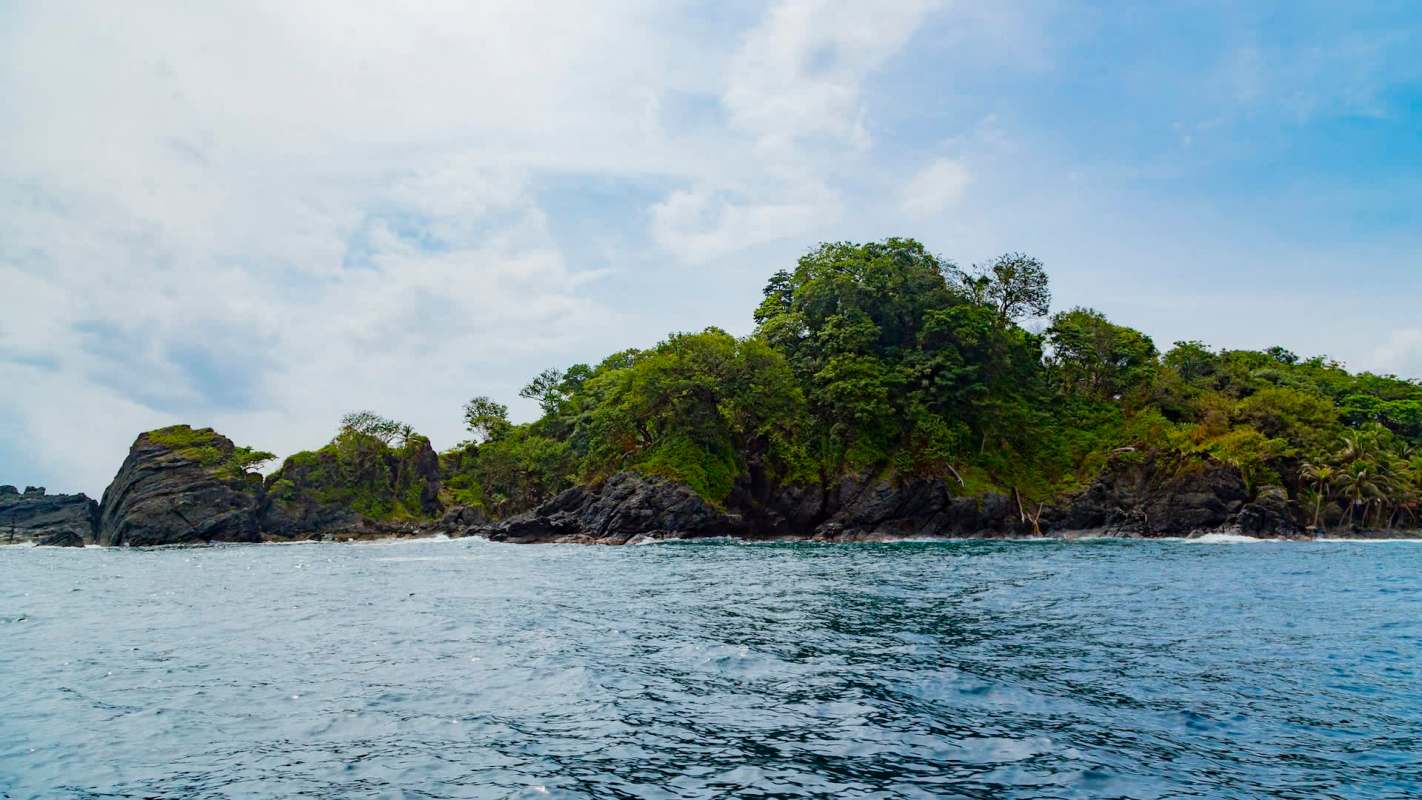
Life is changing on an archipelago off the coast of West Africa as locals fear their islands will be swallowed by the sea.
What's happening?
The Bijagós Islands are situated off Guinea-Bissau and cover 3,850 square miles. Of the 88 islands, around 20 are inhabited year-round.
Now, thousands of locals are at risk of losing their livelihoods and culture due to rising sea levels, according to Agence France-Presse (via Phys.org). The government of Guinea-Bissau estimated that the coastline is retreating by as much as 7 meters (23 feet) per year.
"Fifty years ago, the beach was very wide. Today, everything is overrun by water, and it keeps advancing," said Antonio Honoria Joao, administrative assistant and community organizer at Guinea-Bissau's Institute for Biodiversity and Protected Marine Areas.
"It wasn't like this before," added Joia Mendes Cno, a 45-year-old vegetable seller, per AFP.
Why is this important?
Since 1880, sea levels have risen by 8-9 inches globally on average, according to the National Oceanic and Atmospheric Administration, leaving coastal communities vulnerable. Across the Bijagós Archipelago, a UNESCO World Heritage Site, rising sea levels are increasing the costs of doing business and destroying infrastructure.
Adriano Carlos Souarez told AFP he had to construct a 10-meter (33-foot) barrier to protect his seaside tourist camp from water intrusion. However, powerful waves have already caused damage to the site, and he worries his house will collapse if things continue on the same trajectory.
Rising seas are also decimating natural features, such as mangroves, that would otherwise offer protection against increasingly dangerous storm surges.
In addition to serving as a line of defense against flooding, mangroves store carbon. In fact, they sequester up to four times more carbon per hectare than tropical rainforests, according to a U.S. Forest Service-led study, making them a powerful ally in regulating global temperatures.
What's being done about this?
While Joao said that a changing climate is at the heart of the problem on the islands — as rising global temperatures are causing glaciers to melt and seawater to expand as it warms — he also denounced excessive urbanization and improper waste disposal as exacerbating the situation.
TCD Picks » Quince Spotlight
💡These best-sellers from Quince deliver affordable, sustainable luxury for all




|
How worried are you about rising ocean levels? Click your choice to see results and speak your mind. |
 Very 😰
 IBAP is working to raise awareness among local communities and to identify and restore impacted sites. Elsewhere, similar initiatives are yielding positive results.
However, an anonymous member of the organization called on the Guinea-Bissau government to do more to support the thousands of inhabitants on the Bijagós Islands, per AFP.
"We receive support from some international organizations, but it is not enough," he said.

Get TCD's free newsletters for easy tips to save more, waste less, and make smarter choices — and earn up to $5,000 toward clean upgrades in TCD's exclusive Rewards Club.
Cool Picks






