


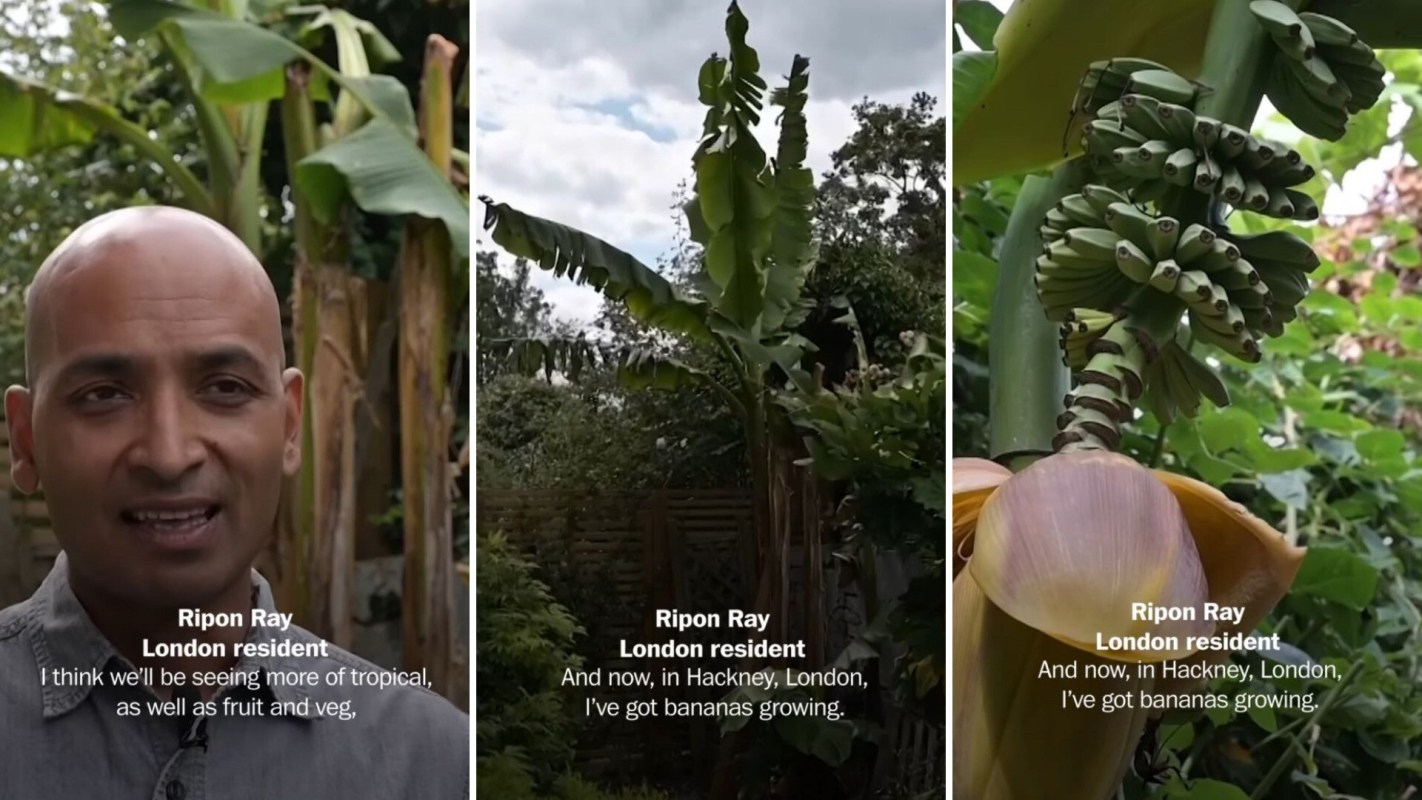
Bananas are a popular fruit worldwide, but for most of the United States and Europe, they're an imported treat. The tropical trees need warm conditions year-round to bear fruit, and the usual weather cycle in areas far from the equator includes a cold winter. However, thanks to the world's increasing temperature, London resident Ripon Ray says he's successfully growing bananas — right in his backyard.
What's happening?
Air pollution generated by humans acts like a blanket around the earth, trapping heat from the sun. Too much pollution means that the world's temperature rises dramatically. Not only does this lead to less stable climate patterns and more extreme weather events, it has also led to the hottest years on record.
An August video from the Washington Post shows the effects of that heat. According to the Post, Ray has a mature banana tree growing in the ground in his yard and producing fruit.
"I didn't think that the banana tree will actually survive, because in winter, it shrinks so much, most of the tree ends up rotting," Ray says in the video. "But for the last few years it hasn't rotted, and now the way things are going, it's going to thrive."
According to Ray, he isn't the only one growing heat-loving crops. He's also heard of a neighbor with a healthy avocado tree.
Why is it a problem to see a banana growing in London?
For fruit lovers, a wider growing range for the banana and other tropical species may seem like a good thing, but growing conditions that are ideal for one species are utterly wrong for others.
Many species need a cold winter to trigger their growth the following spring. For example, the warm winter cost Georgia almost all of its peach crop this year. The rising temperature is also disrupting the schedules of flowers and the pollinators that rely on them, leaving some of these hardworking bugs to starve — and without them, important food crops will suffer.
Scientists have found that some species are changing and adapting to the heat. However, it's likely that many will not be able to adapt quickly enough to keep up with the change. Upsetting the normal cycle of the seasons will have a dramatic effect on the entire system of food production in the affected areas of the world, as well as the natural ecosystems there.
What can we do about the heat?
The only way to stop the rising temperature is to dramatically reduce the amount of heat-trapping air pollution we produce. That means switching from gas-powered cars to electric vehicles, choosing electric appliances rather than gas, and focusing on non-polluting energy sources like solar and wind.

Join our free newsletter for cool news and cool tips that make it easy to help yourself while helping the planet.
TCD Picks » Quince Spotlight
💡These best-sellers from Quince deliver affordable, sustainable luxury for all




Cool Picks






