


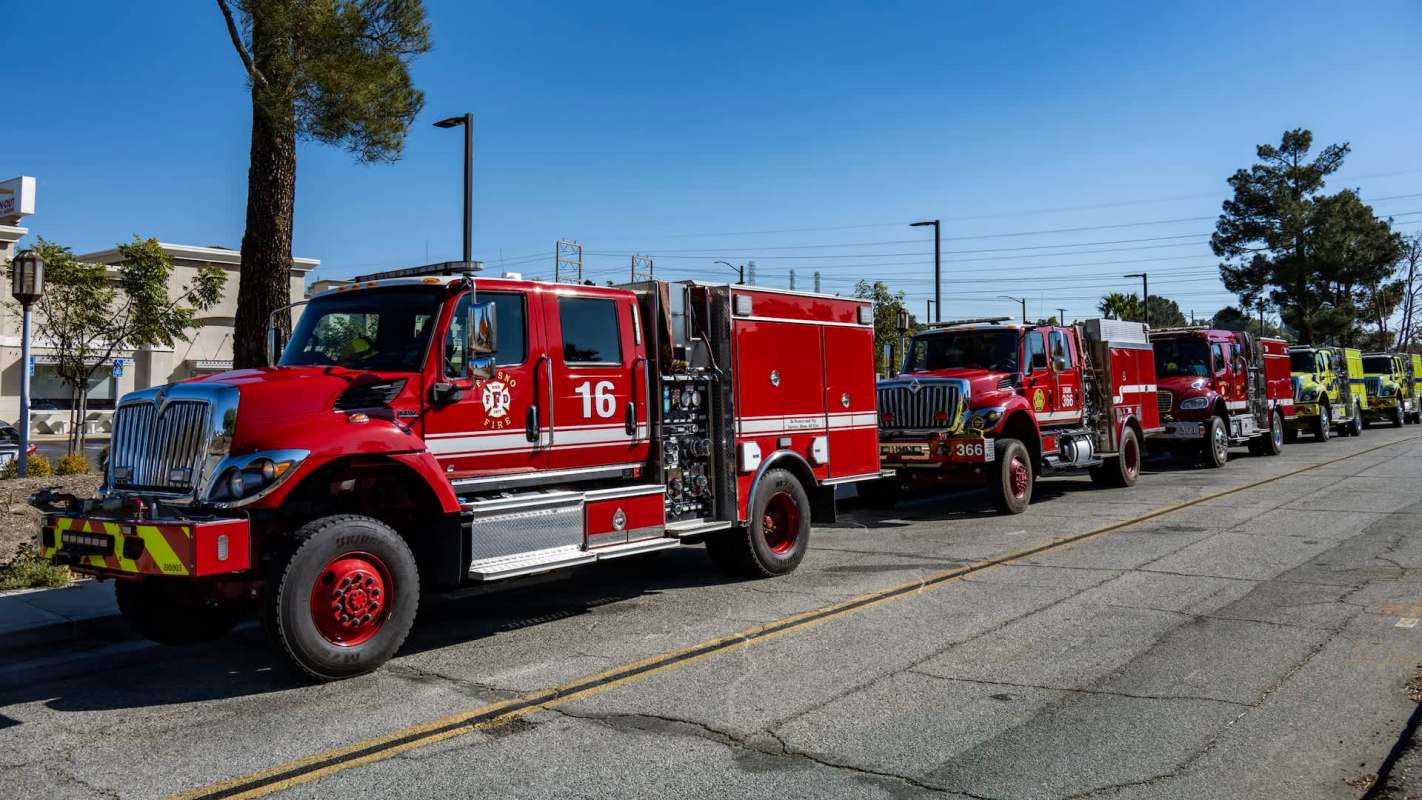
California Gov. Gavin Newsom is pre-deploying firefighters to at-risk areas ahead of adverse weather conditions, KTLA reported.
What's happening?
On Tuesday, August 19, Gov. Newsom issued a press release announcing that the California Governor's Office of Emergency Services (Cal OES) approved the pre-deployment of firefighters and firefighting resources.
Citing "elevated heat and critical fire weather conditions" anticipated across Southern California in the coming days, Newsom's office dispatched teams and equipment to Los Angeles, Kern, Ventura, Santa Barbara, and San Bernardino Counties.
Earlier that day, Newsom's office published a separate press release pre-deploying firefighters and resources to the counties in question.
With the additional resources, the Governor's Office confirmed that 32 fire engines, nine water tenders, nine bulldozers, five helicopters, nine hand crews, 13 dispatchers, and two Incident Management Teams were deployed to the five counties.
In the initial release, Newsom attributed the decision to act in advance to extreme weather conditions.
"Extreme summer weather is returning to California this week. Now is the time to check the forecasts for your area and prepare for higher temperatures and dangerous fire weather," he began.
"While the best thing we can all do is prepare now, the state is also pre-deploying resources to protect communities from catastrophic wildfire," Newsom explained.
As of Aug. 20, the National Weather Service (NWS) indicated Los Angeles was under five separate "Watches, Warnings, & Advisories:" an Extreme Heat Warning, a Gale Warning, a Heat Advisory, a Small Craft Advisory, and a Red Flag Warning.
What is a "Red Flag Warning," and why is it concerning?
The NWS has nearly 50 specific weather-related advisory levels, one of which is a Red Flag Warning.
TCD Picks » Quince Spotlight
💡These best-sellers from Quince deliver affordable, sustainable luxury for all




|
How often do you experience power outages? Click your choice to see results and speak your mind. |
 Pretty regularly 😠
 A Red Flag Warning is issued by the NWS to alert officials to "potentially dangerous fire weather conditions within the next 12 to 24 hours." They're issued when all three of the following conditions are met — low humidity, high winds, and the presence of "dry fuels" like vegetation.
Wildfires aren't weather per se, but they fall under the definition of extreme weather. Hurricanes, wildfires, floods, and extreme heat have always occurred, but extreme weather is a distinct phenomenon.
As average temperatures climb, shifting climate conditions supercharge weather patterns, making extreme weather more frequent, more violent, costlier, and deadlier. For example, Los Angeles and its surrounding areas were devastated by deadly, unseasonal wildfires in January, causing massive destruction and killing dozens.
After flash floods cratered Kerrville, Texas, in July, local meteorologist Travis Herzog explained the basics of extreme weather in a Facebook post.
"Warmer oceans release more moisture into the atmosphere, and warmer air also holds more moisture. This enhances rainfall amounts above and beyond what would happen in a cooler world with cooler oceans," Herzog wrote.
What's being done about it?
Gov. Newsom's decision to prepare in advance underscores the necessity to be aware of climate-related risks like extreme weather.
As Southern California braces for potential wildfires as Hurricane Erin approaches the East Coast, individual steps like packing a go bag can save precious time in the event of sudden evacuation orders.

Join our free newsletter for good news and useful tips, and don't miss this cool list of easy ways to help yourself while helping the planet.
Cool Picks






