


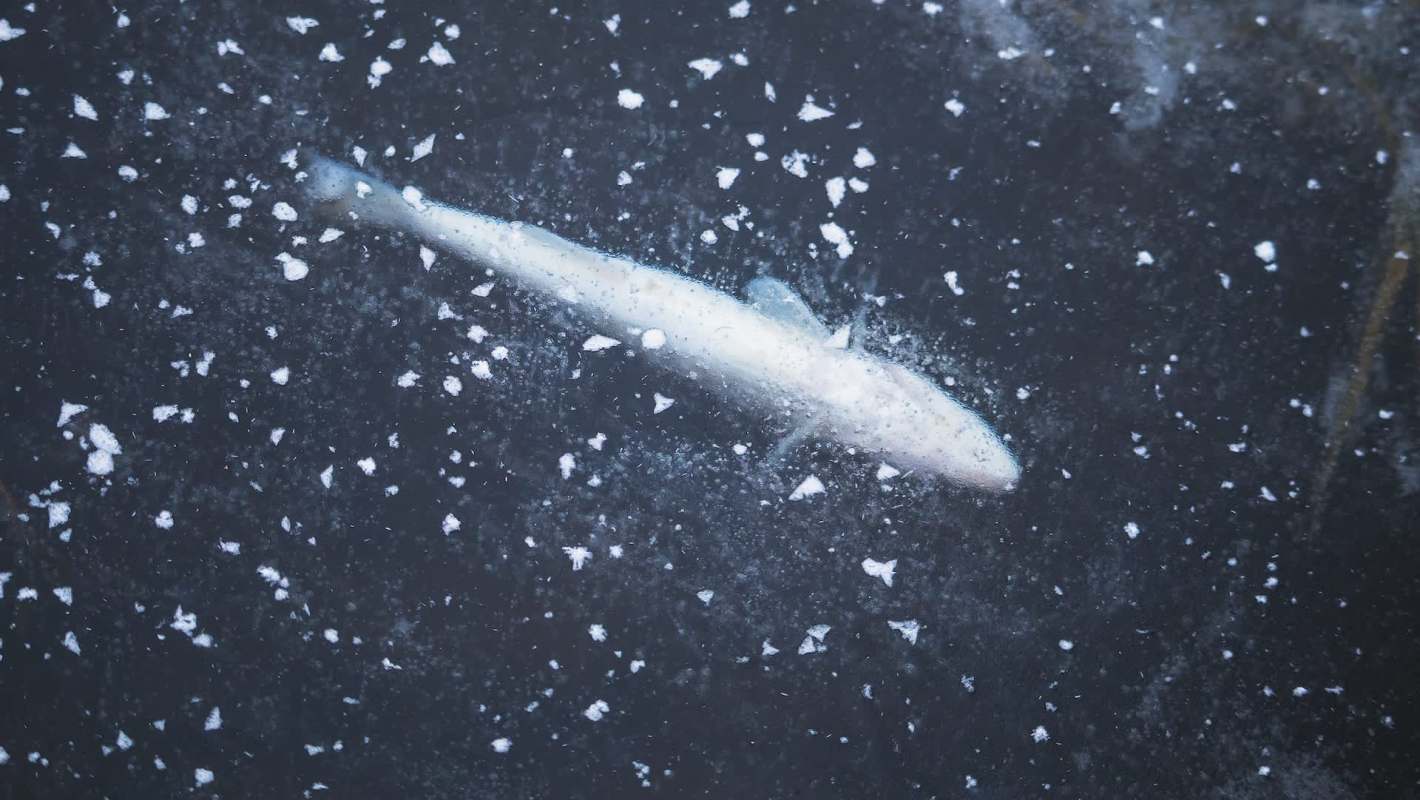
New research has indicated that melting Arctic sea ice could spell doom for the polar cod due to the ripple effects of earlier light on their seasonal habits.
What's happening?
Bjerknes Centre researchers published a study in the journal Nature Communications that found that by 2060, polar cod will face increasing challenges as conditions change in the Barents Sea and in northern sections of the Chukchi Sea and Bering Sea.
Researchers utilized computer simulations to predict the species' future in warming oceans. With sea ice melting, fish that were previously not exposed to sunlight could face it at rates 75% to 160% higher than a century before, per the press release.
This early light affects each species differently. Polar cod have evolved to spend months waiting for food and metabolizing slowly. With warmer temperatures, it's feared the fish will need more energy.
As the earlier sunlight kicks off the explosion of food in the spring, it won't match when the polar cod needs its food most in July and August.
A vicious cycle could occur, with polar cod needing more food due to higher temperatures, while the increased and earlier sunlight means less is available. If newly-born polar cod can't put on enough weight, they won't survive through winter.
Why is the plight of polar cod concerning?
The polar cod is a "keystone species" in the Arctic, as Oceanographic Magazine explained. As one of the bigger fish in the region, they are a valuable food source for both whales and birds. Any disruption to their numbers will be felt across the Arctic.
Of more concern is that polar cod don't have an easy place to migrate to in search of food in the summer months. If they are looking for colder water, the North Pole isn't as good an option as you might think.
"We do not expect the Arctic Ocean to become particularly productive," explained researcher Øystein Varpe. "There may not be enough nutrients, and therefore no basis for large populations of fish."
That isn't to say that fish aren't already moving north, as the phenomenon is being observed among mobile fish like mackerel. The researchers are concerned about the survival prospects for less mobile polar cod in much darker conditions, where they can't find food as easily.
TCD Picks » Quince Spotlight
💡These best-sellers from Quince deliver affordable, sustainable luxury for all




|
Which of these savings plans for rooftop solar panels would be most appealing for you?
Click your choice to see results and earn rewards to spend on home upgrades. |
 Save $1,000 this year 💸
 What's being done about the grim future of polar cod?
The researchers said it's an open question whether another fish species, such as capelin, could fill in polar cod's key positioning as a keystone species in the food chain. As it stands, the impacts of melting ice and sunlight are a concern for the entire ecosystem.

Get TCD's free newsletters for easy tips to save more, waste less, and make smarter choices — and earn up to $5,000 toward clean upgrades in TCD's exclusive Rewards Club.
Cool Picks




