


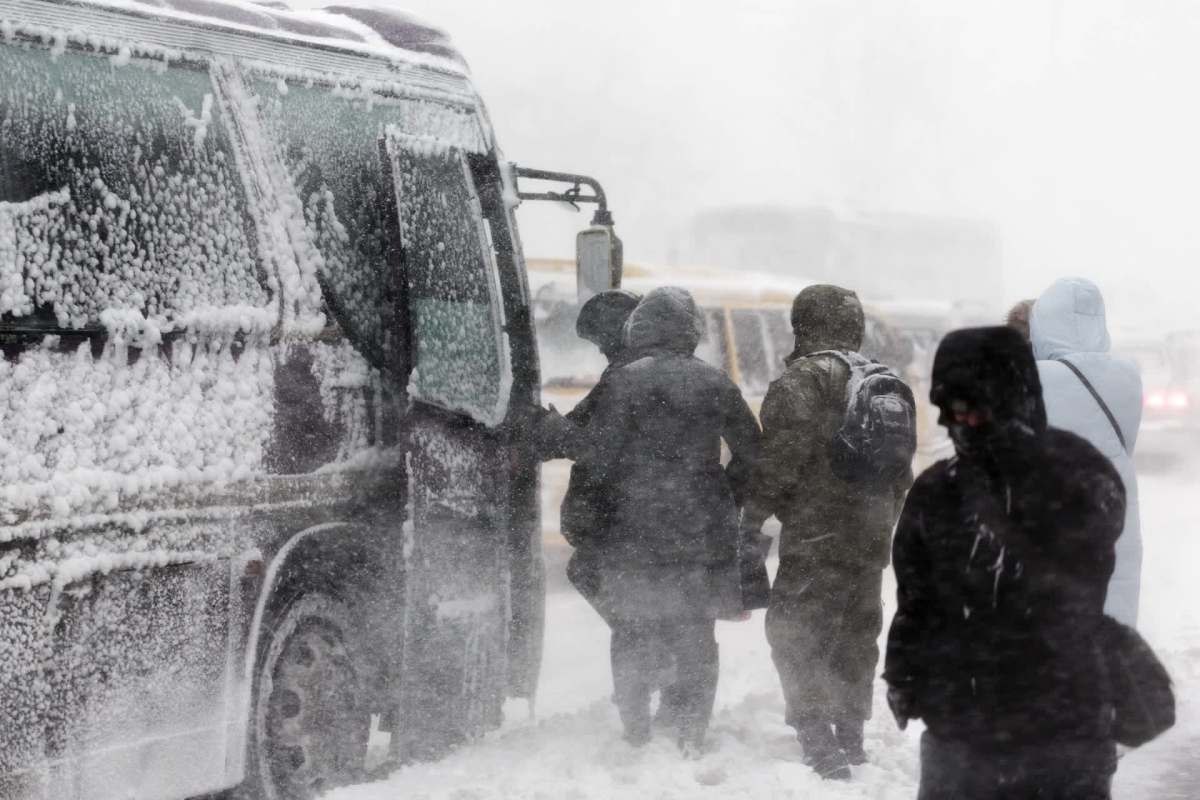
More than 6 feet of snow blanketed the Russian port city of Petropavlovsk-Kamchatsky in mid-January, Accuweather reported, but the outlet issues a warning that AI-generated videos were rife online with exaggerated depictions of the conditions.
What's happening?
Between Jan. 12 and Jan. 15, Russia's Far East was hit by the heaviest snowstorm in the region in over six decades.
Russia is home to the coldest inhabited places on Earth, tied between the Siberian cities of Oymyakon and Verkhoyansk, where temperatures can go as low as negative 90 degrees Fahrenheit.
People dig out their cars after a powerful snowstorm dumped several feet of snow across parts of Russia's Kamchatka Peninsula. pic.twitter.com/v63lUtegX6
— AccuWeather (@accuweather) January 18, 2026
Petropavlovsk-Kamchatsky, on Russia's Kamchatka Peninsula, is comparatively balmy, with temperatures rarely dipping below minus 3 Fahrenheit.
However, a recent, record-breaking snowstorm buried the city after what Accuweather called an "already-snowy December," and Petropavlovsk-Kamchatsky's relative obscurity enabled AI-generated videos to circulate widely, with some fooling "major news outlets."
This fake AI generated video of snowfall in Russia is circulating.
— Chay Bowes (@BowesChay) January 19, 2026
Russias Kamchatka has seen drifts but nothing of this scale. pic.twitter.com/OJhbBqYFEF
Although AI videos have rapidly become more sophisticated and harder to discern from real ones, Accuweather noted that many of the clips would need a "suspension of the laws of physics" to be believed, citing non-existent tall buildings and impossible feats of sledding.
The proliferation of AI-generated footage arguably obscured the severity of this extreme weather event, flooding feeds with false videos amid dangerous conditions.
On Jan. 15, the Moscow Times reported that two people had been killed by falling snow.
Why is this snowstorm concerning?
Russia is the largest country on Earth by landmass, yet Condé Nast Traveller ranked it second coldest, after the largely uninhabited Antarctica.
Snowstorms are, as such, not typically concerning in much of the country, but officials and experts alike warned that the deadly storm in Petropavlovsk-Kamchatsky was cause for alarm.
TCD Picks » Quince Spotlight
💡These best-sellers from Quince deliver affordable, sustainable luxury for all




A Jan. 21 BBC video segment indicated that scientists suspected an overheating planet was "affecting Arctic air patterns," exacerbating the storm's intensity.
The snow brought a winter-ready Petropavlovsk-Kamchatsky to a standstill, with rescue workers tunneling through massive snowdrifts to rescue trapped locals. According to India Today, experts cited "repeated cyclonic systems" as the cause for the extreme weather.
|
Do you think misinformation is a major problem in America today? Click your choice to see results and speak your mind. |
 Definitely 💯
 Throughout December and into January, the storm systems were increasingly strengthened by excessive evaporation from warmer seas, supercharging their intensity and impact.
That feedback loop is a hallmark of extreme weather. While snowstorms have always occurred in most of Russia, higher temperatures and warmer seas render them costlier and deadlier.
Vera Polyakova, from Kamchatka's Hydrometeorology Center, emphasized that the storm was an outlier.
"These conditions are exceptionally rare as far as modern observations go. The last time we saw something like this was over 50 years ago, in the early 1970s," she told the Moscow Times.
What's being done about it?
After one death was reported, Petropavlovsk-Kamchatsky Mayor Yevgeny Belyayev declared a state of emergency, which enabled the city to access additional resources.
The storm was a stark reminder to stay abreast of critical climate issues and to prepare for increasingly commonplace extreme winter weather.

Get TCD's free newsletters for easy tips to save more, waste less, and make smarter choices — and earn up to $5,000 toward clean upgrades in TCD's exclusive Rewards Club.
Cool Picks






