


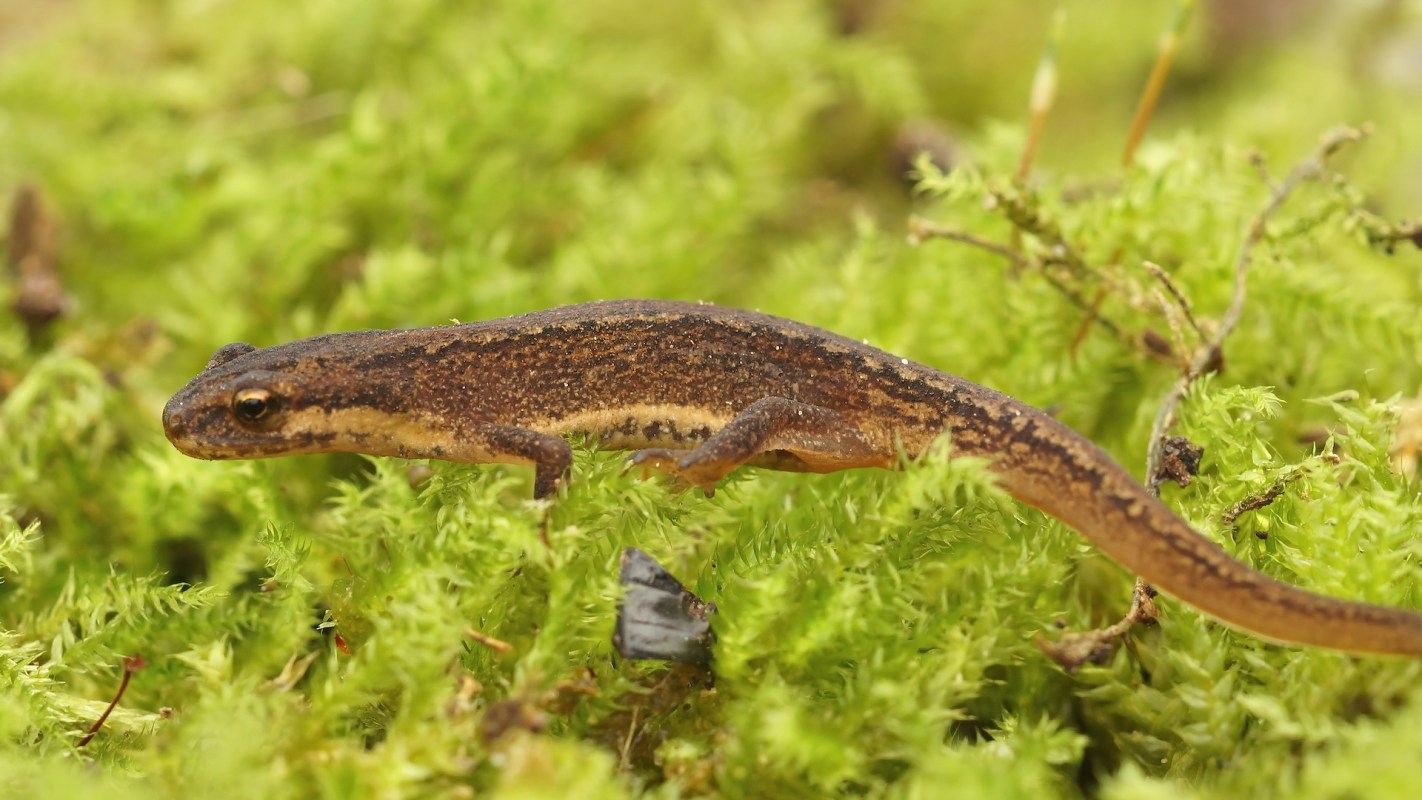
Palmate newts, thumb-size amphibians found across Western Europe, have developed a remarkable survival strategy.
Some adults never fully metamorphose. Instead, they retain their gills, remain underwater, and reproduce without ever leaving the pond.
Now, new research suggests that abandoning that aquatic lifestyle may come with a much steeper physical cost than scientists previously realized.
What's happening?
Researchers led by biologist Mathieu Denoël of the University of Liège studied 80 adult palmate newts over 85 days to better understand what happens when these animals are forced to metamorphose, Earth.com reported.
Some adult palmate newts remain in a larval-like form, a condition known as paedomorphosis. Others lose their gills, complete metamorphosis, and move onto land.
What makes the species especially unusual is that even sexually mature adults can still switch between the two paths if environmental conditions change.
TCD Picks » Quince Spotlight
💡These best-sellers from Quince deliver affordable, sustainable luxury for all




To measure the cost of that transition, researchers placed adult paedomorphic newts into tanks with varying water temperatures and water levels.
In tanks where water levels gradually dropped to mimic drying ponds, some of the newts completed metamorphosis and adapted to land life.
"All individuals that completed metamorphosis lost a significant amount of weight, whereas those that remained paedomorphic did not experience any net weight loss," Denoël said, per Earth.com.
The study, published in BMC Biology, also found that newts nearing metamorphosis stopped eating even when food remained readily available.
Females appeared to be affected most severely. They began losing weight earlier, lost more of it, took longer to complete metamorphosis, and reduced food intake faster than males during the final stages of the transition.
"If males are more frequently observed undergoing metamorphosis in natural populations, it is likely partly because this transition costs them proportionally less," Denoël said, per Earth.com.
Why is this concerning?
The findings are significant because shallow wetlands are drying out more frequently as rising global temperatures and shifting weather patterns place increasing pressure on freshwater habitats.
For a newt trapped in a disappearing pond, metamorphosis may be the only route to survival. But this study shows that escape comes at a major energetic cost.
That matters because amphibians are already among the world's most vulnerable animal groups. Habitat loss, pollution, disease, invasive species, and changing weather patterns have contributed to population declines worldwide.
If female newts enter breeding season weakened and depleted, they may produce fewer eggs — or none at all — making population recovery even more difficult.
The implications extend beyond one species. Amphibians help control insect populations and serve as important indicators of wetland health.
When their numbers decline, it can signal broader instability in freshwater ecosystems that also support birds, pollinators, fish, and nearby communities.
Healthy wetlands play a critical role in storing water, reducing flooding, filtering pollution, and supporting biodiversity. As these ecosystems become less stable, both people and wildlife become more vulnerable.
What's being done about amphibians?
Such studies help conservationists better predict how amphibians and other creatures may respond to hotter and drier conditions in the future.
That information can guide efforts to restore wetlands, protect connected pond systems, and manage habitats in ways that help water remain available longer during dry periods.
For individuals, some of the most effective solutions are local. Reducing pesticide use, planting native vegetation, and protecting backyard habitats can all help amphibians and the ecosystems they depend on.

Get TCD's free newsletters for easy tips, smart advice, and a chance to earn $5,000 toward home upgrades. To see more stories like this one, change your Google preferences here.







