


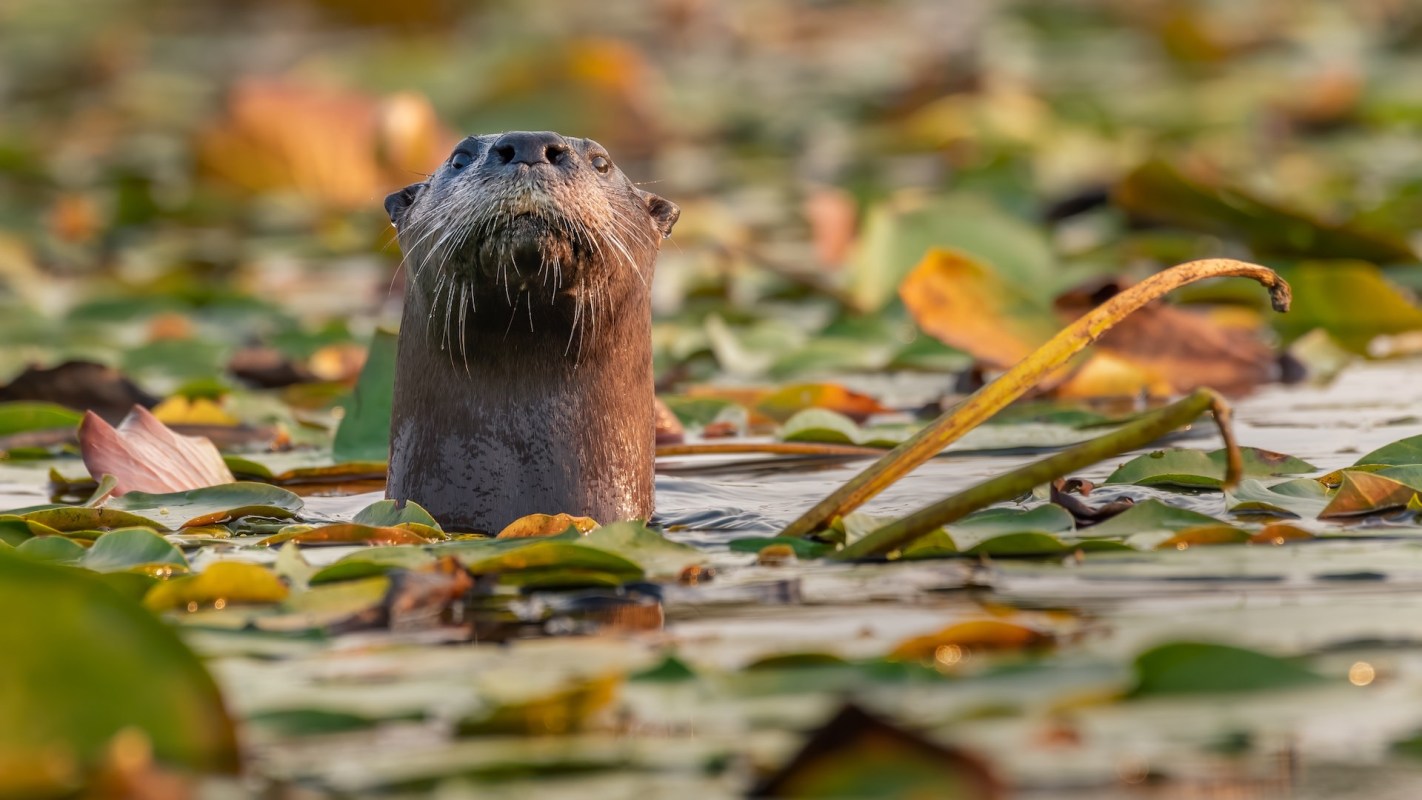
DNA analysis of otter poop in the Chesapeake Bay has given scientists insight into their diet, health, and even enabled them to determine stress levels.
River otters are small, semi-aquatic mammals that live in and along rivers and lakes. These intelligent creatures aren't currently considered endangered, but their population declined heavily in the early 1900s, and they've been recovering ever since.
Tracking otter populations isn't easy, as otters are more active at night, and they spend a third of their time underwater.
"It is shocking how little information there is about their biology and ecology," Katrina Lohan, the head of the Smithsonian Environmental Research Center's Coastal Disease Ecology Lab, said in a release.
The river otters aren't always around, but they're leaving behind something much easier to track: poop.
River otters prefer to poop alongside the river's edge, and these poop piles — called latrines — are providing scientists with extremely valuable information.
Otter droppings can give scientists a clearer estimate of prey populations, and "even found evidence that otters ate two invasive fish: the common carp and the southern white river crayfish," per the release.
The parasites are weakening the fish, helping the otter catch them and slowing the spread of invasive species.
Invasive species, like the carp and crayfish in Chesapeake Bay, are non-native plants or animals that disrupt and harm the local environment. They reproduce rapidly, outcompete native species for resources, and can drive other species to extinction.
Otters are keeping invasives in check in the Chesapeake Bay, but as habitat loss and other effects of climate change take hold, they're creeping closer to human spaces.
TCD Picks » Quince Spotlight
💡These best-sellers from Quince deliver affordable, sustainable luxury for all




|
Do you worry about companies drilling too deep into the ground? Click your choice to see results and speak your mind. |
 Definitely 💯
 While the presence of otters can be helpful for conservation research, Calli Wise, a research technician at SERC, emphasized that this migration could put both the otters and humans at risk.
"As river otters move into more urban waterways, they will be increasingly exposed to pollutants and parasites of concern to humans," Wise said in the release. "As mammals, river otters may be disease sentinels that we can study to learn more about environmental risks to humans."

Join our free newsletter for good news and useful tips, and don't miss this cool list of easy ways to help yourself while helping the planet.
Cool Picks






