


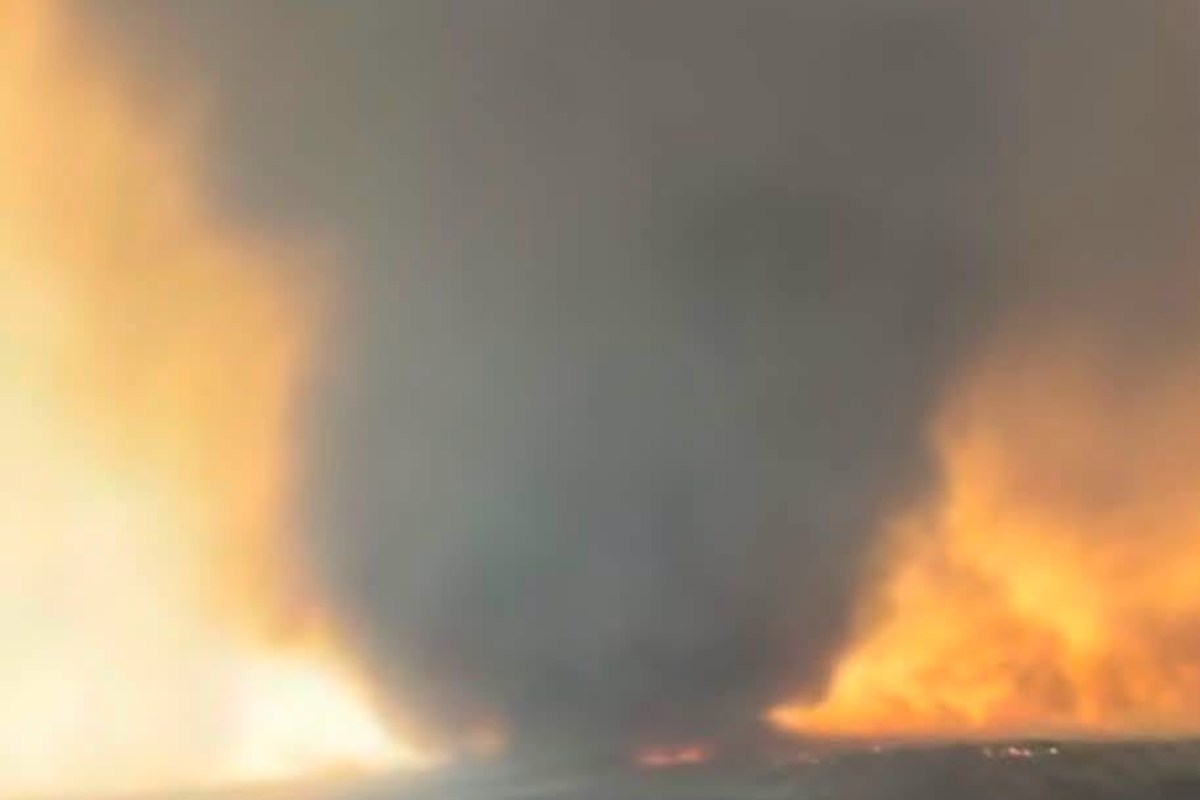
A towering column of spinning smoke rose above an Oregon wildfire in a dramatic video that looked almost unreal at first glance.
However, the twisting plume was a very real sign of how dangerous and unstable wildfire conditions can become.
What happened?
In footage published on August 2, 2026, NBC News showed a rotating smoke column above a wildfire in Oregon that looked strikingly similar to a tornado.
The phenomenon is known as a fire whirl, a spinning vortex that can form when intense heat, smoke, and shifting wind patterns combine.
The events in the video also appeared during a broader stretch of wildfire activity across the Pacific Northwest, where summer conditions have helped fires move quickly.
More than a dramatic visual, the clip reflects conditions on the ground that can cause wildfires to strengthen fast and behave in ways that are hard for fire crews and nearby communities to predict.
TCD Picks » Quince Spotlight
💡These best-sellers from Quince deliver affordable, sustainable luxury for all




@nbcnews A so-called smokenado was captured on video in Oregon as wildfires across the state reach a state of "extremely critical risk."
♬ original sound - nbcnews
Why does it matter?
Fire whirls are a sign of extreme fire conditions.
These rotating columns can make a wildfire even more erratic, sending embers outward, shifting the direction of flames, and increasing risks for firefighters and anyone living nearby.
Worsening extreme weather disasters endanger lives and livelihoods in multiple ways. Wildfires can force evacuations, destroy homes and businesses, shut down roads, and fill the air with smoke that worsens asthma, heart and lung disease, and other health problems.
They can also negatively affect local economies by damaging infrastructure, reducing tourism, affecting outdoor work, and driving up recovery costs for families and communities.
Even outside of the immediate area, intense wildfire smoke can travel long distances, affecting air quality far beyond the fire zone, while rising disaster costs can ripple through insurance markets, emergency response budgets, and utility systems.
Wildfire danger is not only about flames at the fire line. It is also about heat, smoke, wind, and the growing strain these events place on public health and community safety.
What can I do?
For people in fire-prone areas, preparation means signing up for local emergency alerts, knowing evacuation routes, and keeping a go-bag ready with medications, important documents, water, and basic supplies.
To help reduce your exposure to smoke while indoors, check air quality reports, keep windows closed during smoky periods, and use air purifiers or high-efficiency filters. If outdoor smoke is heavy, a well-fitted N95 mask can offer protection.
On the community side, agencies and fire crews continue working to monitor fast-changing wildfire conditions, issue warnings, and respond to fires as they grow.
Even for people not directly threatened by flames, wildfire season is a reminder to review home insurance coverage, create family communication plans, and take heat and air quality alerts seriously.
Although the funnel in the video may look like a tornado, it is actually a weather effect produced by the wildfire itself.
That short burst of spinning smoke captured more than a dramatic image — it highlighted how severe fire conditions can make a blaze far more volatile and unpredictable.

Get TCD's free newsletters for easy tips, smart advice, and a chance to earn $5,000 toward home upgrades. To see more stories like this one, change your Google preferences here.







