


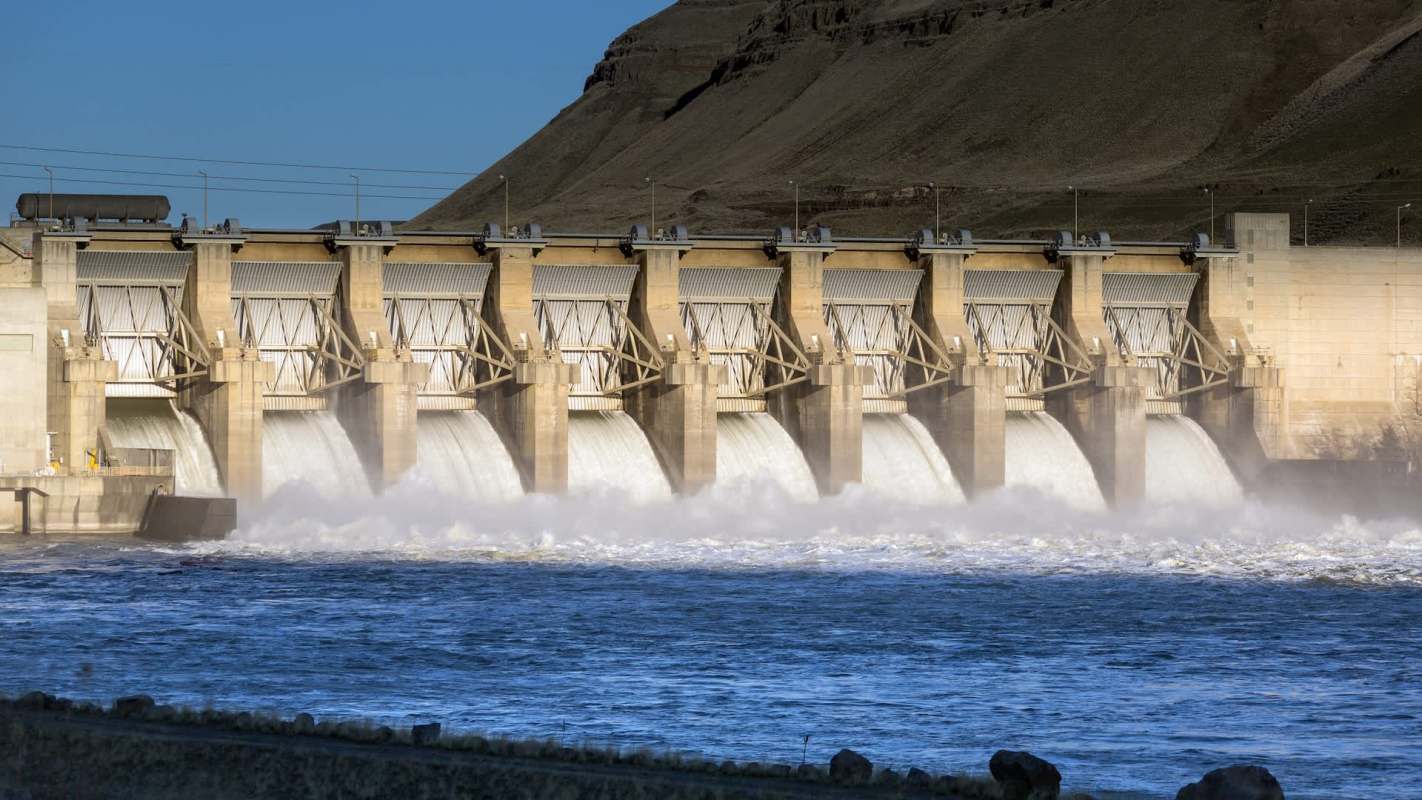
Oregon renewable energy facilities are butting heads with biodiversity advocates, according to The Washington Post.
U.S. District Judge Michael Simon recently ruled that Oregon hydroelectric dams keep their current reservoir levels and increase the spill at eight dams to allow salmon to pass over dams rather than through their turbines, which puts the animals at risk.
This preliminary injunction came in response to federal attempts to reverse a Biden-era agreement, which was designed to support salmon migration while still enabling the production of renewable electricity.
The Trump regime has sought higher reservoir levels behind dams. Industry groups have also voiced their opposition to the renewed salmon protections. They argued that more spill dissolves more nitrogen in the water, which can be harmful to fish downstream.
"The order increases the risk of harm to infrastructure, listed species, and public safety while failing to demonstrate that there will be benefits to listed salmon and steelhead," said the Inland Ports and Navigation Group.
It also suggested the injunction hampered river transportation, a lower-polluting alternative to trucking.
Meanwhile, Indigenous groups and environmental activists have worked for decades to keep West Coast salmon populations healthy in the face of hydroelectric dams. Combined with the threats of drought conditions and contamination, many fisheries have suffered critical declines.
This is a cost to more than just commercial harvesting and cultural value. Upstream, dying salmon feed forest ecosystems. With hampered movement across dams, those ecosystems stand to suffer.
Hydroelectric dams have an important role to play in the electrical grid, however.
Renewable sources like hydro, wind, and solar have the opportunity to displace dirty sources like coal and gas. Making that transition means less pollution, less destructive weather patterns, and lowered costs due to property damage from those disasters.
TCD Picks » Quince Spotlight
💡These best-sellers from Quince deliver affordable, sustainable luxury for all




|
Which of these savings plans for rooftop solar panels would be most appealing for you?
Click your choice to see results and earn rewards to spend on home upgrades. |
 Save $1,000 this year 💸
 In his ruling, Judge Simon remained disappointed in the ongoing struggle between these hydroelectric operators and wildlife advocates.
"One of the foundational symbols of the West, a critical recreational, cultural, and economic driver for Western states, and the beating heart and guaranteed resource protected by treaties with several Native American tribes is disappearing from the landscape," Simon wrote, per The Washington Post. "And yet the litigation continues in much the same way as it has for 30 years."

Get TCD's free newsletters for easy tips to save more, waste less, and make smarter choices — and earn up to $5,000 toward clean upgrades in TCD's exclusive Rewards Club.
Cool Picks






