


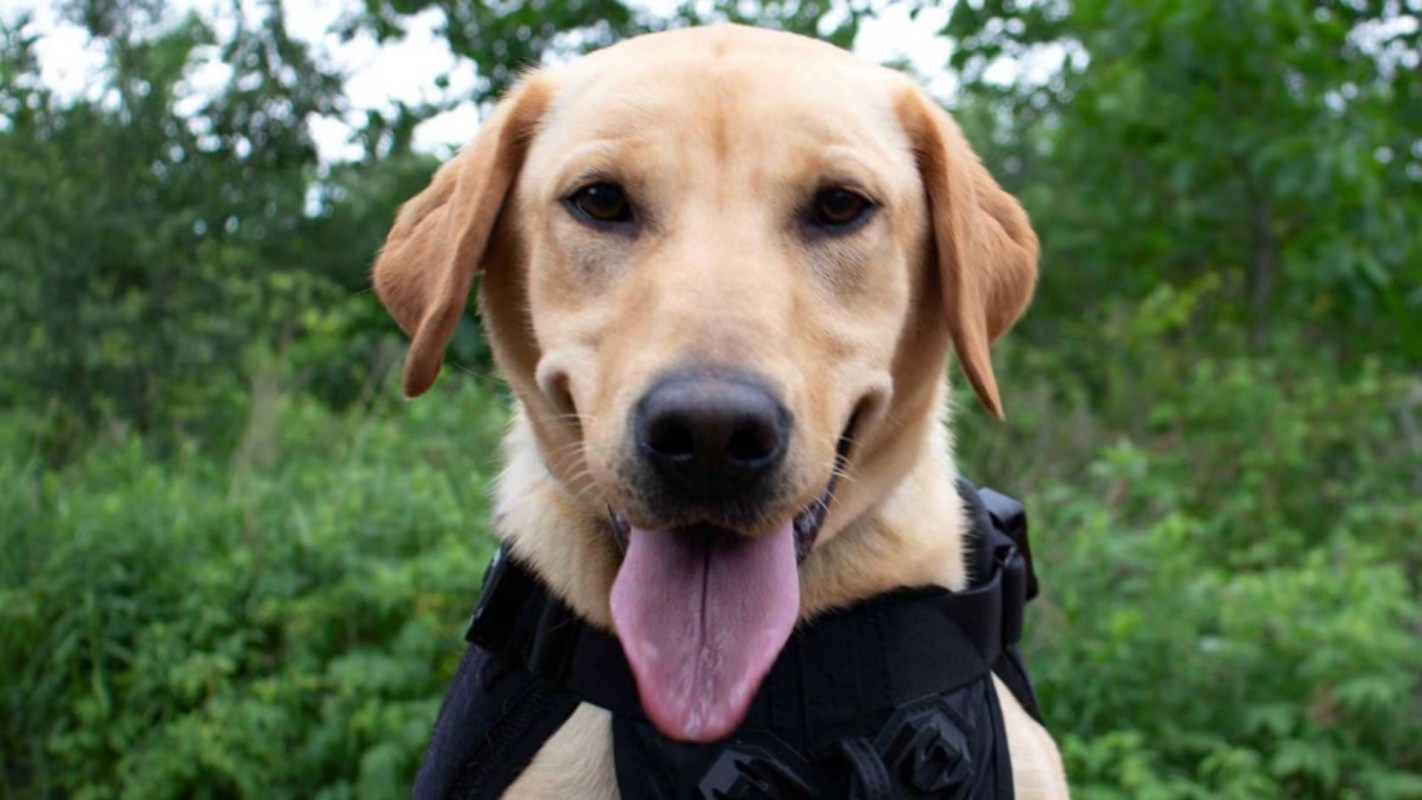
A 2-year-old dog is taking on a major environmental job in Ontario, and she is sticking her nose in the work in the exact right way.
CTV News Toronto reported on Tilly, a golden Labrador retriever working with Credit Valley Conservation to spot invasive species.
What's happening?
Ontario's first pilot conservation detection dog program is now active as Tilly searches the Credit Valley watershed for invasive species, as the outlet detailed.
The program hopes to make managing ecosystems easier. Kate Hayes, senior manager of ecosystem restoration and stewardship with Credit Valley Conservation, said the focus is on catching species as soon as they arrive.
"As the name would suggest, that would mean detecting the species very early on when they arrive to the watershed," Hayes told CTV News Toronto.
Tilly's training currently covers three targets in the hemlock woolly adelgid, spotted lanternfly, and swamp crayfish.
TCD Picks » Quince Spotlight
💡These best-sellers from Quince deliver affordable, sustainable luxury for all




Because humans have largely introduced them to new spaces, invasive species can damage trees, disrupt ecosystems, and create costly problems for local economies. Credit Valley Conservation relayed to the publication that they cost Canada roughly $7.5 billion each year in areas including agriculture, fisheries, and infrastructure.
Although Tilly has only been in the field for a few weeks, Hayes said she could help conservation staff inspect much more land. Crews had previously covered about 40% of expected hemlock woolly adelgid habitat, but Hayes suggested to CTV News Toronto that number could be near full coverage with the dog's help.
Why does it matter?
Early detection can help prevent serious ecological damage. One of Tilly's key targets is the hemlock woolly adelgid, an insect that feeds on eastern hemlock trees. Infestations can lead to needle loss, branch die-off, and eventually the death of the tree.
A major part of Tilly's value comes from her sense of smell.
"It's roughly 100,000 times more sensitive than (a) human being's," Hayes explained to CTV News Toronto.
That advantage could give conservation teams a quicker and more accurate way to find threats across roughly 6,919 acres of land.
What's being done?
Tilly's training began when she was just eight weeks old. According to WorkingK9 owner and head trainer Antonio Pallotta, conservation scent work builds on the same detection methods used to train dogs for military and law enforcement jobs.
"That's something that's new," Pallotta said to CTV News Toronto. "Basically, it's still detection work, so it falls under the same training protocols, just the target odors are obviously different."
Trainers first introduced target odors in boxes and gradually increased the difficulty by adding decoys and similar smells. Food was a key motivator and reward for Tilly.
"We utilized her hunger and her desire to eat as a motivator in exchange for scenting behaviours," Pallotta said.
Next, Tilly is expected to begin field detection work for red swamp crayfish at two Mississauga locations where the species has already been found. By the fall, Hayes said, she will likely move to the Hamilton area to search for hemlock woolly adelgids.
The pilot program remains small, and Credit Valley Conservation is not adding more dogs yet.

Get TCD's free newsletters for easy tips, smart advice, and a chance to earn $5,000 toward home upgrades. To see more stories like this one, change your Google preferences here.







