


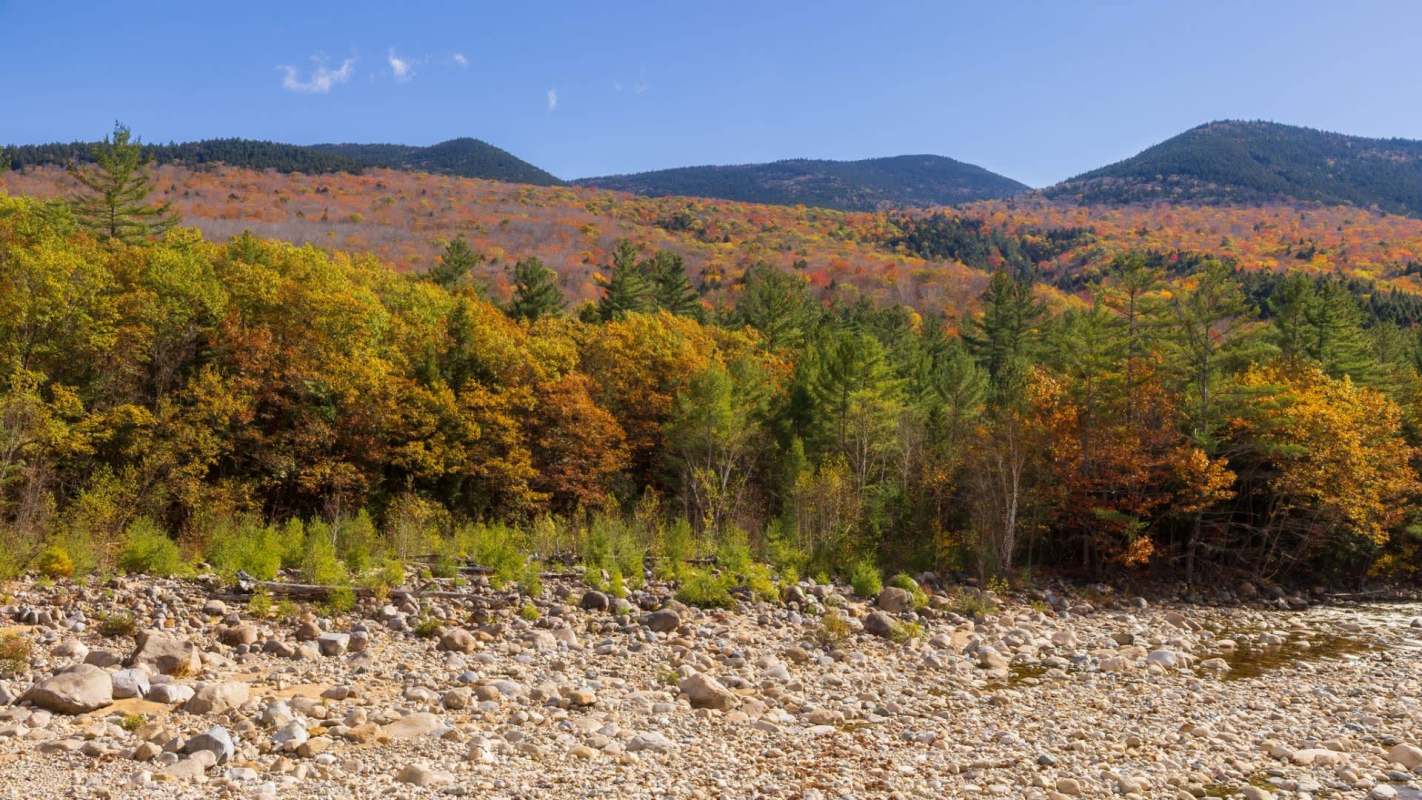
Officials in New Hampshire are issuing warnings over the ongoing drought in the region, cautioning residents to expect it to continue through the winter.
What's happening?
According to New Hampshire Public Radio, the extreme drought conditions that have plagued the state through the summer and fall are expected to continue as the ground freezes this winter.
The problem for New Hampshire is that it is now chasing a precipitation deficit. Because it had so little rain in the summer and fall, even the normal level of precipitation it received at the start of November wasn't enough to end the drought.
"A lot of the conditions that we have are pretty much set going into the winter, because we do expect to see ground freezing up," said Ted Diers, who oversees the water division at the New Hampshire Department of Environmental Services.
Frozen soil doesn't absorb moisture from precipitation, which means that even if New Hampshire manages to get back to normal levels of snowfall this winter, the ground won't see any benefits from it come spring.
Why is this drought concerning?
New Hampshire's drought is emblematic of a problem that much of the United States is facing.
As temperatures rise and oceans warm, weather patterns become less predictable and more volatile. That leads to bigger, more dangerous storms. Meanwhile, prolonged periods of drought can threaten farmland and crops. Flooding and landslides are also more likely as dry soil struggles to absorb massive amounts of water.
New Hampshire isn't the only place in the U.S. dealing with this, either. Illinois, Minnesota, Washington, and Hawai'i are dealing with droughts of their own, and much of the American West and Southwest have been fighting aridification for the better part of five years.
What's being done about New Hampshire's drought?
Residents in New Hampshire have been scrambling to find water in recent weeks, according to Diers.
Wells have been running dry, and residents have turned to having water haulers bring water to their homes or drilling deeper wells. But both solutions can be incredibly expensive, and well drillers have several months' worth of backlog to contend with.
TCD Picks » Quince Spotlight
💡These best-sellers from Quince deliver affordable, sustainable luxury for all




|
Would you install water-collecting hydropanels on your home?
Click your choice to see results and speak your mind. |
 Definitely 👍
 Beyond that, our best solution to combating drought is to continue to reduce carbon pollution to try to slow the heating of our planet.
Doing so would help to stabilize weather patterns and give us a fighting chance against aridification.

Get TCD's free newsletters for easy tips to save more, waste less, and make smarter choices — and earn up to $5,000 toward clean upgrades in TCD's exclusive Rewards Club.
Cool Picks






