


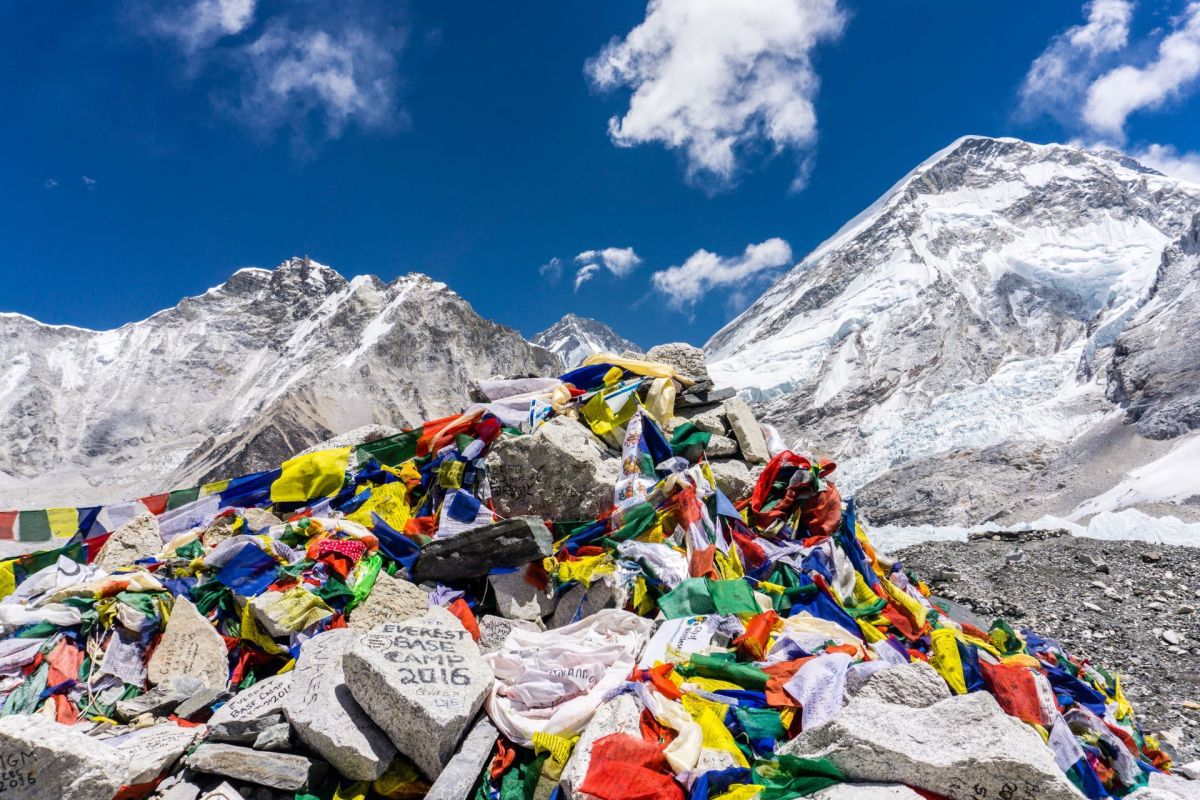
The nation of Nepal has scrapped its incentive to reduce the amount of trash on Mount Everest after it failed to make a meaningful impact.
According to the BBC, the Nepalese government is scrapping its plan after 11 years, and going back to the drawing board to figure out ways to clean one of the world's most iconic mountain peaks.
The plan required a $4,000 deposit that climbers would only get back if they brought at least 18 pounds of waste down from the mountain with them when they returned. But Himal Gautam, director of the tourism department, said that not only had the plan failed to reduce waste on the mountain, but it had "become an administrative burden."
The problem was that most climbers got their money back by bringing trash back from lower campsites, while leaving their own trash and the existing trash at higher camps on the mountain, where the problem is most severe.
"From higher camps, people tend to bring back oxygen bottles only," said Tshering Sherpa, chief executive officer of the Sagarmatha Pollution Control Committee, which runs an Everest checkpoint, per the BBC. "Other things like tents and cans and boxes of packed foods and drinks are mostly left behind there, that is why we can see so much of waste piling up."
Waste of all kinds is a massive problem on Everest, and it keeps getting worse with 600 to 800 people attempting to climb the mountain every year. Many of them leave trash, including food waste, human excrement, tents, oxygen tanks, and general trash along the route, and at higher altitudes, none of that trash degrades, even the organic matter.
While there's been no formal measure of the amount of trash and waste on the mountain, it is estimated to be 50 tonnes, causing serious damage to an incredibly delicate and unique ecosystem. Litter is a major problem at numerous iconic sites around the world, including Big Bend National Park in the United States.
The new rule that the Nepalese tourism department hopes to implement will require a non-refundable $4,000 deposit from everyone who climbs the mountain, which will fund the creation of a checkpoint at Camp Two and mountain rangers to patrol farther up the mountain, ensuring that climbing parties take their trash with them.
Per the BBC, Jaynarayan Acarya, spokesperson for the Ministry of Tourism, said the policy change was designed "to immediately address the pressing problem of waste on our mountains."
It's part of a five-year cleanup plan the Nepalese government is proposing to address this massive problem on one of the most iconic mountains on Earth.
TCD Picks » Upway Spotlight
💡Upway makes it easy to find discounts of up to 60% on premium e-bike brands





|
Which of these savings plans for rooftop solar panels would be most appealing for you?
Click your choice to see results and speak your mind. |
 Save $1,000 this year 💸
 According to the BBC, Mingma Sherpa, chairperson of the Pasang Lhamu rural municipality, said this policy change had been requested by the Sherpa community for many years.
"We had been questioning the effectiveness of the deposit scheme all this time because we are not aware of anyone who was penalised for not bringing their trash down," said Mingma Sherpa. "And there was no designated fund but now this non-refundable fee will lead to creation of a fund that can enable us to do all these clean-up and monitoring works."

Get TCD's free newsletters for easy tips to save more, waste less, and make smarter choices — and earn up to $5,000 toward clean upgrades in TCD's exclusive Rewards Club.
Cool Picks






