


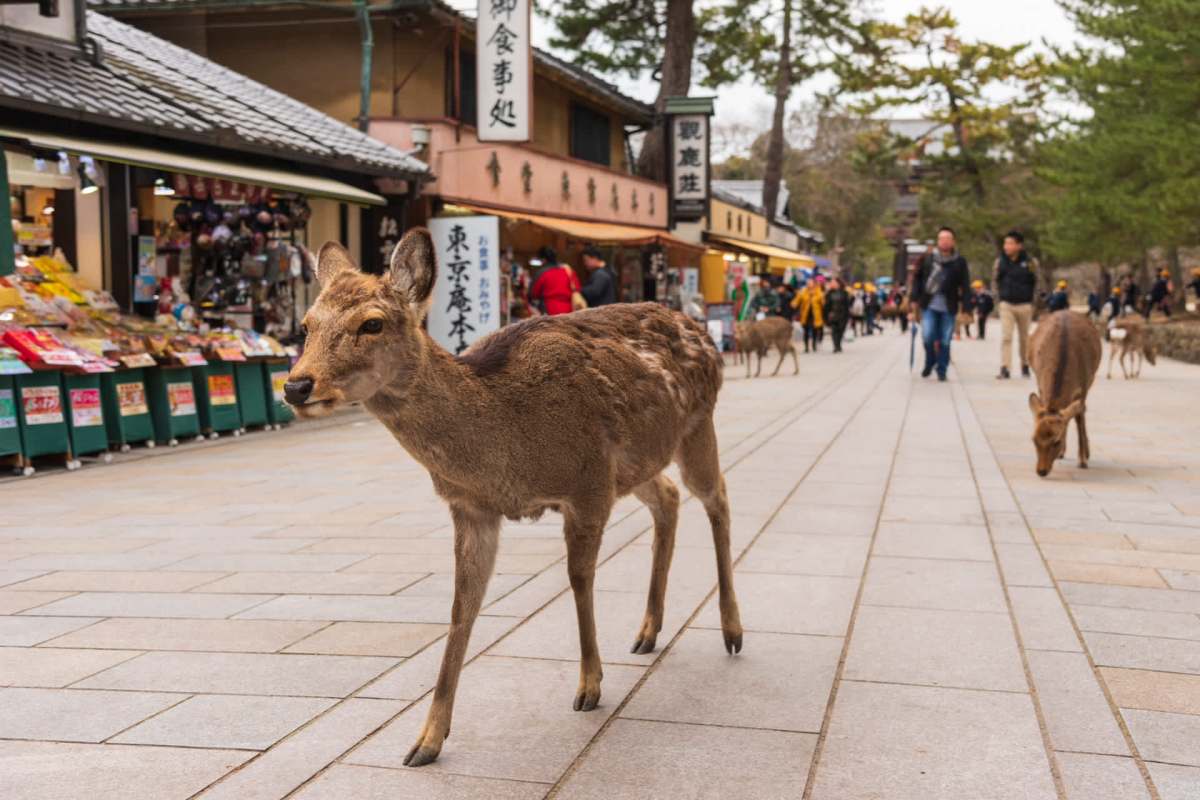
Beloved deer living in a historic Japanese park face growing dangers from litter left behind by tourists. Now, officials are rethinking decades-old waste management policies to protect the culturally significant animals.
What's happening?
Located in Nara, Japan, Nara Park spans 1,630 acres and is famed for its free-roaming deer and historic temples. Unfortunately, it's also now noted for a littering problem threatening local deer populations.
Nara deer are a protected species considered sacred in the region, according to news outlet Japan 2 Earth. About 1,300 deer call the park home, typically feeding on the park's abundant grass and tree nuts. But six years ago, the nonprofit Nara Deer Preservation Foundation examined 14 Nara deer that died from unknown causes. Nine of the deer had plastic in their stomachs. And the problem has only gotten worse since.
"Since the COVID-19 pandemic, the number of tourists has increased — and so has the amount of litter," officials told Japan 2 Earth.
The park removed trash bins in 1985, instead encouraging visitors to take their waste with them. The reason? Deer were rummaging through them and eating the trash.
That somewhat unconventional tactic reportedly worked for a few decades — but officials are now bringing the bins back.
Why is Nara Park's littering problem concerning?
Respecting Nara deer and their habitat is essential for responsible tourism. All wildlife deserves to live in a clean, litter-free environment — and Nara deer hold special cultural significance as sacred animals. According to Japan 2 Earth, local legend says a deity arrived in Nara riding a white deer. Showing respect toward these animals, then, is a way of honoring and respecting Japanese culture.
Access to nature and wildlife is a privilege, especially as development and pollution continue to destroy natural habitats worldwide. When interacting with nature, we should aim to leave an area in the same condition we found it — if not better.
One of the most important ways to protect these environments is by properly managing our waste. The advocacy group Leave No Trace advises park and nature visitors to "pack it in, pack it out." Simply put, if you bring it with you, take it with you when you leave.
What's being done about the littering problem at Nara Park?
In January, trial waste bins were placed at two locations in Nara Park. The bins were designed to prevent deer from accessing the trash, featuring handles that must be pulled down to place trash inside and a sturdy construction that can't be knocked over.
TCD Picks » Quince Spotlight
💡These best-sellers from Quince deliver affordable, sustainable luxury for all




|
Should the government be paying people to hunt invasive species?
Click your choice to see results and speak your mind. |
 Definitely 👍
 To encourage their use, the bins are decorated with statistics detailing Nara Park's waste problem. One bin highlights that 67% of deceased deer in the park were found with plastic in their stomach. Another bin details how one deer was found with 4.3 kilograms — or 9.5 pounds — of plastic in its stomach.
During the trial, officials monitored usage of the bins, including what items were discarded and how the bins impacted littering within the park.
"We want to better understand what types of waste are being discarded," officials told Japan 2 Earth during the trial.
Officials report plastic bottles and paper cups have been the most commonly discarded items.
The bins have seemed to work so far, with officials telling The Japan Times they plan to keep them in place — and possibly add more.

Join our free newsletter for good news and useful tips, and don't miss this cool list of easy ways to help yourself while helping the planet.
Cool Picks






