


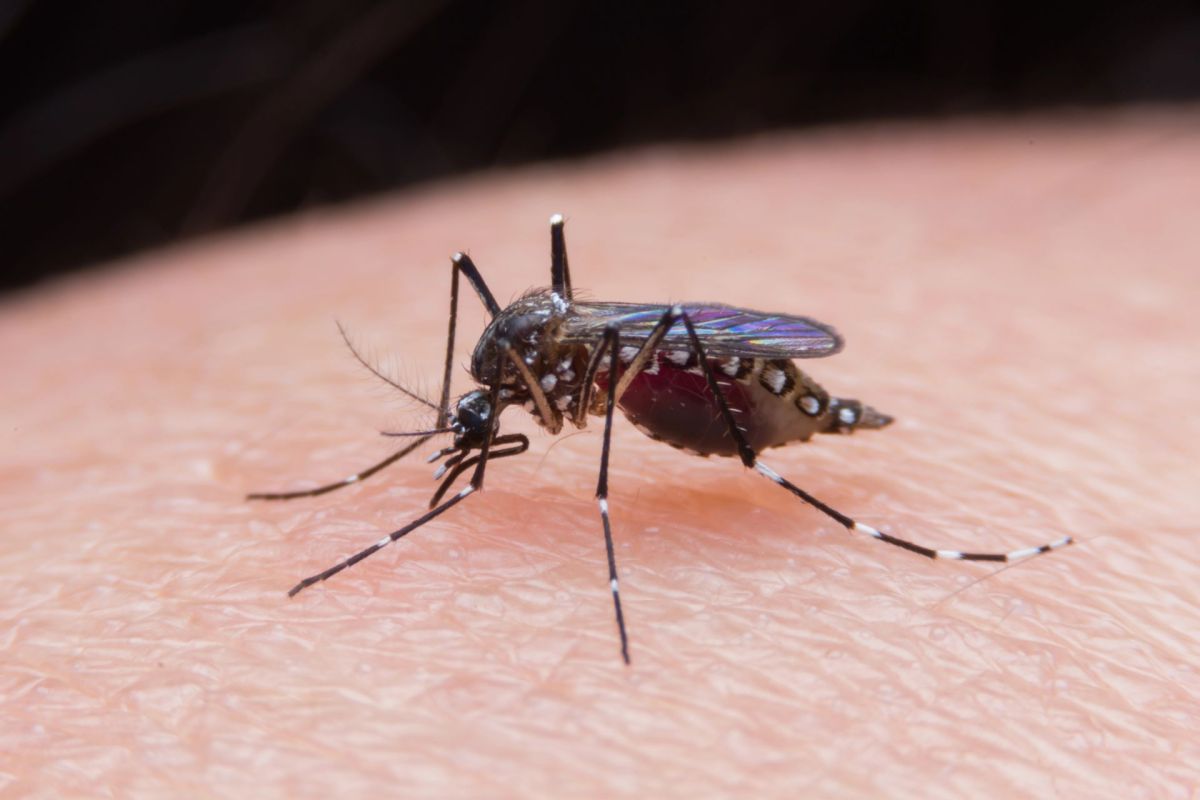
Researchers in Brazil have discovered that the source, or rather the host, of mosquitoes' food could be changing in a concerning way.
What's happening?
According to Frontiers, the study examined what mosquitoes in the Brazilian Atlantic Forest fed on, finding that several of their blood meals contained human blood.
Researchers collected specimens at two different sites between February 2023 and February 2024.
They collected a total of 1,714 mosquitoes, but only 145 were female and engorged, or had blood that could be tested. Male mosquitoes don't drink blood.
Of those 145 mosquitoes, the DNA in only 55 of them could be amplified. Within that set, food sources could be identified in only 24 of them.
The 24 food sources identified included 18 humans, 1 amphibian, 6 birds, 1 canid (a member of the dog family), and 1 mouse.
While the researchers acknowledged the small sample size, they also called for more research into this urgent public health issue.
Why is this concerning?
According to the National Wildlife Federation, mosquitoes are pollinators.
Their primary food source is actually flower nectar; female mosquitoes only seek blood when laying eggs.
But mosquitoes are losing more of their food sources in the wild.
TCD Picks » Upway Spotlight
💡Upway makes it easy to find discounts of up to 60% on premium e-bike brands





|
What's the most you'd pay per month to put solar panels on your roof if there was no down payment?
Click your choice to see results and speak your mind. |
 $200 or more 💰
 The study stated that Brazil's Atlantic Forest once covered 1.3 million square kilometers, or just over 500,000 square miles.
Human activity and agriculture, however, have reduced their coverage to about 377,000 square kilometers (145,000 square miles).
Deforestation, along with rising global temperatures, is forcing mosquitoes to broaden their horizons and look for food elsewhere.
Mosquitoes are, unfortunately, excellent disease vectors as well. Malaria, dengue fever, and West Nile virus are just a few of the illnesses that mosquitoes can pass on to humans.
Rising temperatures have allowed mosquitoes to transmit those viruses farther north in recent years.
Even if you're traveling somewhere warm year-round, you really don't want to bring back a viral souvenir.
What's being done about it?
As the researchers observed, further research into how mosquitoes function can enable people to change their behavior and reduce their risk of vector-borne illness.
"Knowing that mosquitoes in an area have a strong preference for humans serves as an alert for transmission risk," said co-author Dr. Sergio Machado, a microbiology and immunology researcher at the Federal University of Rio de Janeiro.
According to the Cleveland Clinic, the best way to prevent mosquito bites is to wear insect repellent.
Other effective measures include wearing loose-fitting, long-sleeved clothing, avoiding fragrances, and minimizing time spent outdoors between dusk and dawn.

Get TCD's free newsletters for easy tips to save more, waste less, and make smarter choices — and earn up to $5,000 toward clean upgrades in TCD's exclusive Rewards Club.
Cool Picks






