


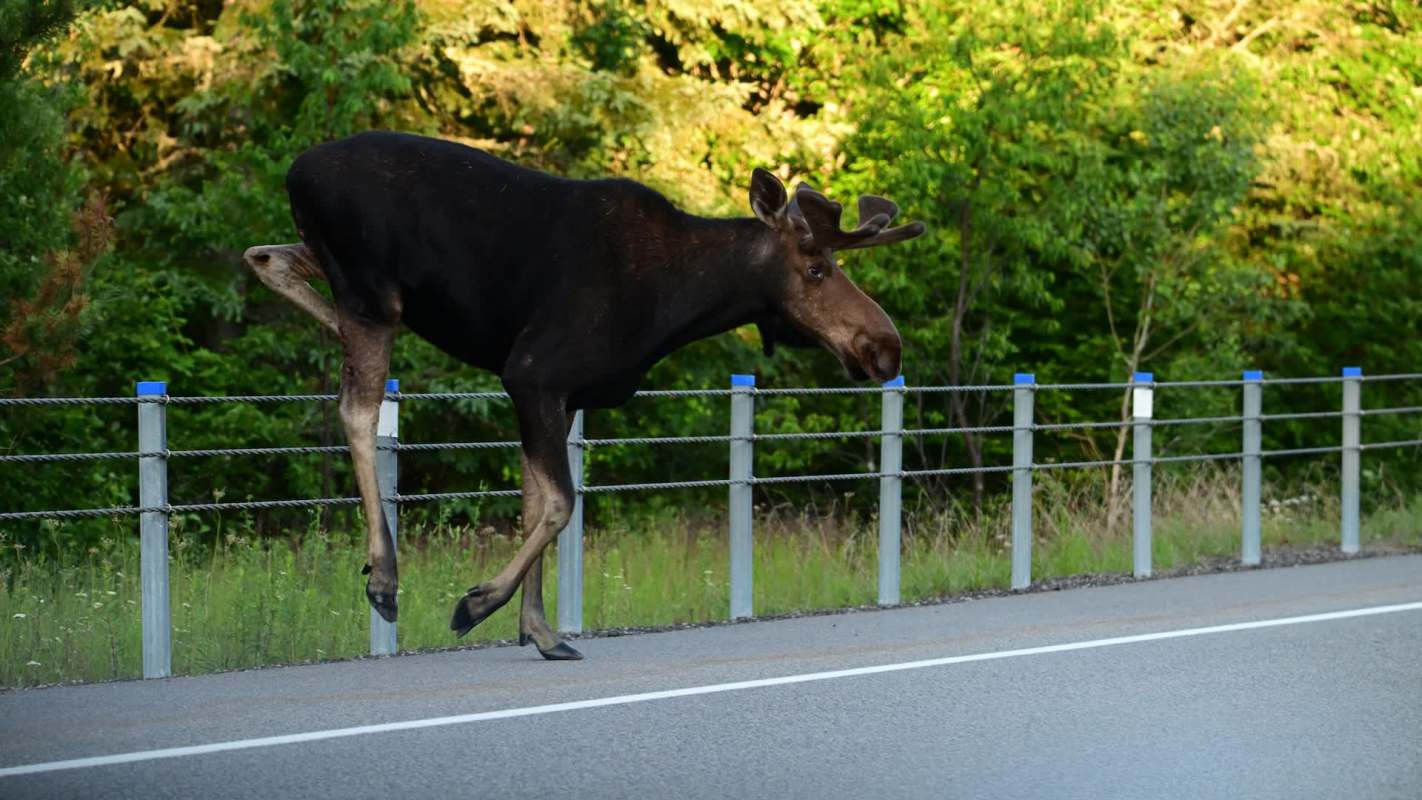
A stranded moose on a Newfoundland highway divider turned one dairy farmer into an unlikely hero after he stopped, flipped the animal upright, and helped it get moving again.
What happened?
As The Globe and Mail reports, Melvin Rideout, a dairy farmer from Cormack, Newfoundland, was headed to a hospital appointment in February with his wife, Diana Rideout, when they spotted a female moose running along the Trans-Canada Highway.
According to the paper, the roughly 800-pound moose appeared to trip at the concrete divider and ended up stuck on its back. Rideout told The Globe and Mail he decided to stop because a large animal can suffocate if it remains upside down.
As Diana Rideout shouted, "Be careful and stay away from it," Rideout and another man first tried to move the moose by her legs, the publication said. That did not work.
When the animal's breathing became "raspy and laboured," Rideout tried again, using one arm around the moose's snout and shifting her front legs until he was able to get her onto her knees, as described by The Globe and Mail.
The moose then got up shakily and made her way across the highway, the paper noted.
TCD Picks » Quince Spotlight
💡These best-sellers from Quince deliver affordable, sustainable luxury for all




Diana Rideout later posted a video of the rescue on Facebook, where commenters responded with lines such as "Cow tippin' Newfoundland style," and "Well done to the moose flipper!!"
Why does it matter?
Moose are common in Newfoundland, and encounters with them can be dangerous for both people and wildlife.
Today, Newfoundland has around 125,000 moose, which makes it the densest moose population in North America, according to The Globe and Mail. That number grew from just four animals brought to the island in 1904 under a government plan aimed at hunting, food supply, and the protection of native caribou, the paper said.
The environmental impact is substantial, too. As The Globe and Mail reported, moose consume about 1.1 million tons of woody and wetland plants each year, reshaping forests and putting added pressure on ecosystems.
Road safety is another concern. The Globe and Mail reported that moose often feed near roadsides, and collisions with vehicles average more than one per day, with some crashes killing drivers.
What's being done?
To lower those risks, Newfoundland uses a mix of strategies, according to The Globe and Mail, including fencing, highway warning signs, a 1-800 line for moose sightings, and an annual hunt intended to manage the population and provide food for residents.
Experts would also generally caution people against approaching an injured or panicked animal unless they have the experience to do so safely. In this case, Rideout's experience working with livestock appears to have helped give him the confidence to step in.
For Rideout, he told The Globe and Mail it was simply "another day of dealing with a large animal." For many others watching later, it became something more memorable.
Rideout has become somewhat of a local celebrity, the paper noted, with people recognizing "the moose flipper" when he's out and about.

Get TCD's free newsletters for easy tips, smart advice, and a chance to earn $5,000 toward home upgrades. To see more stories like this one, change your Google preferences here.







