


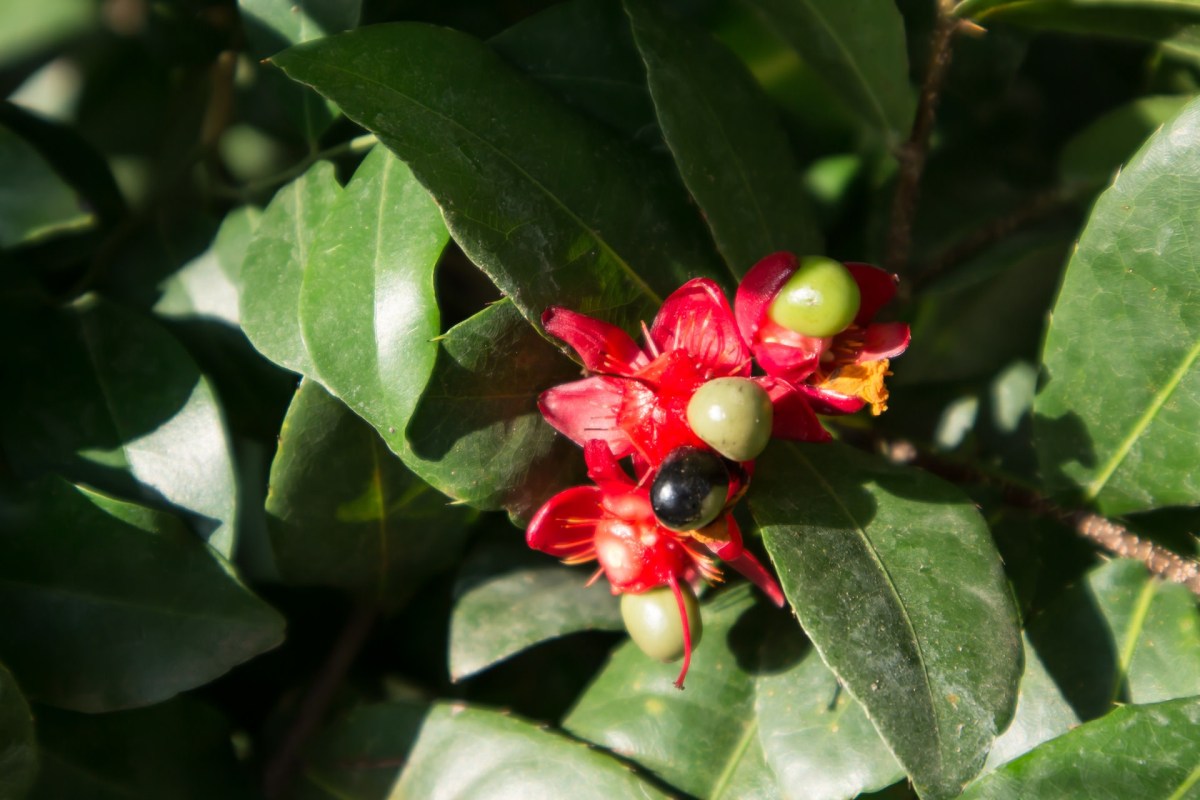
A rapidly spreading plant could upend New Zealand's Northland region, according to The Northland Age.
What's happening?
Originally introduced as an ornamental garden plant, Ochna serrulata (a.k.a., the "Mickey Mouse plant") has broken containment. Nicknamed after the Disney icon, its berries resemble the eponymous cartoon character. However, it's not so friendly.
The Northland Regional Council reports that it has already invaded eastern Australian forests and riverbanks, forming a "dense monoculture" that prevents native plant growth. If left unchecked, it could do the same to the Northland.
Thankfully, it has not yet gotten to that point. At the time of writing, there are 450 sites under active control by the Council's biosecurity team, who told The Northland Age that residents should keep a lookout.
Joanna Barr, the council's biosecurity manager for pest plants, told The Northland Age, "These observations will help us determine the distribution of the Mickey Mouse plant and help us in our battle to control this plant's spread."
Mickey Mouse plants' root systems go deep into the earth, making it impossible to remove without an expert's assistance. The team is offering free services to landowners who spot the plant on their property.
Why is it important to stop the Mickey Mouse plant's spread?
Plants like this one compete with native plants for resources, disrupting ecosystems. While not technically invasive, according to a fact sheet compiled by the Queensland Government, it has harmed native plants and local agriculture in Australia.
This can have devastating long-term consequences if not kept in check. In Connecticut, for example, invasive plants have completely overrun Great Hill Pond, making swimming and boating near impossible.
Native plants help protect our food supply, ensure the conservation of natural resources, and limit the spread of disease. Protecting them against the spread of non-native and invasive plants is critical.
As the Mickey Mouse plant has threatened Australian agriculture, it could do the same to New Zealand, harming forests and rivers in the process.
TCD Picks » Upway Spotlight
💡Upway makes it easy to find discounts of up to 60% on premium e-bike brands





|
What is the biggest reason you don't grow food at home? Click your choice to see results and speak your mind. |
 Not enough time ⏳
 What's being done about it?
Northland officials are asking people to report sightings and not attempt removal themselves, as this can further spread seeds.
If you'd like to do your part to combat invasive plants in your area, consider upgrading to a natural lawn. Native plants will not only give local pollinators a much-needed food source, but also require less maintenance and money than traditional grass lawns.

Join our free newsletter for good news and useful tips, and don't miss this cool list of easy ways to help yourself while helping the planet.
Cool Picks






