


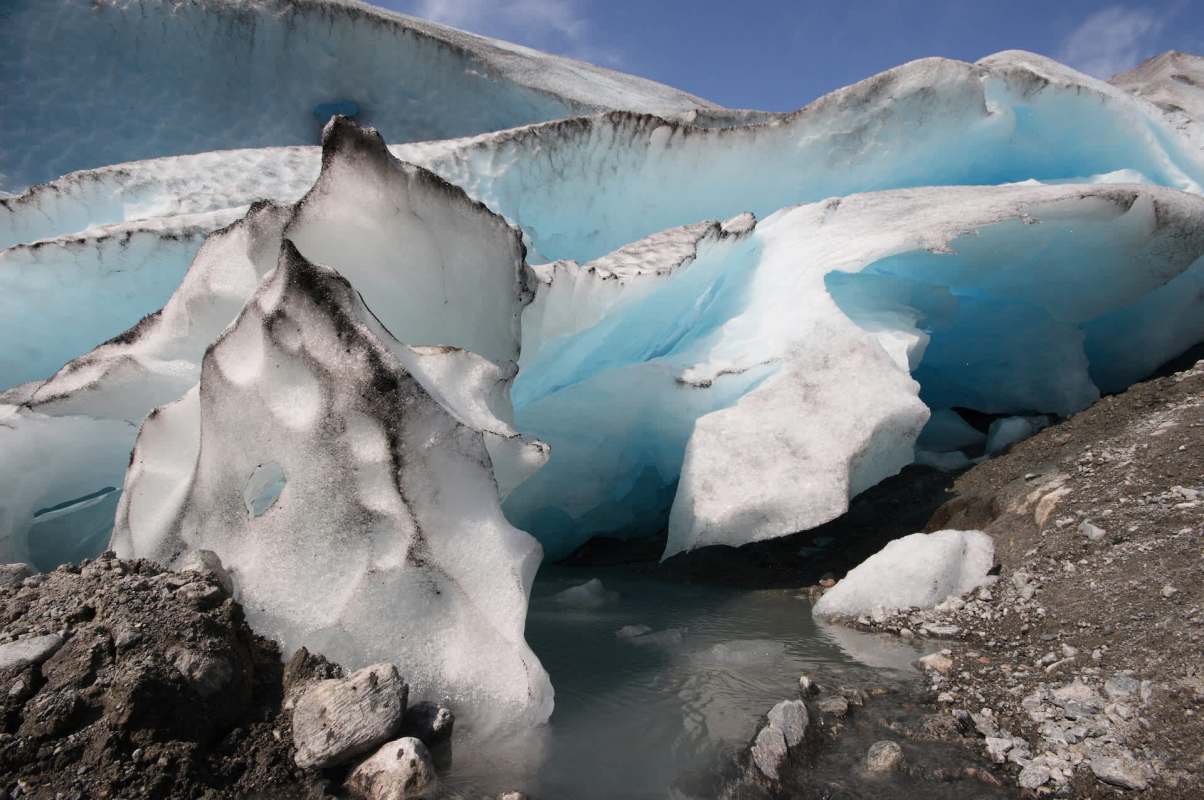
Glaciers in High Mountain Asia, sometimes called the "Third Pole" because they hold the most ice outside of the Arctic and Antarctic, are melting faster than expected.
What's happening?
A new study from the University of Utah and Virginia Tech University shows that shifting monsoon rainfall patterns, not just rising global temperatures, are accelerating the melt.
According to EurekAlert, the team found glaciers in the Central, Western, and Eastern Himalayas are especially vulnerable. "If the timing and intensity of the monsoon continues to alter, it could accelerate ice loss and threaten water availability for millions downstream," lead researcher Sonam Sherpa said.
Already, glaciers in this region are losing more than 22 gigatons of ice per year, which is the equivalent of nearly 9 million Olympic swimming pools.
Why are the melting glaciers concerning?
These glaciers feed rivers and lakes that supply freshwater to more than 1.4 billion people in South and Central Asia. Faster melting means that instead of being stored as snow and ice, more water runs off all at once, increasing risks of droughts, floods, and dangerous glacial lake outbursts.
This finding adds to other troubling discoveries about how Earth's ice is vanishing.
For instance, in Norway's Svalbard archipelago, satellite imaging revealed that glaciers have lost about 5% of their total volume in just two decades. That's roughly 273 billion metric tons of ice per year, or the amount of water every person on Earth drinks in 30 years.
While events like these have always existed, scientists have stated that the impacts of human-driven climate change are supercharging these extreme weather events.
Losing these "frozen reservoirs" does much more than impact the area's scenery. It affects food security, hydropower, and clean drinking water for millions of families.
What's being done about the melting ice?
Scientists are racing to track and mitigate ice loss more effectively. In Canada, for instance, researchers with projects like Real Ice and Arctic Reflections are experimenting with ways to preserve sea ice.
TCD Picks » Quince Spotlight
💡These best-sellers from Quince deliver affordable, sustainable luxury for all




|
How often do you worry about the quality of your drinking water? Click your choice to see results and speak your mind. |
 Never 👎
 Communities can also prepare by building resilience against extreme weather. Installing solar panels with battery storage, for example, helps keep the lights on during outages. Platforms like EnergySage make it easy to compare vetted installers and save up to $10,000 on installations.
And, of course, education remains one of our most powerful tools. Staying informed about these critical climate issues is one immediate step you can take toward a cooler, healthier future.

Join our free newsletter for good news and useful tips, and don't miss this cool list of easy ways to help yourself while helping the planet.
Cool Picks




