


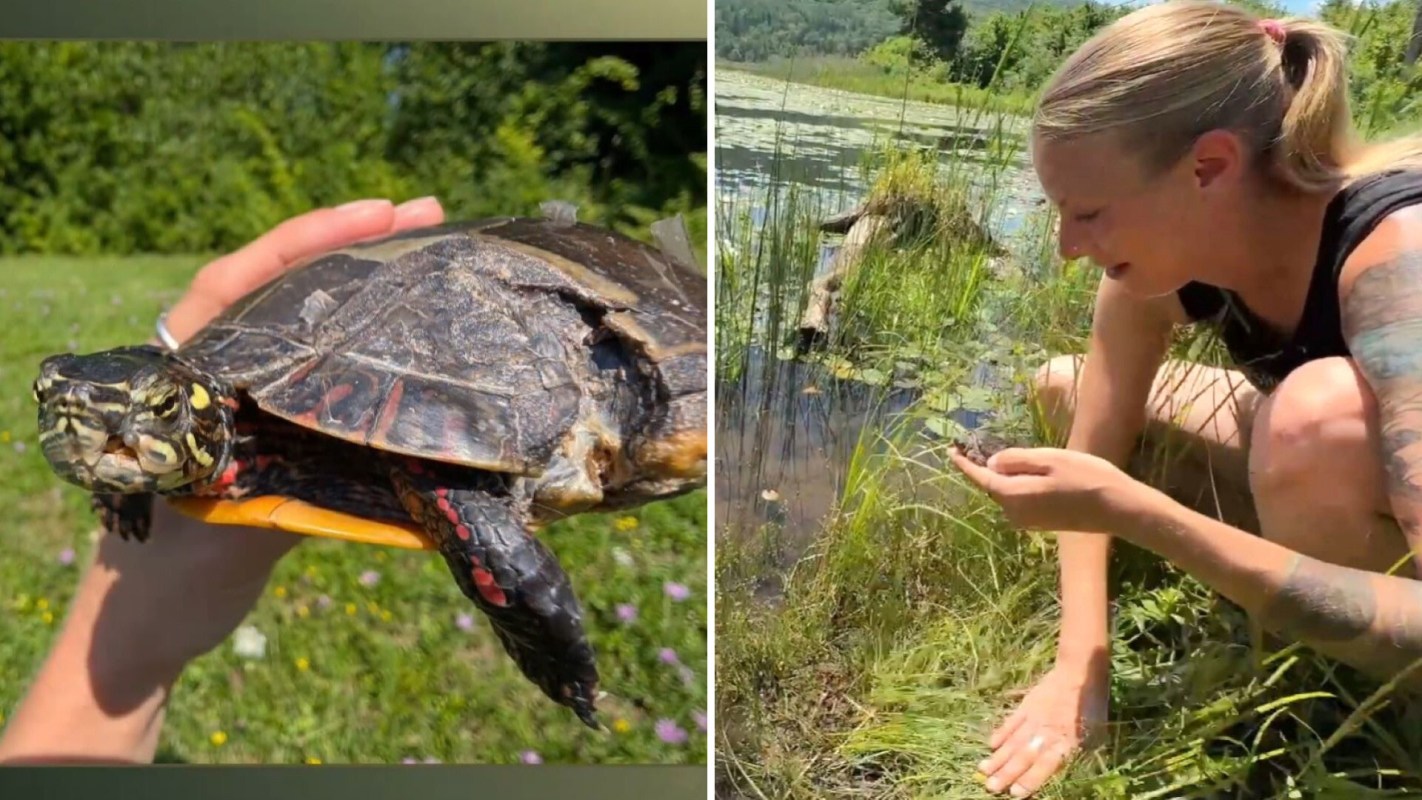
A Massachusetts wildlife rehabilitator is heading into a demanding turtle season that offers a striking snapshot of the mounting pressures these animals face.
iBerkshires.com profiled Tracy Zustra, founder of Berkshire County Turtle Rescue, who is currently caring for about 40 injured turtles while incubating roughly 100 eggs.
What's happening?
Zustra has watched the number of turtle cases climb each year. Last year, she treated more than 130 injured turtles and helped more than 200 eggs hatch. By the middle of this season, she had already helped 90 turtles.
"Egg-laying season has ended so there are not as many turtles crossing the roads, but for the rest of the summer and into the fall, they'll still be trickling in a little bit," Zustra explained to iBerkshires.com.
Outside of the rescue, Zustra works as an activities director. She launched the nonprofit in February 2023 to support injured turtles after the cost of medical treatment, food, and supplies grew beyond what she could handle on her own.
Road crossings during egg-laying season, habitat destruction, and continued human development are all contributing to the need. There's also an education gap that Zustra is filling by teaching locals what to do when they encounter turtles.
TCD Picks » Quince Spotlight
💡These best-sellers from Quince deliver affordable, sustainable luxury for all




Why does it matter?
As Zustra explained, turtles are a keystone species and can reflect the condition of waterways like rivers and bogs.
By eating decaying plants and animals and spreading seeds, turtles help keep ecosystems working and waterways cleaner and healthier. When their numbers fall, it can point to broader environmental stress that affects other wildlife, too.
Massachusetts has 10 turtle species, Zustra said, and six are endangered. Many also take a long time to mature: painted turtles need about 10 years, while snapping and wood turtles may take roughly 20.
"They're very slow to reproduce, and they cannot keep up with the destruction, habitat loss, the roadway loss, and six out of our 10 turtle species in Massachusetts are endangered, and they just continue to decline," Zustra said.
What can I do?
A turtle found on land usually should not be moved to water, she said, because semi-aquatic turtles often travel on purpose between habitats.
"They can spend several hours or even a couple of days out of water," Zustra clarified. "They know what they're doing. They know where they're going,"
When someone calls about an injured turtle, Zustra said the first thing she asks is where it was found. That allows the animal to be returned to the same area after recovery instead of being released somewhere unfamiliar.
She said people can help by slowing down on roads, especially in warmer months. Zustra also said wild turtles should not be taken home as pets; supporting rehabilitators is a much better way to care for wild turtles that may be struggling.
Zustra hopes to eventually build a turtle hospital and grow volunteer support, and she also mentors new rehabilitators through the Wildlife Rehabilitators Association of Massachusetts.
"They don't have to do it at the same level that I do because I do hundreds of turtles a year," Zustra explained to iBerkshires.com. "But even if we had a handful of people doing a couple turtles a year, it would be extremely helpful."

Get TCD's free newsletters for easy tips, smart advice, and a chance to earn $5,000 toward home upgrades. To see more stories like this one, change your Google preferences here.







