


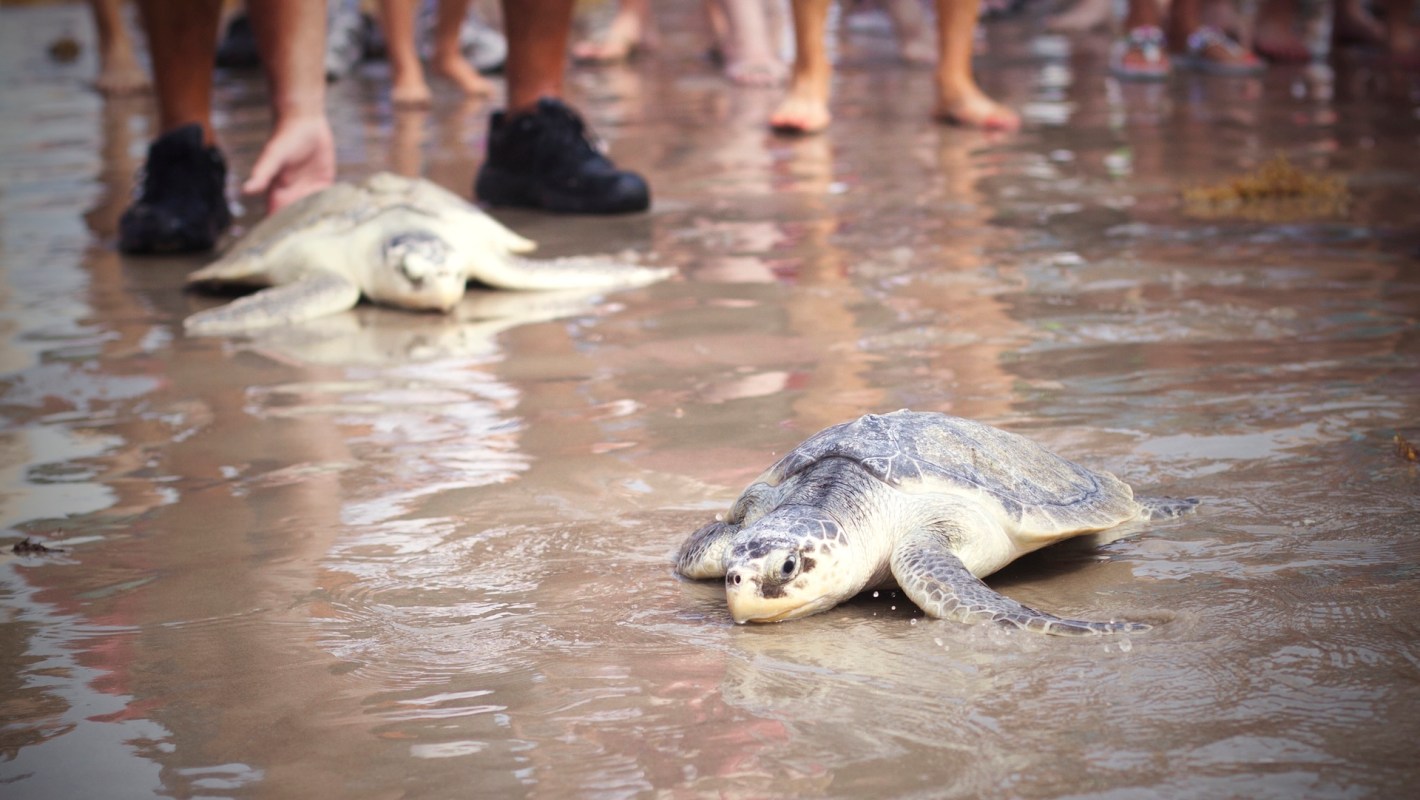
After months of treatment and an unusually long wait for warmer water, 29 rescued sea turtles have finally returned to the ocean off North Carolina.
For the National Aquarium's rescue staff, the return is a significant step after months of care, and it also highlights how changing winter conditions can shape marine animal rescue efforts well beyond a single season.
What happened?
Waters off Oak Island, North Carolina, were the destination on April 14 when the National Aquarium released 29 rehabilitated green and Kemp's ridley sea turtles, according to a National Aquarium press release.
Those animals came from a December intake of 40 turtles rescued near Cape Cod, Massachusetts, after a rapid late-fall temperature drop left them cold-stunned.
One turtle died upon arrival, and 10 are still receiving care.
Cold stunning left many of the turtles with multiple medical issues. The press release said staff treated problems including infections, breathing difficulties, dehydration, malnutrition, and injuries caused by predators or boat strikes.
TCD Picks » Quince Spotlight
💡These best-sellers from Quince deliver affordable, sustainable luxury for all




The rehabilitation effort also carried a Baltimore theme: through a public contest last fall, the turtles were given names based on city neighborhoods.
Those released included turtles named Hampden, Canton, Federal Hill, Curtis Bay, Riverside, Ashburton, Barclay, Overlea, Locust Point, and Jonestown.
Their time in rehabilitation lasted longer than usual because ocean temperatures remained too cold for a safe release even farther south, delaying a return that normally would have happened sooner.
Why does it matter?
Sea turtle rescues like this one are about more than helping individual animals. Turtles play an important role in marine ecosystems, and healthier coastal ecosystems can support cleaner water, stronger food webs, and more resilient shorelines.
The case also shows how unusual weather can complicate wildlife recovery. The aquarium said this winter's conditions contributed not only to delayed turtle releases but also to a marine mammal stranding season in which distressed animals turned up unusually far south.
The aquarium said experts think changing winter conditions, including ice patterns, may have played a role.
Rescue centers, veterinarians, and regional stranding networks all have to adapt when animal emergencies become less predictable.
What's being done?
Even as staff waited for conditions warm enough to return the turtles, the National Aquarium's Animal Rescue team was also handling seal rescue season.
One of the first cases this year was Jetty, a grey seal pup found in distress in Virginia and admitted in February.
After round-the-clock treatment, rehabilitation, and weight gain, Jetty was released back into the wild on April 9 at Assateague Island National Seashore, the aquarium said.
The aquarium has since admitted three more seals for long-term treatment: Crew, a harp seal nearing release after treatment for dehydration and parasites, and two grey seal pups, Boom and Barge, who are still receiving care.
This work is being done in partnership with organizations across regional stranding networks, including the National Oceanic and Atmospheric Administration.
As Malia Hale, Director of Animal Rescue at the National Aquarium, put it: "It is always our priority to return rescued animals to their natural setting as soon as they are healthy enough to thrive."

Get TCD's free newsletters for easy tips, smart advice, and a chance to earn $5,000 toward home upgrades. To see more stories like this one, change your Google preferences here.







