


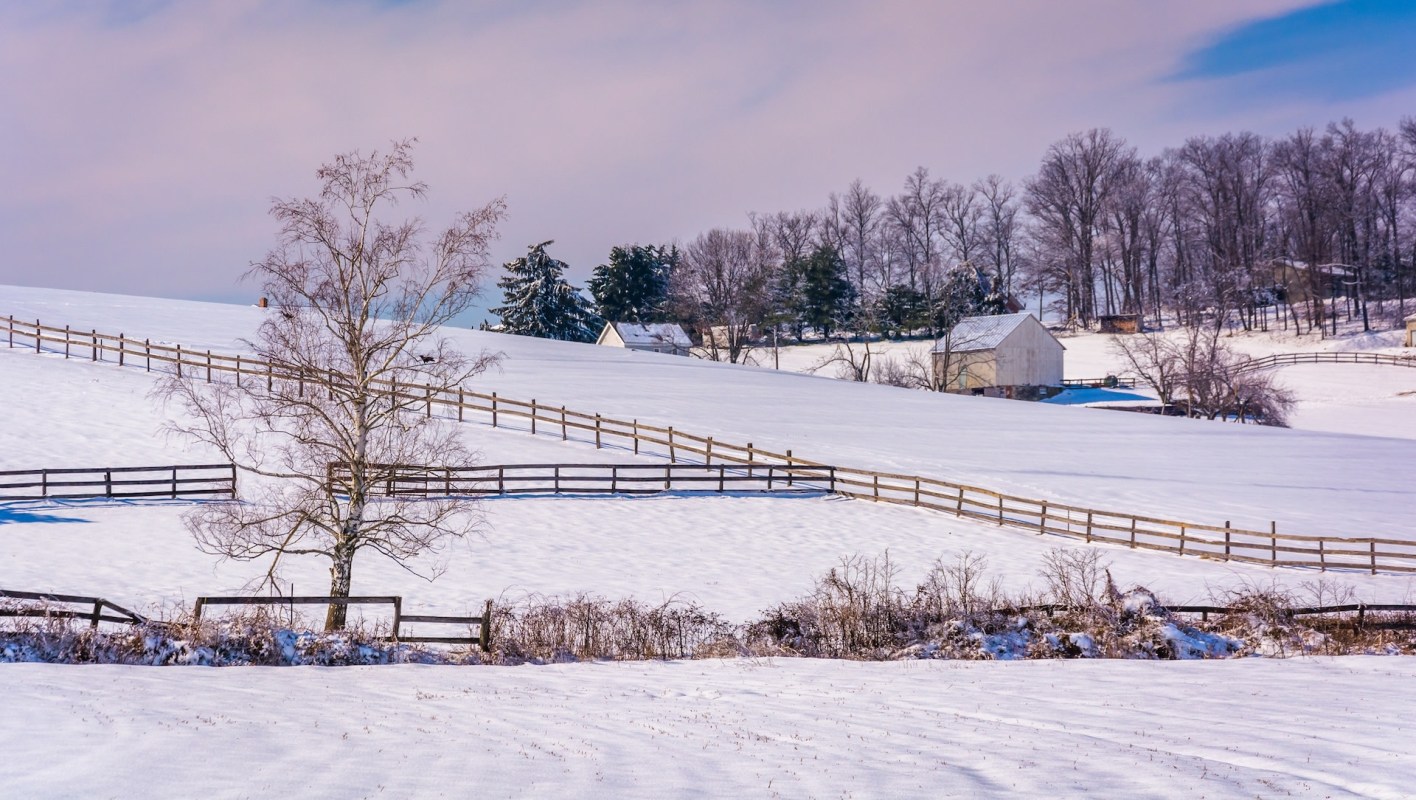
Experts are predicting a milder winter in Maryland, with a slightly higher chance of above-normal temperatures.
However, the snowfall forecast remains up in the air, with equal chances of above- or below-average accumulation throughout the upcoming season.
What's happening?
As the Baltimore Banner reported, officials in Maryland are preparing for just about everything that Mother Nature might throw at them during the winter months.
Coming off the heels of a mild winter the previous year with below-average snowfall, residents in the state may be in store for more of the same.
According to a three-month outlook from the National Oceanic and Atmospheric Administration, the La Niña climate pattern is set to offer warmer temperatures for most of the mid-Atlantic region this winter.
La Niña can provide colder-than-normal sea surface temperatures in the eastern and central Pacific Ocean. This can often bring cooler and wetter conditions in the northern U.S. and warmer, drier conditions in the Southeast.
Why is the presence of La Niña this winter important?
While La Niña is a naturally occurring weather pattern that may "temporarily reduce the warming effects of climate change," according to the U.S. Department of Agriculture, rising global temperatures driven by human-caused pollution are contributing to warmer-than-usual La Niña cycles. Globally, a warming climate is supercharging extreme weather events. However, per the USDA, "the interaction between climate change and La Niña is not completely understood."
Since snow amounts were first recorded in the 1883-1884 winter season, Baltimore sees an average of just over 19 inches per season. The last time the city saw above-average snowfall was in the 2015-2016 season, with 35 inches.
Jeffrey B. Halverson, a professor of weather and climate at the University of Maryland, noted that the western part of Maryland has been "kind of in a snow drought" over the last few years.
"We have not had snowy winters the past three to four years," Halverson said.
TCD Picks » Quince Spotlight
💡These best-sellers from Quince deliver affordable, sustainable luxury for all




With a La Niña system setting up shop for the next few months, Halverson suggested that residents likely won't have to break out their snowblowers any time soon.
|
Do you think the U.S. should tax goods from China? Click your choice to see results and speak your mind. |
 Definitely 👍
 "The big blockbuster 2-foot storm is not typically what you see during a La Niña pattern," he added.
While the mid-Atlantic region could expect to see above-average temperatures over the next few months, experts are keeping an eye on the North Atlantic Oscillation, which can greatly affect the jet stream and the likelihood of storm systems throughout the winter season on a global scale. But unlike La Niña, the North Atlantic Oscillation is less predictable over long periods.
The North Atlantic Oscillation has two separate phases. A positive phase can often influence a stronger-than-average low pressure over Iceland, leading to warmer and wetter conditions in the Northeast U.S.
A negative phase can create a more southerly-dipping jet stream, bringing cooler, drier weather to the region.
What's being done about the upcoming winter season in Baltimore?
Despite the forecast for a mild winter, Baltimore Mayor Brandon M. Scott announced that the city is ready for winter, with a plan involving stocked salt domes, prepped trucks, and a multi-agency approach.
In a press release, Scott revealed that the city's snow response included 294 pieces of equipment supported by 300 contractor apparatuses, all thanks to a $7.3 million budget for snow removal. Altogether, Baltimore is equipped with 15,000 tons of salt.
"For our snow removal efforts to be successful, residents need to prepare now, including by assembling emergency supply kits for both their homes and vehicles, and keeping up to date on weather reports," Scott said in a statement.

💰Get TCD's free newsletters for easy tips to save more, waste less, and make smarter choices — and earn up to $5,000 toward clean upgrades in TCD's exclusive Rewards Club.
Cool Picks






