


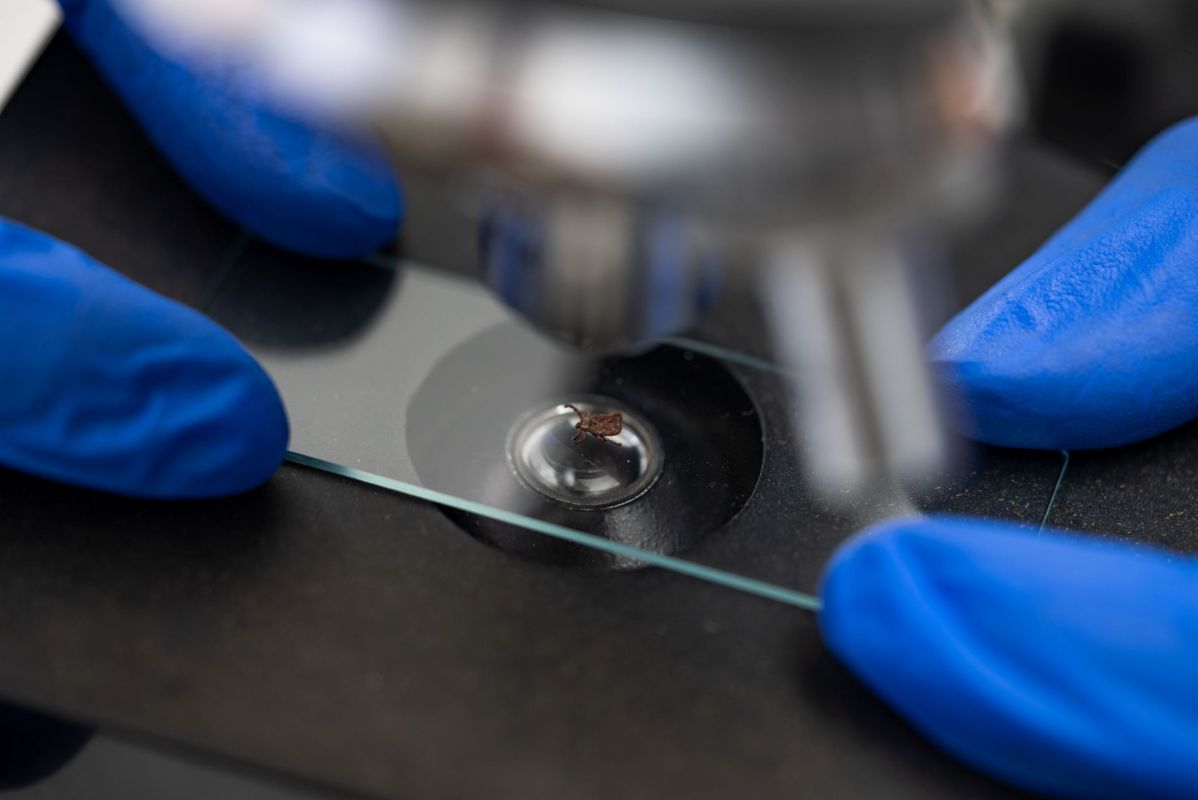
For decades, scientists have questioned mosquitoes' ability to transmit Lyme disease. A recent study now appears to settle the debate once and for all.
What's happening?
Researchers from Florida International University have found evidence that proves that mosquitoes are not capable of contributing to the spread of Lyme disease. In fact, they say that ticks still remain the sole "competent vectors."
In a study first published in the journal Parasites & Vectors, biologists took a closer look at transmission mechanisms behind the spread of Borrelia burgdorferi sensu lato, the group of spirochete bacteria responsible for Lyme disease.
What they found revealed that mosquitoes were simply not able to efficiently acquire Borrelia from infected hosts. They also discovered that an enzyme in a mosquito's gut can actually destroy the bacteria, preventing it from being transmitted.
"Our results show that mosquitoes do not have the biological capacity to efficiently acquire and maintain the bacteria that cause Lyme disease, and that they are unable to transmit them naturally or mechanically," said Fernando Noriega, professor emeritus of biological sciences at FIU and co-author of the study, in the school's summary of the findings.
Why is determining the spread of Lyme disease important?
According to data from the Centers for Disease Control and Prevention, there are well over 200 species of mosquitoes that are found throughout the U.S. and its territories. However, only 12 species are known to be capable of carrying a number of potentially harmful viruses and parasites that could lead to the transmission of diseases like West Nile, dengue, and Zika.
TCD Picks » Quince Spotlight
💡These best-sellers from Quince deliver affordable, sustainable luxury for all




Much like mosquitoes, ticks are capable of carrying a wide range of harmful diseases that can cause severe health issues. This includes the bacteria that causes Lyme disease. Ticks can pick up the Borrelia bacteria by feeding on an infected animal over an extended period of time. That bacteria can then find the perfect habitat inside the tick as the parasite works through its natural life cycle.
"Unlike ticks, mosquitoes only need a few minutes to complete a blood meal," the study reads. "This short feeding period limits the time available for Borrelia spirochetes to transition from a non-infectious to a vertebrate-infective state."
What's being done about preventing the spread of Lyme disease?
Rising global temperatures have been linked to an increase in vector-borne diseases by expanding the geographical range of vectors such as mosquitoes and ticks. Warmer temperatures create more suitable habitats and longer seasons for vectors to be active. This can result in a higher risk of disease transmission to humans.
As noted by Noriega, determining how certain diseases are spread is an invaluable step in the process of controlling disease outbreaks. By understanding which carriers can be ruled out, health officials can develop more effective prevention and risk assessment strategies.
"This study provides compelling evidence against Lyme disease transmission by mosquitoes and reinforces Ixodes ticks as the only competent vectors, which is critical for targeted public health interventions and accurate risk communication," added Noriega.
|
How bad are the mosquitoes in your area? Click your choice to see results and speak your mind. |
 What mosquitoes? 😎
Join our free newsletter for good news and useful tips, and don't miss this cool list of easy ways to help yourself while helping the planet.







