


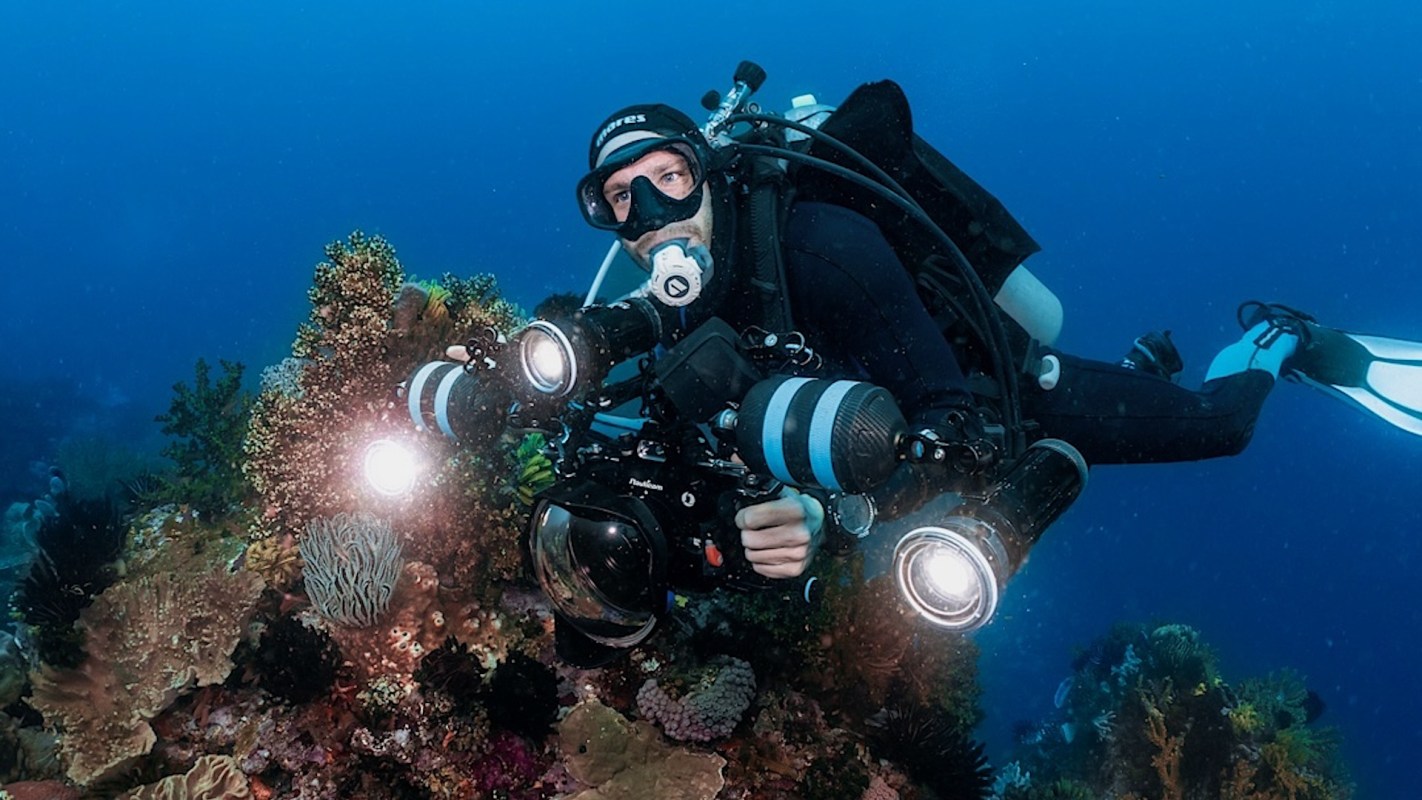
Diver and underwater videographer John Roney shared mesmerizing footage from his last dive — a close-up of the world's largest jellyfish, the lion's mane jellyfish.
As Gizmodo reported, the footage was taken in the Salish Sea, an inland sea connected to the Pacific Ocean off the coast of British Columbia.
The lion's mane jellyfish has an average length of only 1.5 feet, but according to Oceana, it can grow upwards of 6.5 feet and have up to 1,200 tentacles divided into eight clusters. The largest one ever recorded had tentacles that were 120 feet long.
"Several minutes into the dive, I noticed a long, thin tentacle trailing overhead, stretching far beyond my vision," John Roney wrote on his Instagram (@roneydives). "I followed it through the darkness for over a minute before coming upon a giant lion's mane jellyfish."
The video shows the translucent orange and purple jellyfish floating in the water. The shot is so clear that viewers can appreciate the textural difference between the tentacles and the creature's body.
Roney shared more fascinating information about the jellyfish in his post.
"They use their stinging tentacles to ensnare, pull in, and eat prey such as fish, zooplankton, and other jellyfish," Roney wrote.
"They also have these deep, vibrant orange, purple, and crimson colours that I love to film. But fair warning — this is a jellyfish you definitely don't want to touch."
While beachgoers are warned not to go near jellyfish because of their poisonous and painful stings, the lion's mane jellyfish is not fatal to humans, but touching it can still be quite painful.
Videos like Roney's educate the general public about what actually lives in the ocean. It's not just open waters and plants; it's thriving fish schools, lion's mane jellyfish that weigh as much as a ton, whale pods, and coral colonies that are all worth protecting from oil spills, plastic waste, overfishing, and noise pollution.
TCD Picks » Quince Spotlight
💡These best-sellers from Quince deliver affordable, sustainable luxury for all




With continued ocean conservation, sustainable fishing, and funding to improve ocean health, we can continue to enjoy videos like Roney's for years to come.
|
Do you think humans are doing enough to protect endangered animals? Click your choice to see results and speak your mind. |
 Definitely 👍
Get TCD's free newsletters for easy tips to save more, waste less, and make smarter choices — and earn up to $5,000 toward clean upgrades in TCD's exclusive Rewards Club.
Cool Picks




