


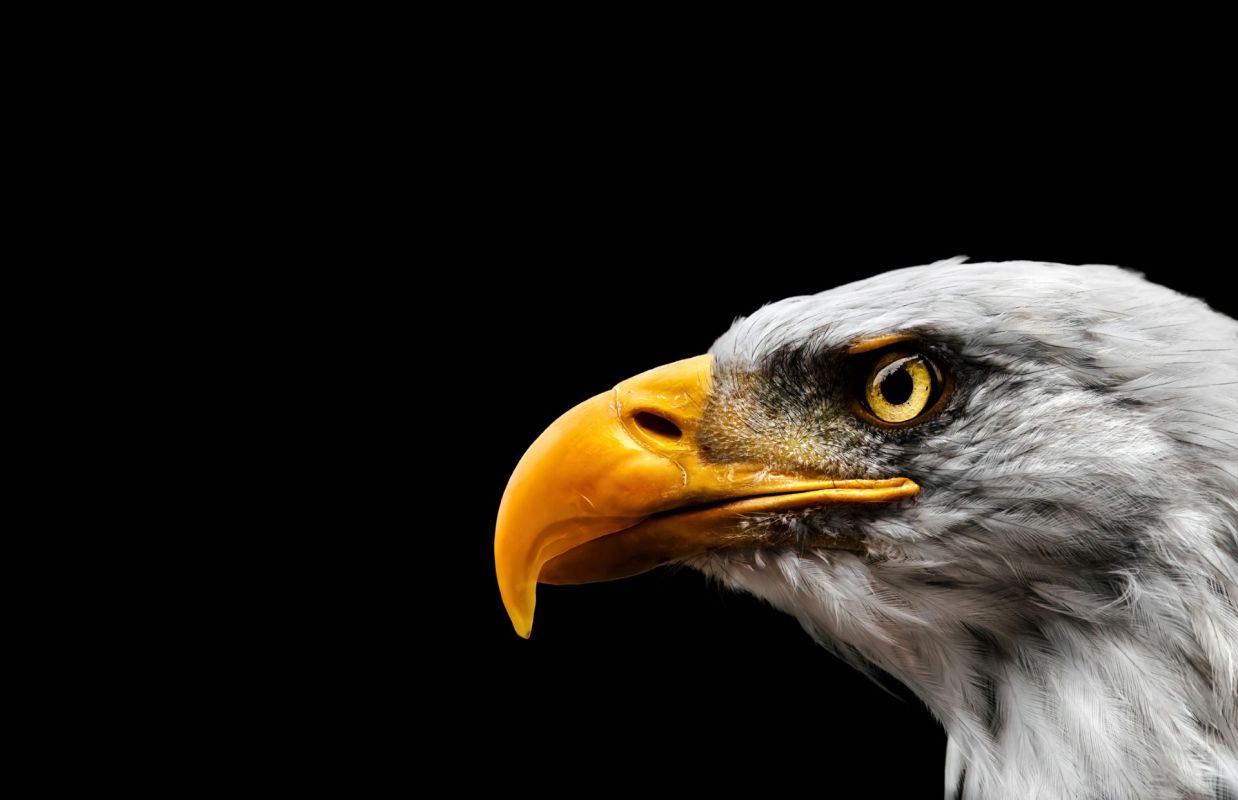
A wildlife photographer in southwest Missouri tracked down a unique bird after reports of an all-white eagle in the area.
According to Whiskey Riff, Terry Nunn found and photographed the leucistic bald eagle, defying the odds of 1 in 30,000 of seeing the bird in the wild.
The eagle's unique appearance is caused by leucism, a genetic condition that prevents melanin from fully depositing in feathers. Unlike albinism, leucism does not affect eye color, and birds with the condition can appear partially white or, as in this case, almost entirely white.
"I drove back over to southwest Missouri hoping to find the leucistic eagle again and pray I could get some clean shots even at distance," Nunn wrote on Instagram. "No guarantees. No shortcuts. Just patience.
"I spent 8 hours watching her fly to a few different trees just hoping she would come a little closer," he continued. "These are some of the photos I'm most proud of in my entire photography career. Not because they're perfect. But because of what it took to make them and the subject."
While the story has captivated wildlife enthusiasts, it also underscores how vulnerable such animals can be.
TCD Picks » Quince Spotlight
💡These best-sellers from Quince deliver affordable, sustainable luxury for all




Bald eagles have made a significant comeback in the United States after decades of conservation efforts, but they still rely on clean waterways, abundant food sources, and relatively undisturbed nesting and roosting areas.
Pollution, habitat loss, and shifting seasonal patterns can all place added pressure on birds that already stand out because of their rare coloring.
The story also reflects how human activity increasingly shapes wildlife encounters. More people are spending time outdoors, sharing sightings online, and venturing further into wildlife habitats, making it easier to document uncommon discoveries.
That visibility can support conservation when sightings are reported responsibly.
However, increased overlap between people and wildlife can also create stress for animals if crowds gather, photographers get too close, or habitats become more fragmented.
The best response to a rare sighting like this is to maintain a respectful distance. Birders and photographers can help by avoiding disturbance, staying away from nesting or roosting areas, and reporting unusual sightings to state wildlife agencies instead of turning them into spectacles.
More broadly, protecting bald eagles means supporting habitat conservation, keeping rivers and lakes free from pollution, and backing policies that preserve forests, wetlands, and other ecosystems birds rely on.
Communities can also reduce risks to raptors by properly disposing of fishing gear and avoiding practices that contaminate waterways or food sources.
Stories like this show what is possible when conservation efforts succeed. A rare white eagle may be an outlier, but the conditions that allow any bald eagle to survive benefit entire ecosystems.

Get TCD's free newsletters for easy tips, smart advice, and a chance to earn $5,000 toward home upgrades. To see more stories like this one, change your Google preferences here.







