


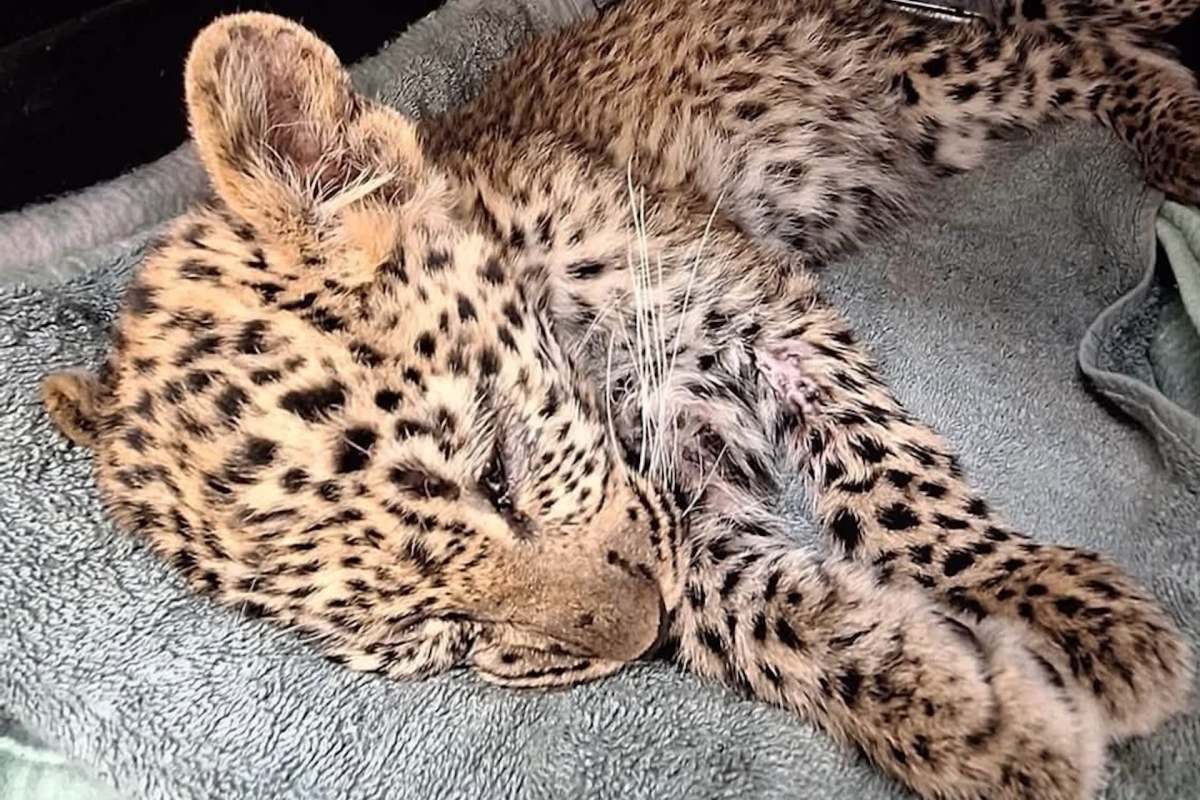
A starving leopard cub wandered into a chicken coop in South Africa in search of food. Instead of being turned away, it found people willing to help.
Because farmers made the call, rescuers stepped in, and a big cat sanctuary built a temporary rehabilitation space in just a week.
What happened?
The cub was found in Limpopo, South Africa, where farmers discovered her alone and trapped in a chicken coop, as the African Pangolin Working Group (@AfricanPangolinConservation) revealed in a Facebook post.
By the time rescue teams reached her, they believed she had been separated from her mother for a while and was in poor condition.
As Good Things Guy noted, the African Pangolin Working Group is a conservation team best known for rescuing and rehabilitating pangolins. They took on the case, even though this emergency involved a leopard rather than one of their usual patients.
"So weak and thin, she needed intensive veterinary attention and round-the-clock observation to bring her back to health," the group wrote. "We named her Mohli, short for Mohlabane, meaning 'fighter,' because she was fierce from day one, and she prevailed despite her fragile state."
TCD Picks » Quince Spotlight
💡These best-sellers from Quince deliver affordable, sustainable luxury for all




Urgent veterinary care at the Pangolarium stabilized Mohli after veterinarian Dr. Kelsey brought her there in an APWG rescue vehicle.
She was dehydrated and severely underweight, and after being helped to recover, she was moved to Indlulamithi Wild Big Cat Sanctuary for the next phase of rehabilitation.
Why does it matter?
Several people chose coexistence over conflict. The farmers who discovered Mohli could have seen her only as a threat to their animals. Instead, they asked for help.
When young predators lose their mothers or end up in spaces dominated by humans, their chances of survival can collapse quickly without intervention. The group said Mohli was "far too young to be surviving on her own," and rescuers were working against the clock.
Wildlife rescue efforts often require flexibility. The Pangolarium was founded around pangolins, but thanks to the group's veterinary knowledge and rescue equipment, the rescuers were able to save another vulnerable wild animal in an emergency.
"As a veterinary practice grounded in wildlife conservation, we're able to assist animals of all kinds when they arrive in need of care," the group wrote on Facebook. "That readiness isn't a departure from our purpose, it's the heart of it."
The space being created for her rehabilitation may later be used to help other rescued big cats, adding another resource for wildlife care in the region.
What's being done?
After Mohli was stable enough to leave, Indlulamithi Wild Big Cat Sanctuary agreed to take her despite not having a vacant enclosure ready. The team then pulled together support and quickly created room for her.
"We did not have an open enclosure, but we knew we had to help her," the sanctuary shared in a BackaBuddy campaign post. "We managed through friends and family to get enough money to build her a small 25m x 25m management camp to start off with. It was built in a week."
The group revealed camera traps are following Mohli as she eats, explores, and regains strength, helping caretakers keep human contact to a minimum and preserve her wild instincts.
The goal is to release her at around 18 months old with a satellite collar. First, the sanctuary needs a larger soft-release enclosure where she can run, build hunting skills, and continue maturing safely.
"It is so important to get this little girl back to the wild, she is wild, and that is where she belongs!" the sanctuary concluded.

Get TCD's free newsletters for easy tips, smart advice, and a chance to earn $5,000 toward home upgrades. To see more stories like this one, change your Google preferences here.







