


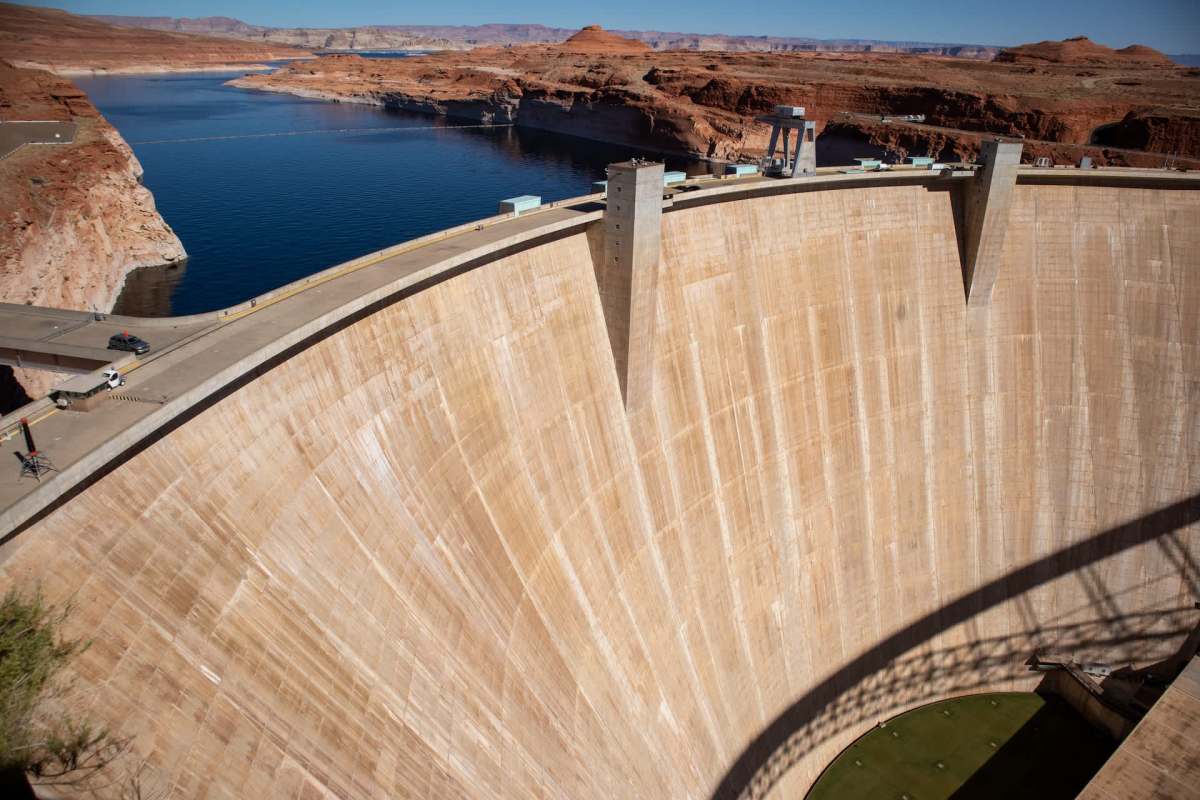
Lake Powell is again in the danger zone. The chronically water-hungry reservoir could reach "minimum power pool" by December because of drought conditions.
What's happening?
The lake, which is predominantly located in Utah and crosses the Arizona border, would not be able to produce electricity, according to a monthly Bureau of Reclamation study, KNAU reported. The two-year projection shows that the water level is rapidly approaching 3,490 feet of elevation, below which the Glen Canyon Dam is unable to generate power.
Under the worst-case scenario, this would happen by August.
"The agency says a lack of precipitation over the past month has pushed the forecast for water flowing into the Colorado River down 1.5 million acre-feet since January," KNAU stated. "The loss is equivalent to about 50 feet in elevation in Lake Powell. Hydrologists say the overall inflow for the current water year is now 52% of average."
The situation is part of an ongoing problem. On Tuesday, the lake hit 3,533 feet, with the water level having fallen every day since late October. Lake Powell has not crested 3,587 feet since 2020, but it has also never dipped below 3,500 feet since a couple of years after it was filled in 1963.
Why is this important?
Seven states — plus Native American tribes and Mexico — rely on Lake Powell and Lake Mead, located on the Nevada-Arizona border, for water and electricity. They are the second-largest and largest reservoirs in the United States.
The reservoirs were only 25% and 34% full as of Tuesday compared to historical Feb. 17 averages of 46% and 61%, per the Bureau of Reclamation, putting 40 million people as well as 5.5 million acres of farmland at risk. The driving factor is a 25-year drought, the Colorado Sun reported.
"There are many trade-offs to consider. We cannot keep drawing from savings when the system is not making sufficient deposits of water. We must work with what nature is providing," Sharon Megdal, director of the University of Arizona Water Resources Research Center, told Newsweek just before the new year.
What's being done about Lake Powell's low level?
The federal government is pushing Colorado Basin states to come to an agreement, and officials will likely reduce the amount of water they release from the dam so the lake remains above 3,500 feet, according to the Sun. Emergency releases from upstream reservoirs can also help, as could the ecosystem engineers known as beavers.
"Negotiation efforts have been productive; we have listened to every state's perspective and have narrowed the discussion by identifying key elements and issues necessary for an agreement," Secretary of the Interior Doug Burgum said in a news release. "We believe that a fair compromise with shared responsibility remains within reach."
TCD Picks » Quince Spotlight
💡These best-sellers from Quince deliver affordable, sustainable luxury for all




Whether you live in the Southwest or elsewhere, you can take a number of steps to use less water. Talking about this and other critical climate problems with your family and friends also promotes awareness about environmental issues, fostering community-driven approaches to conservation.
|
What's the most you'd pay per month to put solar panels on your roof if there was no down payment?
Click your choice to see results and speak your mind. |
 $200 or more 💰
Get TCD's free newsletters for easy tips to save more, waste less, and make smarter choices — and earn up to $5,000 toward clean upgrades in TCD's exclusive Rewards Club.
Cool Picks




