


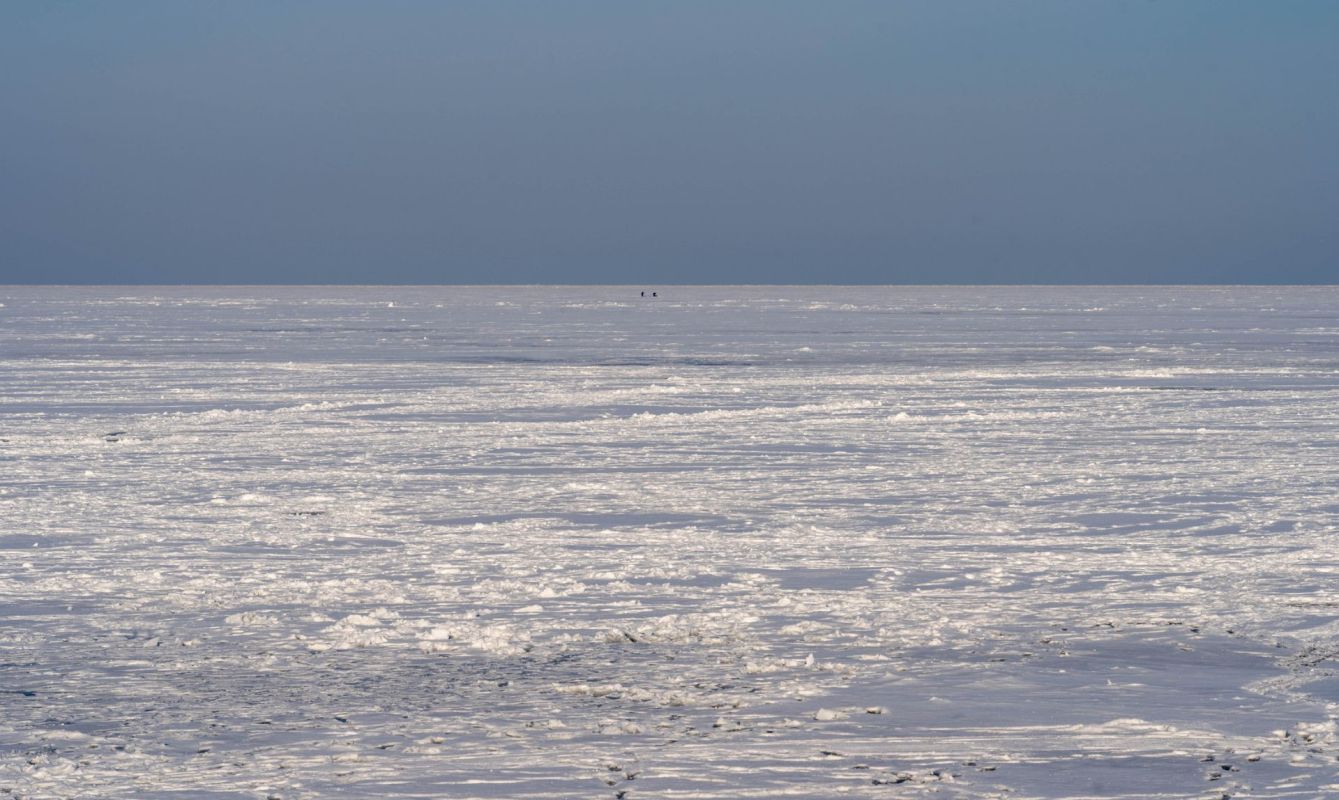
This year, Lake Erie is experiencing ice coverage it hasn't seen in nearly three decades.
While frozen Great Lakes might appear picturesque, extreme swings like this show how weather patterns are becoming more volatile.
What's happening?
The Chronicle reported that the surface of Lake Erie has approached nearly 100% ice coverage for the first time since 1996.
Meteorologist Jim Sullivan described the near-complete freeze as "very rare."
Sullivan added that calm wind conditions increased the likelihood that ice would form and stay put if temperatures remained low enough.
Lake Erie is the shallowest of the Great Lakes, making it more prone to freezing than the other lakes.
Even so, full or near-full ice coverage isn't very common, and it can disrupt freight vessels, or "lakers," as they navigate the waters.
Why is this concerning?
Freight ships in the Great Lakes carry all sorts of cargo, from agricultural products to limestone and steel.
When ice forms, it can slow down the transport of goods and require the assistance of special "cutter" ships to break up the ice and restore paths in the lakes.
Beyond disrupting shipping companies, the freeze underscored how weather patterns are becoming more volatile as global temperatures rise.
TCD Picks » Quince Spotlight
💡These best-sellers from Quince deliver affordable, sustainable luxury for all




|
Which of these savings plans for rooftop solar panels would be most appealing for you?
Click your choice to see results and earn rewards to spend on home upgrades. |
 Save $1,000 this year 💸
 Air pollution hasn't just contributed to more unpredictable weather; it's also made extreme weather like storms, heat waves, floods, and wildfires more frequent and severe.
From storms and flooding in Spain wiping out crops to soaring temperatures creating health risks for Texans, extreme weather's effects reverberate across economies, ecosystems, and communities.
Additionally, people living in areas prone to weather-related disasters like wildfires and hurricanes are finding it harder and more expensive to obtain insurance coverage, putting entire families at risk of losing everything.
What can be done about shifting weather patterns?
For Lake Erie, cutters with the United States Coast Guard are heading out to break up some of the ice in the lake so that freighters can get back to business.
This is important because around 1.8 billion tons of cargo cross the Great Lakes each year.
At the policy level, efforts to better predict and strengthen resilience to weather events can help protect people and businesses from disasters. But on a broader level, working to reduce heat-trapping pollution is the best way to reduce rising temperatures and weather volatility.
Individuals can explore critical climate issues and learn to make changes at home and in their communities to help work toward a safer, more stable future for everyone.
Simple actions like using less plastic and doing more with your leftovers add up over time — the more people who try to reduce pollution, the greater the impact.

Get TCD's free newsletters for easy tips to save more, waste less, and make smarter choices — and earn up to $5,000 toward clean upgrades in TCD's exclusive Rewards Club.
Cool Picks






