


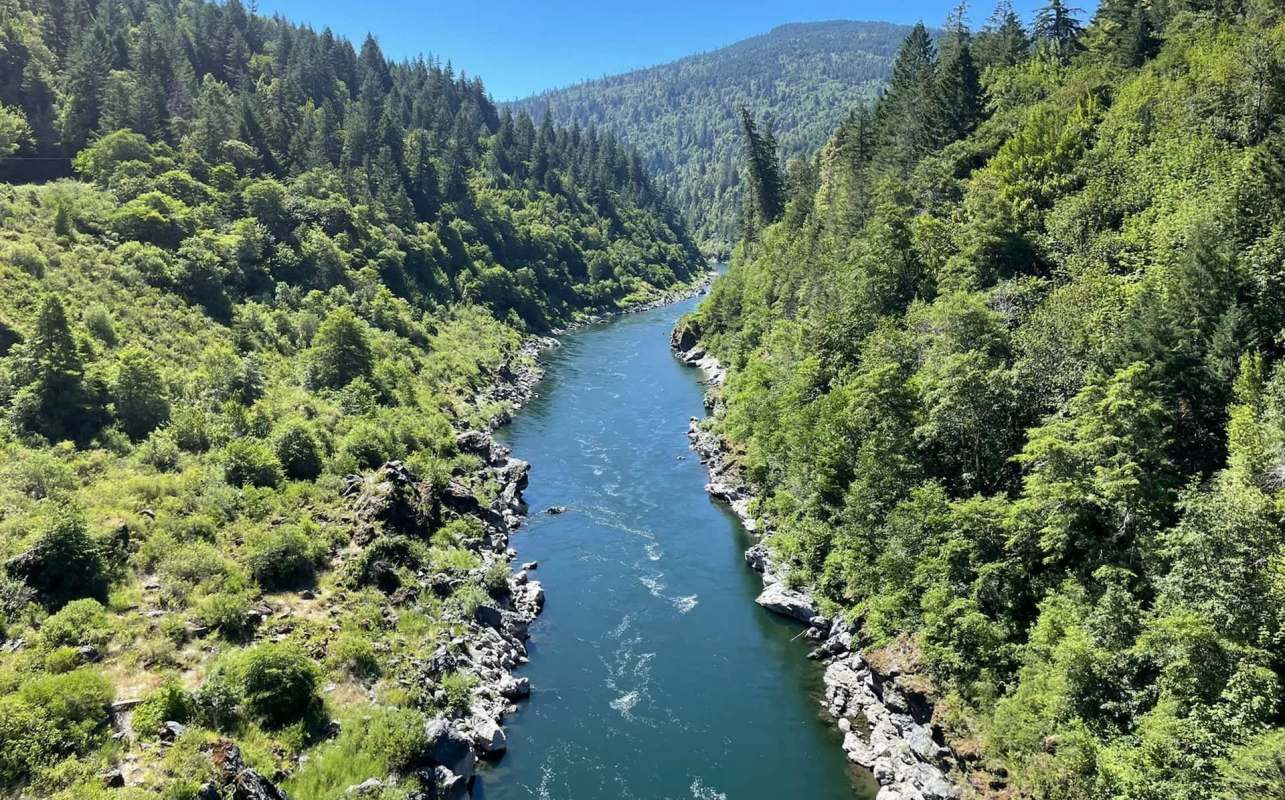
One year after four dams came down on the Klamath River, scientists are already noticing positive changes to the ecosystem.
The removal of these four dams and the restoration of the river and the lands around it is the biggest restoration project in U.S. history. Oregon Public Broadcasting explored the changes seen in the Klamath and the immense impact that dam removals can have.
Damon Goodman, Mount Shasta-Klamath regional director for California Trout, said, "The river seemed to come alive almost instantly after dam removal," per the news outlet.
This return to life is critical for the health of the wildlife that live in and depend on the Klamath.
Scientists from local tribes, the state, nonprofits, and the federal government have been paying close attention to these changes since the dams came down last year. The positive impacts have been numerous: more natural water temperatures, stable dissolved oxygen content, the disappearance of toxic bacteria, and perhaps most excitingly, the return of salmon to their natural breeding grounds.
The temperature change was especially important in bringing salmon back to the river, as colder waters help the fish save energy for spawning upstream. Before, the reservoirs behind the dams would get hot in the summer and release warm water downstream, keeping temperatures too high for an ideal salmon breeding ground.
TCD Picks » Quince Spotlight
💡These best-sellers from Quince deliver affordable, sustainable luxury for all




The return of the Klamath to its natural state will not only benefit wildlife and nature, but also communities — especially the Tribes along the river who were historically connected by salmon runs. Earlier this year, a group of Indigenous teens and young adults took a historic journey down the restored river.
Though the dam removals are having positive impacts on the river environment, other changes in the climate and weather patterns mean that Tribal communities along the Klamath and around the world are still adjusting to changes in salmon populations.
Klamath Tribal Chair William Ray, Jr. described the returning health of the Klamath, saying, "It's mixed feelings for many tribal members, both rejoicing and a blessing. But also, a certain amount of remorse. All those elders and all those generations that didn't get to see this happen. … They did not get an opportunity to see their victories, because this is a victory for the Klamath Tribes, to essentially make it right again for us."
|
Do you think America does a good job of protecting its natural beauty? Click your choice to see results and speak your mind. |
 Definitely 👍
Join our free newsletter for good news and useful tips, and don't miss this cool list of easy ways to help yourself while helping the planet.







