


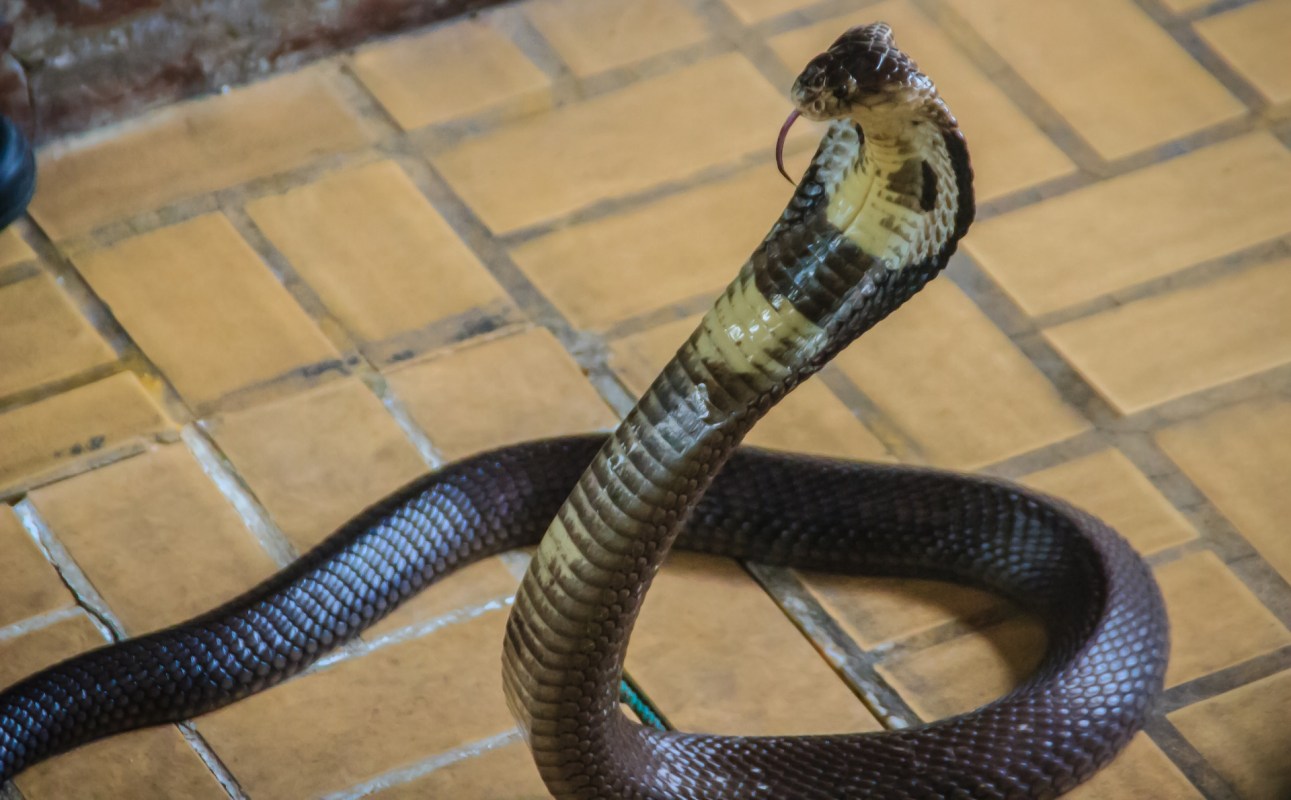
A video from Uttarakhand, India, shows a king cobra silently slipping into a house. The frightening footage highlights a bigger issue: As development expands and wild spaces are disturbed, dangerous encounters between people and animals can become more common.
What happened?
A Reddit video appears to show a king cobra entering a home in Uttarakhand with almost no warning, and making its way over a person before standing and looking at them.
King cobras are the world's longest venomous snakes and can reach striking lengths. They live across parts of India and Southeast Asia, usually in forests and other natural habitats — not inside homes.
"That ending genuinely gave me goosebumps," one user commented. "King cobras standing up like that and making eye contact is enough to get my heart pounding through a screen."
"This is nightmare fuel," another agreed.
The video does not appear to show what happened afterward, but the footage alone was enough to trigger widespread concern.
Support pets in need with these special-edition memory foam shoes BOBS from Skechers has helped over 2 million shelter pets around the world — and the charity program just announced this year’s Paws for a Cause design-winning sneakers. These "hound huggers" and "kitten kicks" sneakers are machine washable and equipped with memory foam insoles. Plus, they were designed by passionate students who were inspired by their very own rescue pets. BOBS from Skechers is also committed to donating half a million dollars to the Best Friends Animal Society this year to help every dog and cat experience the safety and support of a loving home. |

Why is this encounter concerning?
Situations like this put both people and wildlife at immediate risk.
For residents, a close encounter with a highly venomous snake can become a medical emergency in seconds if the animal feels cornered or threatened. For the snake, these situations often end badly, too, since wild animals that enter human spaces are frequently injured or killed out of fear.
These incidents may also be connected, at least in part, to human activity. As forests are cleared for roads, farms, and housing — and as rising global temperatures affect animal behavior, prey patterns, and water availability — wildlife can be pushed into closer contact with people.
New research predicted that venomous snakes, such as king cobras, are likely to shift their habitats toward more populated regions.
TCD Picks » Quince Spotlight
💡These best-sellers from Quince deliver affordable, sustainable luxury for all




Many so-called animal "attacks" are actually signs of habitat loss, environmental stress, and human encroachment into places animals once occupied with far less disturbance.
King cobras play an important ecological role by helping regulate other snake populations. When top predators lose habitat or are pushed into human settlements, it can be a sign that surrounding ecosystems are under strain.
What can be done about this type of conflict?
The most effective solutions are broader ones: protecting forests, limiting unnecessary land clearing, preserving wildlife corridors, and planning development in ways that leave animals with intact habitat instead of forcing them into villages and homes.
For individuals, experts generally advise against approaching, trapping, or attempting to kill a venomous snake. Instead, residents should maintain a safe distance, contact local wildlife officials or trained rescuers, and, when possible, reduce hiding spots around homes.

Get TCD's free newsletters for easy tips, smart advice, and a chance to earn $5,000 toward home upgrades. To see more stories like this one, change your Google preferences here.
Cool Picks






