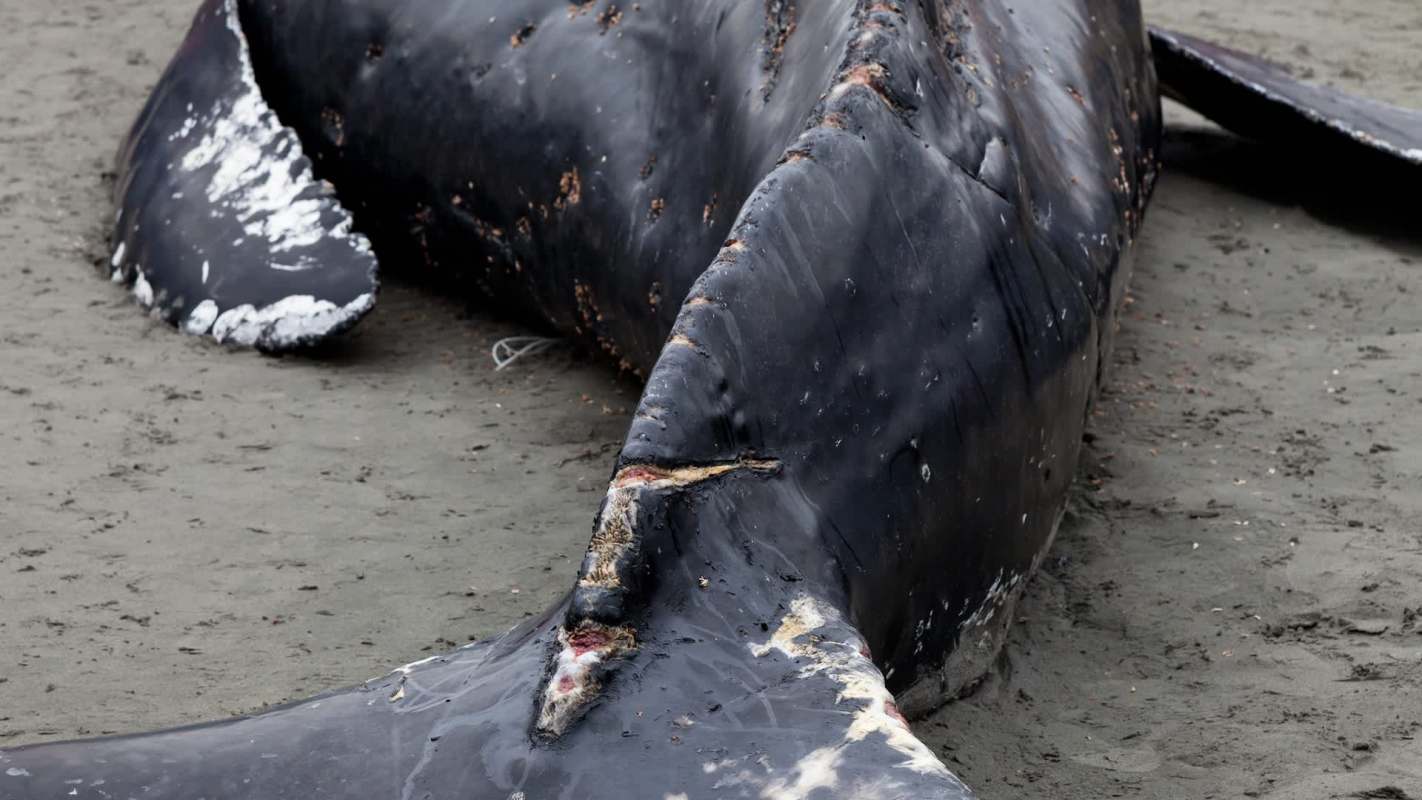
A juvenile humpback whale found dead along the California coast has drawn crowds, forced a beach closure, and become a new focus for scientists looking at marine mammal health.
What happened?
After the whale was first spotted in the water early this month, it washed ashore near Hopkins Marine Station in Pacific Grove, as KSBW reported.
Pacific Grove police then closed Lover's Point Beach, about a mile away, as people gathered to watch and take pictures.
To learn what caused the death, researchers at UC Santa Cruz's Long Marine Lab began examining the whale and testing samples.
"Our team was able to successfully get a fecal sample, and that's one of the samples that we need to determine whether there was domoic acid in its body," Robin Dunkin from UCSC Long Marine Lab told KSBW.
According to Colleen Talty, director of operations at Happywhale, the whale had a tag and was recorded twice in March, per the outlet. Researchers estimated it was about 2 years old.
TCD Picks » Quince Spotlight
💡These best-sellers from Quince deliver affordable, sustainable luxury for all




For many onlookers, the whale appeared larger than expected.
"It doesn't look that big when you're just looking at it," Heather Cool told KSBW. "And then when you see these people, they're not even the size of a fin."
Chris Fenstermaker said the scene reminded him of another whale that washed up in the area a few years ago.
"There was, a couple of years ago, a beached whale at Asilomar," Fenstermaker recalled to KSBW. "But that was a lot more decomposed. This one's, like, fresh. It's brand new."
Why does it matter?
Examining a whale death like this can help scientists understand the health of marine mammals in the region.
As KSBW reported, one of the things researchers are checking for is domoic acid, a naturally occurring toxin associated with harmful algal blooms that can sicken or kill marine animals.
"We don't always tow whales," Dunkin told the network. "We really take into consideration the beach that the animal has landed on, whether it's kind of highly accessed by the public, whether there's any safety concerns."
The incident also led to a beach closure about a mile away. A follow-up report from KSBW indicated that the beach is now back open, but water activities are discouraged due to sharks in the region.
What's being done?
In situations like these, scientists collect as much information as they can.
In this instance, samples may show whether domoic acid or something else contributed to the death.
After testing is finished, the whale is expected to be returned to the ocean. KSBW noted that was expected to take up to 48 hours.
On Tuesday, in its latest update, the Pacific Grove Police Department announced the whale was in the water but cautioned against sharks. That same day, KSBW reported that responders were "waiting for ocean conditions that would allow the carcass to be safely towed offshore."

Get TCD's free newsletters for easy tips, smart advice, and a chance to earn $5,000 toward home upgrades. To see more stories like this one, change your Google preferences here.