


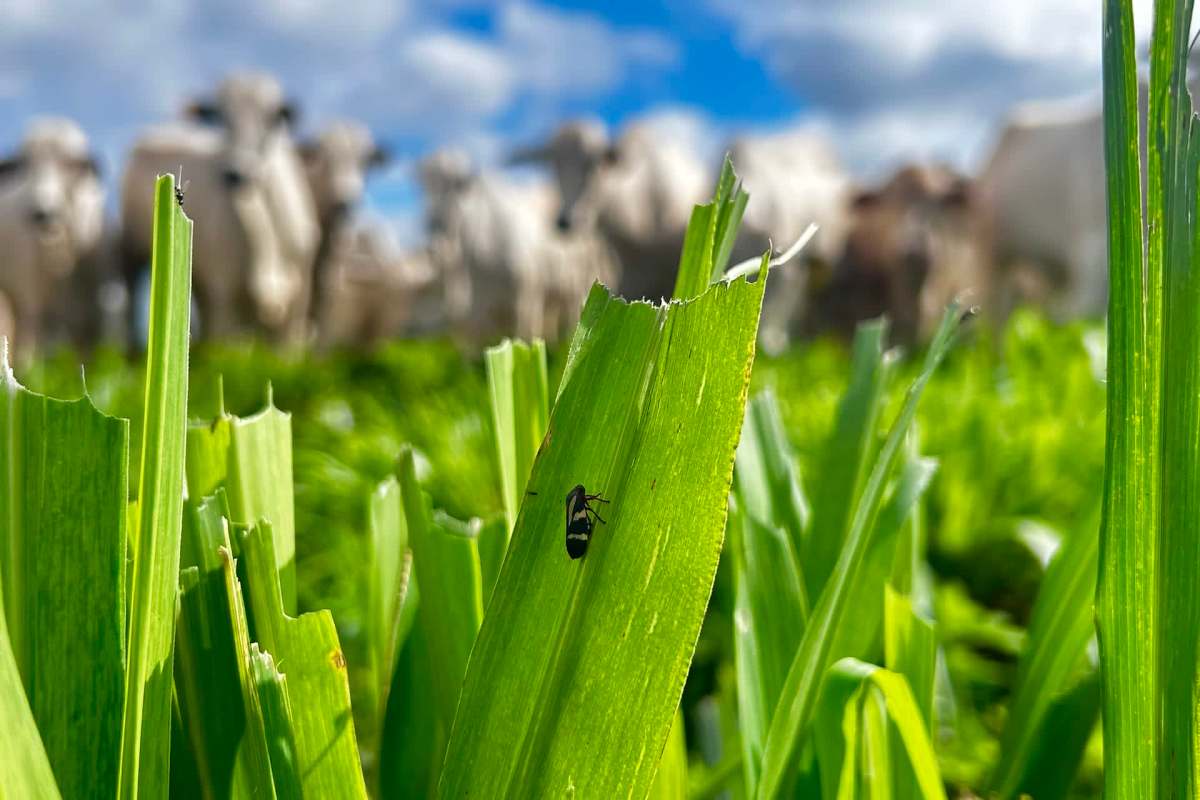
You wouldn't think something so small could create so much havoc, but that's exactly what a little bug in Hawaiʻi is doing. According to the Star Advertiser, "The two-lined spittlebug arrived on Hawaiʻi Island in 2016."
It's distinguishable by its red legs and two blood-orange stripes on its back. It's only one centimeter long, lives for 60 days, and is native to the southeast U.S.
What's happening?
This little bug is threatening Hawaiʻi's livestock industry. After 10 years, it destroyed about 320,000 acres of ranchlands across Pu'u Wa'awa'a to South Point.
University of Hawaiʻi Range and Livestock Extension Specialist Mark Thorne told the Star Advertiser, "It has grown tremendously."
Once the spittlebug eats the pasture grass, it paves the way for invasive grass and weeds. It's difficult for ranchers to get rid of the invasive plants.
Thorne added, "It basically renders the rangelands that our livestock industry rely on almost to the point of not being able to support livestock production."
"It's pretty devastating," he said.
Why is the invasion of the spittlebug concerning?
While not all non-native species are invasive, the ones that are can be devastating to a community. They tend to outcompete native species for food resources, leading to declines in native plants and animals and even to extinction. Invasive species are also costly to the economy. It costs the U.S. $20 million a year for clean-up and management. Additionally, these species can carry diseases.
As of 2023, Hawaiʻi's livestock industry was valued at $50 million. The spittlebug is not just a threat to the industry and economy, but also to Hawaiʻi's food security and soil erosion, which will impact the state's watershed.
Thorne has been researching the spittlebug's movements since it arrived and warned that if nothing is done, the bug will move into the state's largest livestock area, Waimea.
TCD Picks » Upway Spotlight
💡Upway makes it easy to find discounts of up to 60% on premium e-bike brands





|
What's the most you'd pay per month to put solar panels on your roof if there was no down payment?
Click your choice to see results and speak your mind. |
 $200 or more 💰
 What's being done about the spittlebug?
State Sen. Mike Gabbard introduced a bill to help protect the cattle industry. It went through its first reading on Jan. 21 and has moved into the Agriculture and Environment and Ways and Means committees.
The bill aims to be proactive rather than clean up the damage afterwards. It establishes a two-year pilot program to address the threat. It will be more expensive to wait than to solve the problem now, as it's estimated to cost $1.6 million in total.
The bill lays out a plan for a response team to "target early infestations, map the bug's spread and test most effective and affordable ways to control it," according to the Star Advertiser.
Thorne's team has also created an app to help the public identify the bugs and report them.

Get TCD's free newsletters for easy tips to save more, waste less, and make smarter choices — and earn up to $5,000 toward clean upgrades in TCD's exclusive Rewards Club.
Cool Picks






