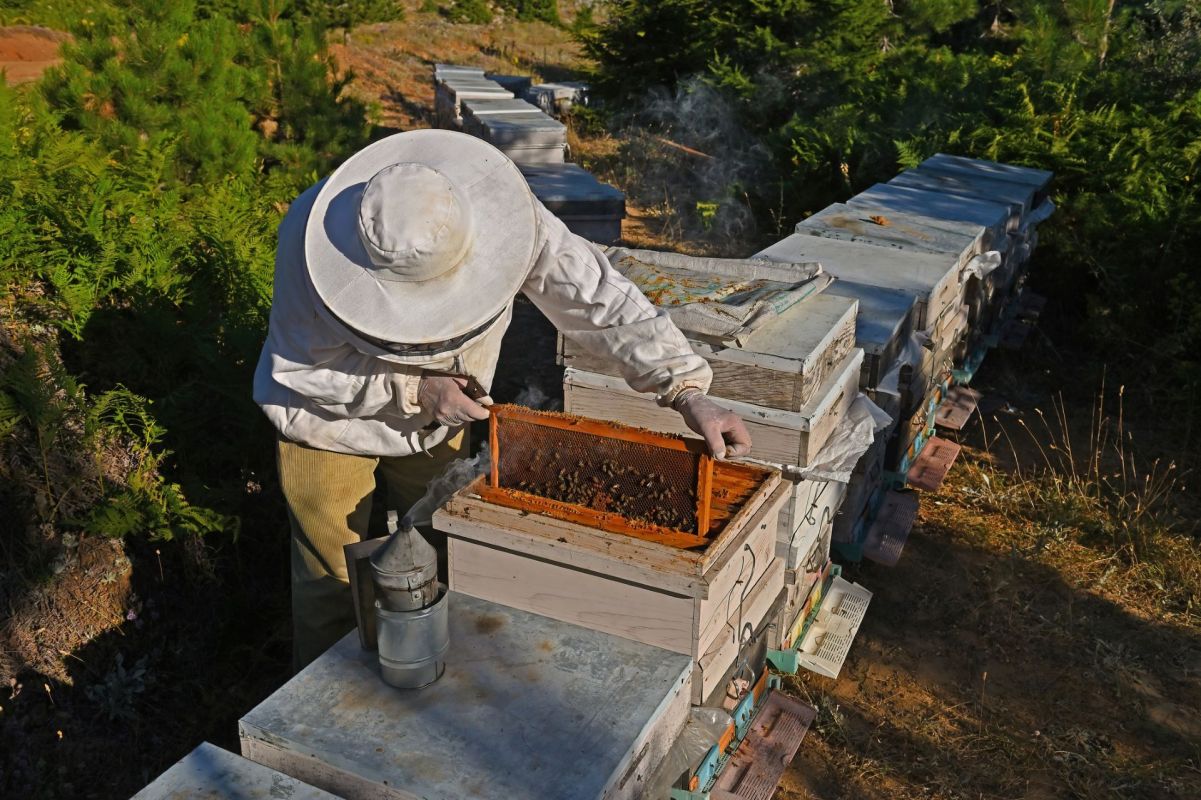
The rampant growth of Chinese tallow trees in and around New Orleans has caused a conundrum for scientists and beekeepers.
What's happening?
Originally native to eastern Asia, Chinese tallow was first introduced to North America by Benjamin Franklin in the 18th century.
Left uncontrolled and separated from the bugs and critters that would normally keep its growth in check, the plant exploded across the southern gulf coastline over the course of the following 250 years.
"It has put a lot of stress on ecosystems," explained ecology professor Anthony Abbate, per The New Orleans Advocate. "Land managers have been having a hard time trying to control it."
Despite its invasive quality, however, the Chinese tallow's long-entrenched presence has made it critical in some ways to its new ecosystem — to honeybees in particular.
While scientists have begun to seriously consider introducing two non-native insect species — a beetle and a moth, both carefully selected for the least collateral impact — into the region to help curb tallow tree populations, the importance of these trees to honeybees complicates the decision.
Perk up the winter blues with natural, hemp-derived gummies Camino's hemp-derived gummies naturally support balance and recovery without disrupting your routine, so you can enjoy reliable, consistent dosing without guesswork or habit-forming ingredients. Flavors like sparkling pear for social events and tropical-burst for recovery deliver a sophisticated, elevated taste experience — and orchard peach for balance offers everyday support for managing stress while staying clear-headed and elevated.
Learn more → |

After all, honeybees are a cornerstone of crop production all across the U.S. and pollinate more than 130 fruit and vegetable varieties, according to a U.S. Department of Agriculture estimate.
"If you kill all those tallow trees, you're going to raise the price of food on everybody's plate," one beekeeper warned.
Why is this dilemma concerning?
It appears that these precarious circumstances have made it unlikely that both honeybees and the wider ecosystem will get by unscathed.
If the tallow overgrowth is removed, the bees will lose one of their most substantial sources of nectar; if the invasive species is left to spread, it will no doubt overtake more land, smother native plants, monopolize soil nutrients and other resources, and disrupt larger ecosystems.
TCD Picks » Upway Spotlight
💡Upway makes it easy to find discounts of up to 60% on premium e-bike brands





|
What's the most you'd pay per month to put solar panels on your roof if there was no down payment?
Click your choice to see results and speak your mind. |
 $200 or more 💰
 Scientists in favor of introducing non-native insects to limit tallow growth have suggested that, rather than eradicating tallow altogether, as an herbicide might, the process would merely reduce tallow populations to a certain degree by reacquainting the tree with some of its former ecological competitors.
In other words, it wouldn't be a total loss for honeybees — but it's safe to say that these vital pollinators, as well as our food production outputs down the line, would still likely take a hit.
What's being done about invasive tallow?
According to The New Orleans Advocate, policymakers remain hesitant to authorize the release of non-native insects into the tallow-affected regions, and as a result, conservationists are working to minimize any potential risks as they advocate for the procedure.
For instance, by running controlled experiments on the non-native beetles and moths in question, scientists were able to simulate their responses to various native plants and conclude that the threat posed to any species other than tallow itself was virtually nonexistent.

Get TCD's free newsletters for easy tips to save more, waste less, and make smarter choices — and earn up to $5,000 toward clean upgrades in TCD's exclusive Rewards Club.
Cool Picks