


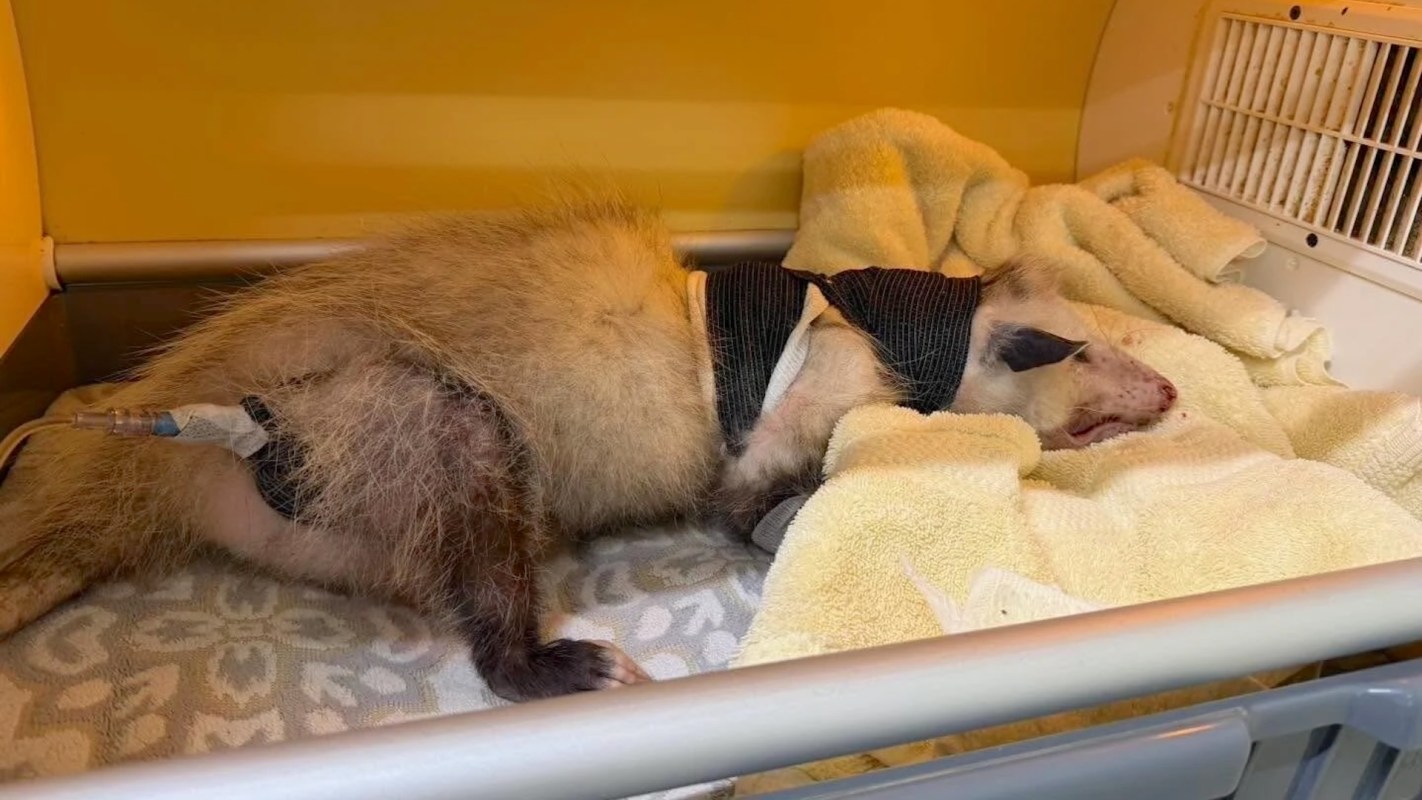
An injured opossum in Burlington, Ontario, is recovering after a rescue that also helped save her four babies, who were still clinging to her back when residents found the family along a local trail.
For an animal that often goes overlooked, the incident served as a reminder of how quickly a community can step in when wildlife is in distress.
What happened?
According to a Burlington Post report published by InsideHalton, people found the mother opossum and her babies, and after seeing that the mother was hurt, several Burlington residents coordinated to get help.
Burlington resident Ashley Henderson later shared the incident on Facebook, posting a photo that showed the injured opossum with four babies on her back, which is how opossum mothers often transport their young.
After the rescue, the Burlington Post said both the mother and her babies were recovering well.
"On arrival, the opossum was awake and alert, but very stressed," Chantal Theijn of Hobbitstee Wildlife Refuge said. "She was sedated for exam and we found superficial abrasions on both front legs and her shoulder. X-rays revealed a skull fracture."
TCD Picks » Quince Spotlight
💡These best-sellers from Quince deliver affordable, sustainable luxury for all




The opossum, which Theijn believes was hit by a car, was given fluids, antibiotics and pain medication.
Why does it matter?
Injured animals can easily go unnoticed, especially species that are often misunderstood or dismissed. Opossums are not part of many people's usual picture of Ontario wildlife, so seeing one in distress can catch residents off guard.
Animals such as opossums play a role in local ecosystems, and babies are especially vulnerable when their mother is injured.
As neighborhoods, roads, and trails increasingly overlap with wildlife habitat, everyday encounters with injured animals are becoming more likely. Knowing when to call for help — rather than trying to manage the situation alone — can protect both people and wildlife.
What can I do?
If you come across an injured wild animal, the safest first step is usually to keep your distance and contact a local wildlife rehabilitator, animal services department, or humane society for guidance. Wild animals can be stressed, frightened, or in pain, making direct handling risky.
It can also help to note the exact location, observe from a safe distance, and, if possible, share clear information or photos with rescuers so they can assess the situation quickly.
Drivers and trail users can make a difference as well. Slowing down in areas where wildlife is commonly seen and staying alert near green spaces can help reduce the chances of collisions and injuries in the first place.
"It truly was a community effort," Henderson said.

Get TCD's free newsletters for easy tips, smart advice, and a chance to earn $5,000 toward home upgrades. To see more stories like this one, change your Google preferences here.







