


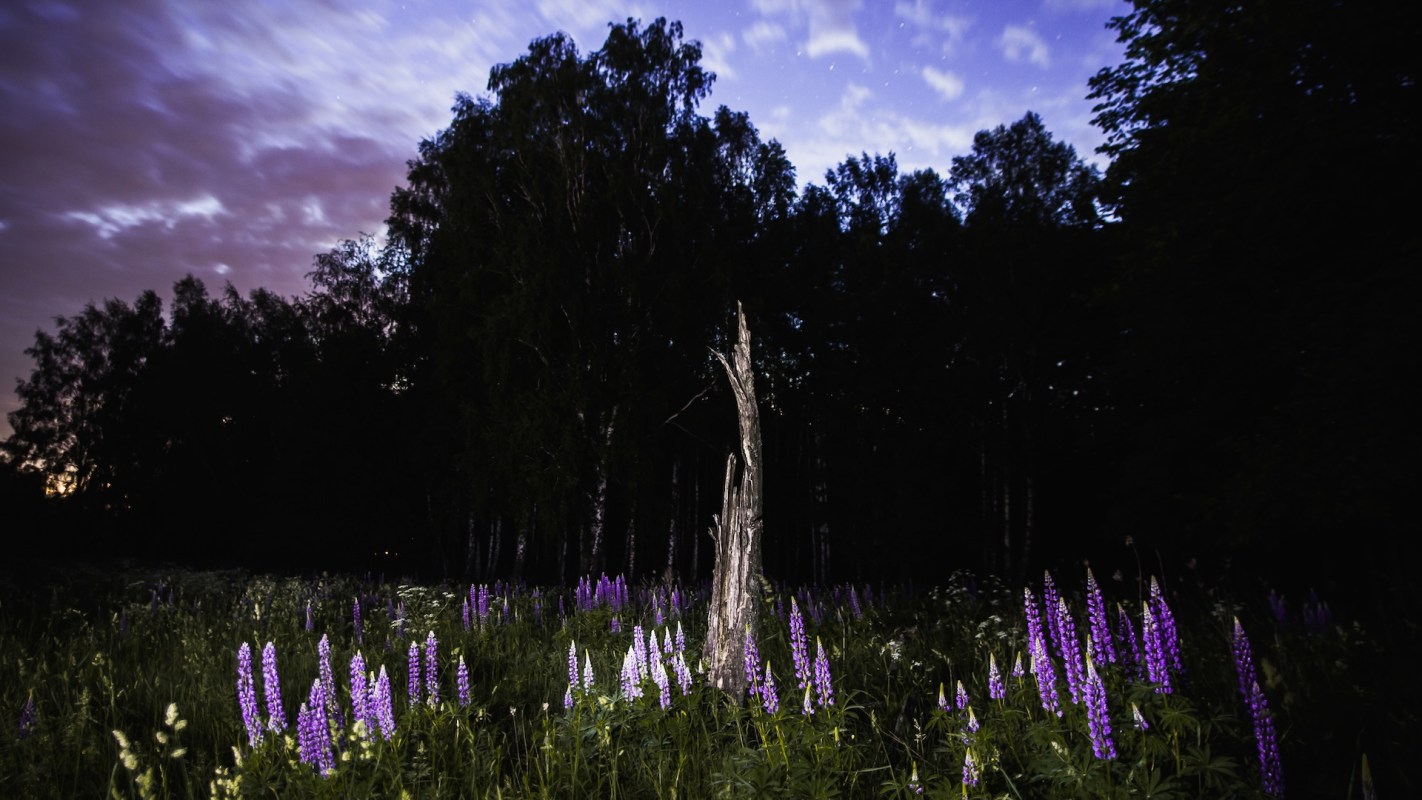
Iceland's native species are being threatened by a Nootka lupin invasion that has taken over large patches of the country's landscape.
What's happening?
Eighty years ago, out of concern for the quickly degrading volcanic soil of Iceland, well-meaning foresters introduced the Nootka lupin. This beautiful blue-violet flower, native to Alaska, spread across Iceland's countryside as intended. However, it unfortunately did its job a little too well and now presents a threat of its own, as The Guardian reported.
Fields of purple lupins have become a well-known site in Iceland and a draw for tourists, who love to take pictures against such a striking backdrop. However, the fact that the flowers grow this way — in thick carpets of just the one species — is exactly the problem.
Lupins have become invasive in Iceland because they outcompete native species, crowding out other plants and flowers and thereby damaging populations of those species.
"The history of the lupin in Iceland is one of good intentions and unexpected consequences," said Pawel Wasowicz, director of botany at the Natural Science Institute, per The Guardian. "Back in 1945, nobody knew about invasive species. The term didn't exist. Nobody had an idea of climate change. You could get free packets of seeds at petrol stations to spread it. That's how the invasion started. They thought it would be a medicine that solved their problems, but it has spread far more than expected."
Why is the spread of lupins important?
For now, there are still many native plants in Iceland. However, the lupin is damaging the biodiversity of the area. It covers 0.3% of Iceland, but it is expected to spread aggressively, potentially covering as much as one-sixth of the island in future years.
The plant was originally intended to help restore the soil, then make way for the restoration of Iceland's native forests and plants. While this has happened in some areas, experts have assessed the growth of lupins and other plants and determined that the process will not play out this way everywhere. The lupins are here to stay.
"It won't crash. The number of lupins will just peak and plateau," said Wasowicz, per The Guardian. "The question is not whether it is good or bad, probably. When you look at the lupins in June, it's really beautiful. But how much change are you willing to accept? And what will follow? That is the problem."
What's being done about lupins?
It is extremely unlikely to eradicate the lupin from Iceland, given how far it has spread. However, officials are looking for ways to limit its spread and protect the most precious, biodiverse areas.
Unfortunately, uninformed citizens are continuing to plant lupins, so one of the most important ways to protect Iceland's native species is to educate the public.
TCD Picks » Quince Spotlight
💡These best-sellers from Quince deliver affordable, sustainable luxury for all




|
What's the hardest thing about taking care of your yard? Click your choice to see results and speak your mind. |
 Mowing the lawn 🏡
Get TCD's free newsletters for easy tips to save more, waste less, and make smarter choices — and earn up to $5,000 toward clean upgrades in TCD's exclusive Rewards Club.
Cool Picks






