


Four people have died, and three people have had liver transplants after eating death cap mushrooms, wild fungi that have been growing more than usual after a particularly rainy season in California.
The California Department of Public Health has urged residents to stop foraging and eating wild mushrooms, given that it's caused "an unprecedented outbreak of severe illness and deaths." There have been 39 reported cases of death cap poisonings since Nov. 18, including the aforementioned deaths and those who required transplants. All affected patients have ranged in age from 19 months to 67 years.
"This is the most massive cluster of amatoxin cases I've seen in my 40-plus years in poison control," California Poison Control (CPC) Executive Director Thomas Kearney said in December. "We knew immediately that we were facing an unusually dangerous season."
What are death cap mushrooms?
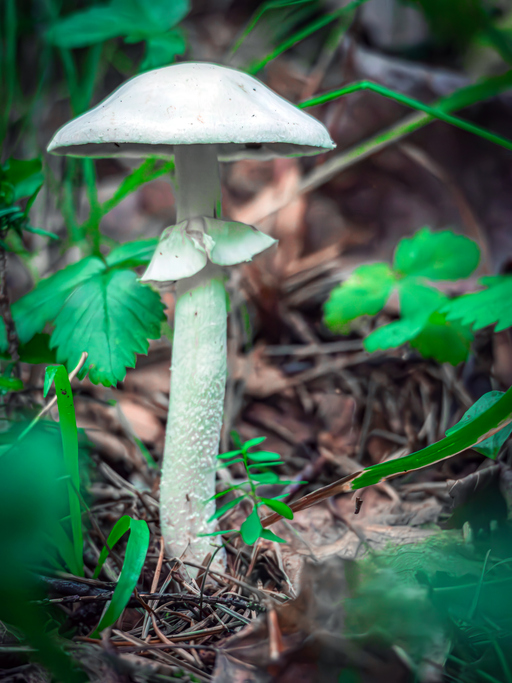
Death cap mushrooms, also known as Amanita phalloides, are one of the most poisonous mushrooms in the world. They are considered an invasive species and look similar to Asian paddy straw mushrooms and puffball mushrooms, both of which are edible. This is particularly the case at earlier stages of growth, before a death cap mushroom has formed an additional "collar"-looking feature underneath the cap.
Death cap mushroom toxins damage the liver and kidneys, and nothing, including freezing or cooking, can deactivate them. They typically grow near oak, pine, and other hardwood trees, and usually in widely spaced groups. Officials said in December that there were "significant clusters" reported in the Monterey and San Francisco Bay Areas.
In the average year, there are roughly two to five death cap poisonings in California, Dr. Craig Smollin, medical director for the San Francisco division of CPC, told the Associated Press.
TCD Picks » Quince Spotlight
💡These best-sellers from Quince deliver affordable, sustainable luxury for all




"The main thing this year is just the magnitude, the number of people ingesting this mushroom," Smollin said. "Having almost 40 is very unusual."
Some reports have noted an increase in mushroom foraging throughout Northern California over the last few years. Some public parks, such as Salt Point State Park, Jackson Demonstration State Forest, and the Point Reyes National Seashore, are open to visitors who want to try it out — especially in the fall and winter seasons.
As Smollin noted to AP, "unless you're an expert who studies mushrooms, it can be very difficult to know" what the mushrooms are.
Why are California residents foraging for mushrooms right now?
The CPC noted that cultural traditions and recent immigration can also contribute to rising mushroom foraging, stating that many recent cases have involved migrant families who may have confused the death cap mushrooms with edible ones from back home.
TCD Picks » Quince Spotlight
💡These best-sellers from Quince deliver affordable, sustainable luxury for all
|
What's the most you'd pay per month to put solar panels on your roof if there was no down payment?
Click your choice to see results and speak your mind. |
 $200 or more 💰
 Laura Marcelino, 36, who moved to Salinas, California, from Oaxaca, Mexico, was one of the people who got sick from accidentally eating the mushrooms, she told KSBW. Her husband was one of the three patients who had to undergo a liver transplant because of it.
"We thought to ourselves, it's the rainy season," she said. "People pick up the mushrooms."
She and her husband picked the mushrooms while on a walk because they thought they looked like ones they were familiar with from Oaxaca. "It's food, but we didn't think it was poisonous," she said.
Marcelino cooked the mushrooms, and the couple suffered a reaction that resulted in severe stomach pains and vomiting, which are two of the early symptoms, alongside fatigue, confusion, and diarrhea, state officials said. More intense symptoms can include hallucinations, liver damage, kidney damage, and seizures, which could lead to death.
Seeking hospital care quickly was crucial to the couple's survival. Time is of the essence when dealing with death cap mushroom toxicity. Both are now in recovery.
"The single most important intervention that we have at our disposal is to prevent the exposure in the first place," Smollin told the University of California, San Francisco's School of Pharmacy. "If you have ingested a mushroom, you may not have symptoms right away. By actually coming to the hospital earlier on, we at least can provide some treatments that may prevent the toxin from being absorbed."

Get TCD's free newsletters for easy tips to save more, waste less, and make smarter choices — and earn up to $5,000 toward clean upgrades in TCD's exclusive Rewards Club.







