


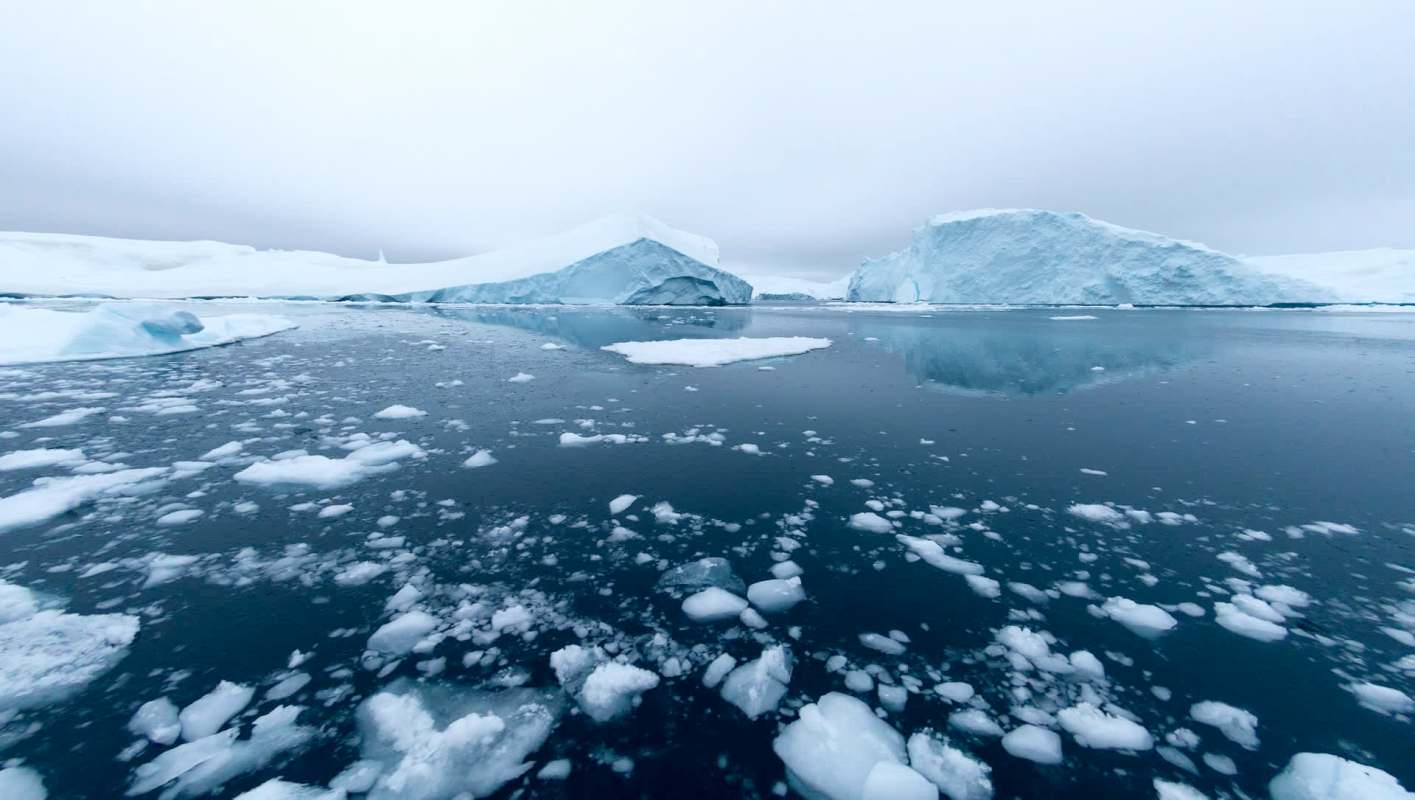
Scientists studying ice in northern Greenland have uncovered unsettling proof that a massive Arctic ice dome completely disappeared in the not-so-distant past.
The jarring part of this discovery, with findings published in the journal Nature Geoscience, is that the temperatures causing that disappearance are strikingly similar to those that the region is once again experiencing.
What's happening?
A research team drilled more than 1,600 feet through ice at Prudhoe Dome, a towering bulge of ice in Greenland, and found something surprising beneath it: sediments that were last exposed to sunlight about 7,100 years ago.
That means the entire ice dome melted away during a warm period in the distant past. Using a technique called luminescence dating, which measures how long minerals have been buried in darkness, scientists confirmed that the ground under Prudhoe Dome was ice-free when summer temperatures were roughly 3 degrees Celsius to 5 degrees Celsius (5.4 degrees Fahrenheit to 9 degrees Fahrenheit) warmer than today.
"That is very direct evidence that the ice sheet is as sensitive as we feared," said Yarrow Axford, a geologist who was not involved in the study, according to New Scientist.
Those temperature ranges closely match projections for the Arctic by the year 2100.
Why are these findings concerning?
Arctic ice acts like a global stabilizer. When it melts, seas rise, coastlines erode, and weather patterns shift across the planet.
Melting ice from Greenland already contributes more to rising oceans than any other ice mass on Earth. Scientists have estimated that similar melting this century could raise global sea levels by several inches to more than 2 feet, putting coastal communities at greater risk of flooding.
That has real human consequences, some we see right in our backyards. In Florida, for instance, there has been as much as 8 inches of sea level rise since 1950 as a direct result of the ice melting in Greenland.
More broadly, accelerating ice loss contributes to extreme weather that can disrupt local economies and displace entire communities worldwide.
TCD Picks » Quince Spotlight
💡These best-sellers from Quince deliver affordable, sustainable luxury for all




|
How worried are you about rising ocean levels? Click your choice to see results and speak your mind. |
 Very 😰
 What's being done about the ice loss?
On the science side, projects like GreenDrill are helping researchers refine models that predict how quickly ice may melt, giving communities and governments better tools to prepare.
For individuals, staying informed matters. Understanding the critical climate issues our planet is facing (including how Arctic changes ripple outward) can help you make smarter decisions about where you live, how you prepare for extreme weather, and which solutions you support.
Though these findings are sobering, at least they confirm some suspicions: the Arctic has crossed this threshold before, and now we know just how close we may be to seeing it happen again.

Get TCD's free newsletters for easy tips to save more, waste less, and make smarter choices — and earn up to $5,000 toward clean upgrades in TCD's exclusive Rewards Club.
Cool Picks






