


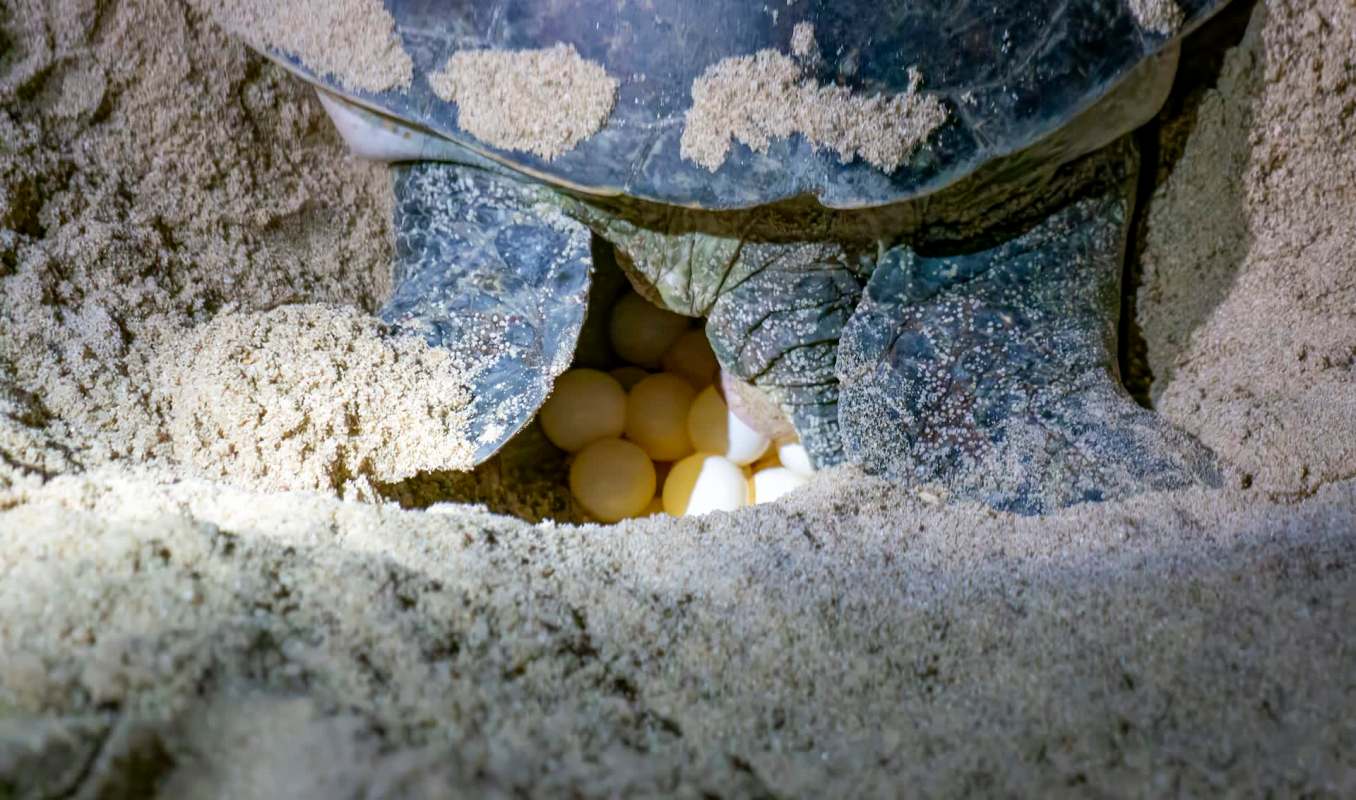
Thousands of endangered green sea turtle hatchlings safely reached the ocean after researchers relocated vulnerable eggs to a cooler island.
The effort shows how science and Indigenous stewardship can work together to help a species survive in a warming world.
What happened?
After eggs were transferred from Australia's Raine Island to nearby Sir Charles Hardy Island, more than 9,100 hatchlings from the northern Great Barrier Reef population of green sea turtles made it safely to the water, Australia's ABC reported.
To make that happen, researchers gathered the eggs as soon as they were laid on Raine Island, sealed them in oxygen-free bags to briefly pause development, and carried them about 80 kilometers (about 50 miles) by boat to Sir Charles Hardy Island.
On arrival, the eggs were reburied in nests beneath a specially built shade structure that reduced sand temperatures by about 1.5 degrees Celsius (2.7 degrees Fahrenheit). Cooler sand is important because hotter sand results in fewer male turtles.
This was the second relocation trial. According to the ABC, a smaller 2024 effort moved 3,000 eggs, but the team expanded the effort this season, resulting in an 82% hatch-and-reach-water success rate.
TCD Picks » Quince Spotlight
💡These best-sellers from Quince deliver affordable, sustainable luxury for all




Why does it matter?
The ABC said Raine Island is the largest rookery for this green sea turtle population and can attract as many as 100,000 nesting females in some years, but the effects of Earth's warming are making the site harder for turtles to use.
Eggs can be lost to rising seas, and steeper shorelines can leave hatchlings stranded or flipped over. Hotter sand is also pushing the sex ratio further out of balance, putting the population's future at risk.
The relocation effort is one form of climate adaptation, aimed at protecting biodiversity while supporting communities with deep cultural ties to the species.
The project also crosses important Indigenous homelands: Sir Charles Hardy Island is in Wuthathi country, while Raine Island lies across both Wuthathi and Meriam countries. Traditional owners have been part of the work to protect turtles for future generations.
Healthier turtle populations can also help strengthen reef ecosystems that people, wildlife, and local economies depend on.
What are people saying?
Katherine Robertson, a senior project officer with the Queensland Parks and Wildlife Service, described the latest results to the ABC as "a fantastic outcome."
She also noted that "this population is almost entirely female."
Meriam Nation elder Falen Pasi emphasized the species' cultural importance, saying, "Turtles for Indigenous people are very significant and spiritual."
"Where I come from, it's our totem," he added.
Researchers remain optimistic while still monitoring potential limits of the approach.
James Cook University's Caitlin Smith said, "Hatching success from those relocated clutches is phenomenal," but she added that "the quality of the hatchlings" needs to be considered, too.

Get TCD's free newsletters for easy tips, smart advice, and a chance to earn $5,000 toward home upgrades. To see more stories like this one, change your Google preferences here.







